
Attic Dust: Causes, Health Concerns, and Cleanup
Attic dust is a mixture of settled particles that can include dirt, pollen, insulation debris, insect remains, and pest waste. Some dust is normal in an attic, but heavy buildup, unusual odors, moisture stains, or animal droppings may signal a problem.
Attic dust can affect indoor air quality when particles move through ceiling gaps, duct leaks, or other air pathways. The level of concern depends on what the dust contains, how much is disturbed, and whether occupants are exposed.
Understanding the source is the first step toward safe attic cleanup. This guide explains common causes, possible health effects, practical cleaning methods, and situations that require professional help.
What Is Attic Dust?
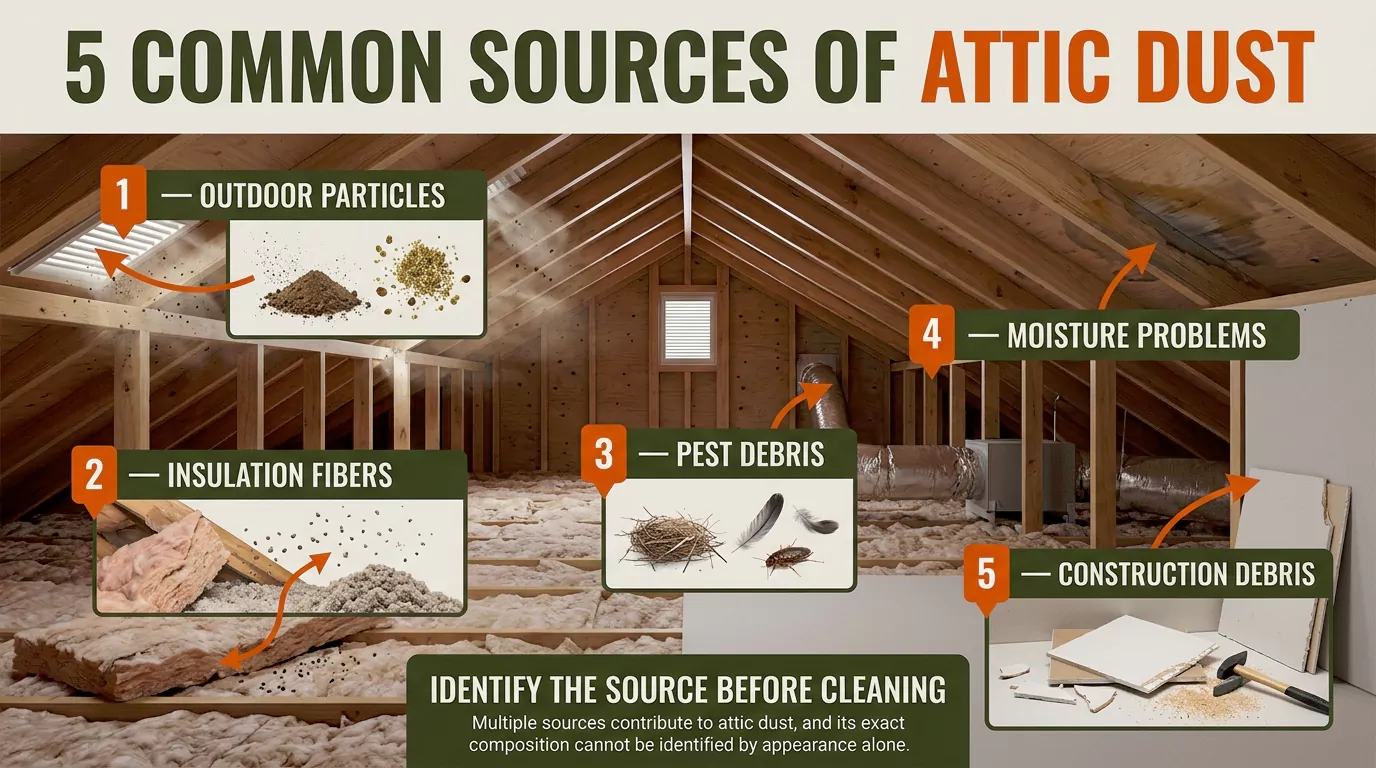
Attic dust is the fine material that accumulates on insulation, roof framing, floor surfaces, stored belongings, and other attic components. It develops as particles enter from outdoors, break away from building materials, or result from pest activity.
Its composition varies from one property to another. A relatively clean attic may contain ordinary household and outdoor particles. An older or poorly maintained attic may also contain degraded insulation, construction debris, moisture-damaged material, or animal waste.
Common components include:
- Outdoor particles: Soil, pollen, and other airborne debris that enter through vents and building openings.
- Insulation fibers and particles: Material released when insulation is damaged, deteriorates, or becomes disturbed.
- Biological debris: Insect remains, nesting material, and other organic particles.
- Pest waste: Rodent droppings, urine residues, and debris from animal activity.
- Mold-related particles: Spores and fragments that may be present when moisture supports fungal growth.
- Other contaminants: Selected chemicals or metals may occur in dust near certain pollution sources or in buildings with specific material histories.
Not every attic contains every contaminant listed above. Appearance alone cannot reliably identify a dust sample’s chemical or biological composition.
What Causes Dust to Accumulate in an Attic?
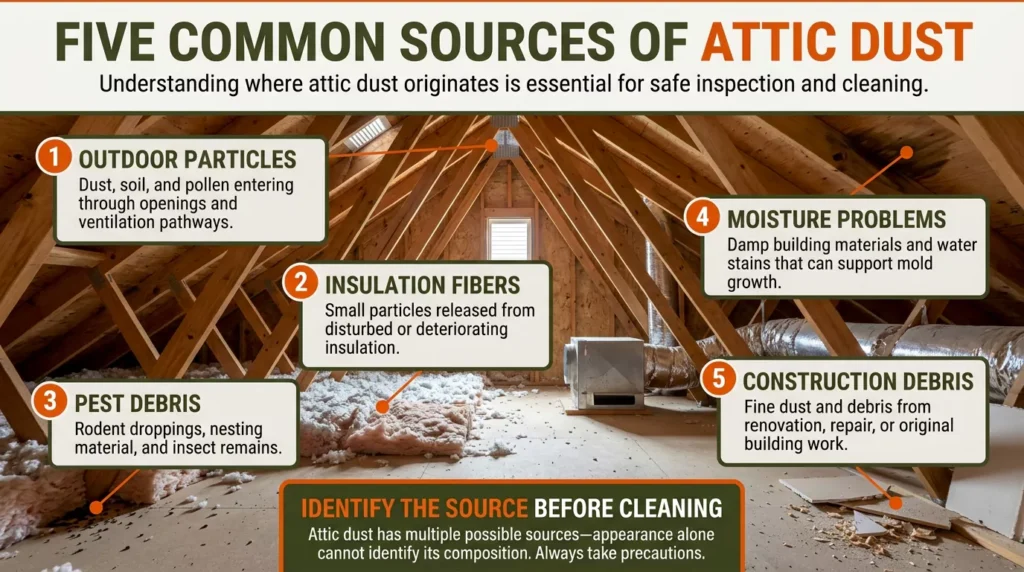
Attic dust usually develops through several processes over time. Outdoor infiltration, insulation disturbance, pests, and moisture problems can contribute to the buildup. Finding the source matters because cleaning alone may not prevent the dust from returning.
1. Outdoor Dust and Air Leakage
Wind can carry soil particles, pollen, and other debris toward a building. Some particles enter through attic ventilation openings, while others pass through gaps around roof penetrations, framing, and unfinished construction joints.
Air movement also affects where dust settles. Pressure differences between the attic, outdoors, and living areas can move particles through openings in the building envelope.
A dusty attic does not automatically mean the ventilation system is defective. Ventilation openings serve an important purpose, and blocking them can create moisture and heat problems. The goal is to control unintended air leakage while preserving appropriate attic ventilation.
2. Insulation Fibers and Building Debris
Insulation can contribute to attic dust when it becomes disturbed or damaged. Renovation work, foot traffic, air movement, and deterioration may release fibers or small particles from some materials.
Different insulation types have different properties.
- Fiberglass insulation: Made from fine glass fibers that can irritate the skin, eyes, and respiratory tract when disturbed.
- Cellulose insulation: Made primarily from processed plant fibers and may contribute loose particles as it becomes disturbed or damaged.
- Mineral wool insulation: Made from mineral fibers and may release particles when handled or disturbed.
- Older or unidentified insulation: May contain materials that require specialist assessment before anyone disturbs them.
Dust around insulation does not necessarily mean the insulation has failed. Before removing material, check whether it is damaged, wet, contaminated by pests, or simply covered with settled dust.
Pay particular attention to older vermiculite insulation. Some vermiculite products may contain asbestos. Do not disturb suspected asbestos-containing material to identify or clean it yourself.
3. Rodents, Birds, and Other Pests
Pests can introduce more than ordinary dust into an attic. Rodents may leave droppings, urine, nesting material, and contaminated insulation. Birds and bats can also leave waste that requires careful handling.
As these materials dry or break apart, particles may become airborne during cleaning or renovation. Pest activity can also damage insulation and wiring, creating additional maintenance concerns.
Look for warning signs such as:
- Droppings or urine staining.
- Nests, feathers, or shredded material.
- Scratching sounds or visible animal activity.
- Strong, persistent animal odors.
- Gnaw marks on wood, wiring, or stored belongings.
- Insulation that is displaced, compacted, or contaminated.
Do not assume that a quiet attic is free of contamination. Old nesting material and waste may remain after the animals have left.
4. Moisture, Roof Leaks, and Mold
Moisture can turn a routine dust problem into a more serious attic maintenance issue. Roof leaks, plumbing leaks, condensation, and poorly managed moisture can wet insulation and wood.
When susceptible materials remain damp, mold may develop. Mold growth can produce spores and fragments that become part of the surrounding debris.
Warning signs include musty odors, water stains, damp insulation, and visible growth on wood or other surfaces. However, a musty smell alone does not prove that mold is present.
Cleaning should follow moisture control. Repair the leak or condensation problem first, then determine whether affected insulation and building materials can be cleaned, dried, or must be removed.
5. Construction and Renovation Work
Roof repairs, electrical work, insulation installation, and remodeling can disturb settled particles. Cutting, drilling, sanding, and moving old insulation may create a temporary increase in airborne dust.
Before starting work in an older attic, identify any materials that could require hazardous-material assessment. Do not assume that all old insulation or construction debris is safe to disturb.
Can Attic Dust Affect Your Health?
Yes. Attic dust can cause irritation or contribute to respiratory symptoms, depending on its composition and the amount of exposure. However, finding dust in an attic does not automatically mean it is making anyone sick.
The health concern depends on the contaminants present, their concentration, the exposure pathway, the duration of exposure, and individual sensitivity.
Respiratory Irritation and Allergies
Dust can contain particles that irritate the eyes, nose, throat, and respiratory tract. People with asthma or allergies may be more sensitive to some airborne particles.
Possible symptoms include:
- Sneezing and nasal congestion.
- Itchy or watery eyes.
- Coughing and throat irritation.
- Wheezing or worsening asthma symptoms.
- Skin irritation after contact with certain fibers or materials.
These symptoms have many possible causes. They do not establish that attic dust is responsible.
If symptoms persist, become severe, or include breathing difficulty, seek appropriate medical advice. Severe breathing difficulty requires urgent medical attention.
Mold and Biological Contamination
Mold can develop when moisture remains on suitable materials. Exposure to mold may cause allergic reactions or respiratory irritation in sensitive individuals. Damp buildings can also aggravate asthma in some people.
Animal waste presents a separate concern. Rodent droppings, urine, and nesting material can contain biological contaminants. Bat or bird droppings may also present an infection risk in certain circumstances.
For example, Histoplasma is a fungus associated with some environments contaminated by bird or bat droppings. Disturbing contaminated material can release spores when the fungus is present. Droppings alone do not prove that the fungus is present, and the risk varies by location and exposure.
Do not dry-sweep or use an ordinary household vacuum on potentially contaminated animal waste. Large accumulations and heavily contaminated insulation are best assessed by qualified remediation professionals.
Fiberglass and Other Insulation Fibers
Fiberglass fibers can cause temporary irritation when they contact the skin, eyes, or respiratory tract. The level of concern depends on the material, exposure conditions, and handling method.
Avoid unnecessary disturbance of insulation. When maintenance requires handling known fiberglass insulation, use suitable protective clothing, eye protection, and respiratory protection selected for the task.
Do not apply the same cleanup procedure to every insulation type. Unknown materials should be identified before disturbance when hazardous substances are a possibility.
Asbestos, Lead, and Other Potential Contaminants
Some older buildings contain materials that require special precautions. Vermiculite insulation may contain asbestos, and lead-bearing dust or other pollutants may occur in particular building or environmental settings.
These hazards cannot be reliably identified by color, smell, or a quick visual inspection.
If you suspect asbestos-containing insulation, stop work and consult a qualified asbestos professional. Avoid disturbing the material or collecting samples yourself. For suspected lead or other environmental contaminants, an appropriate inspection and targeted laboratory analysis may be needed.
The important distinction is between a possible hazard and a confirmed exposure. Testing and professional assessment help establish what is present and what action is appropriate.
How Does Attic Dust Enter Your Home?
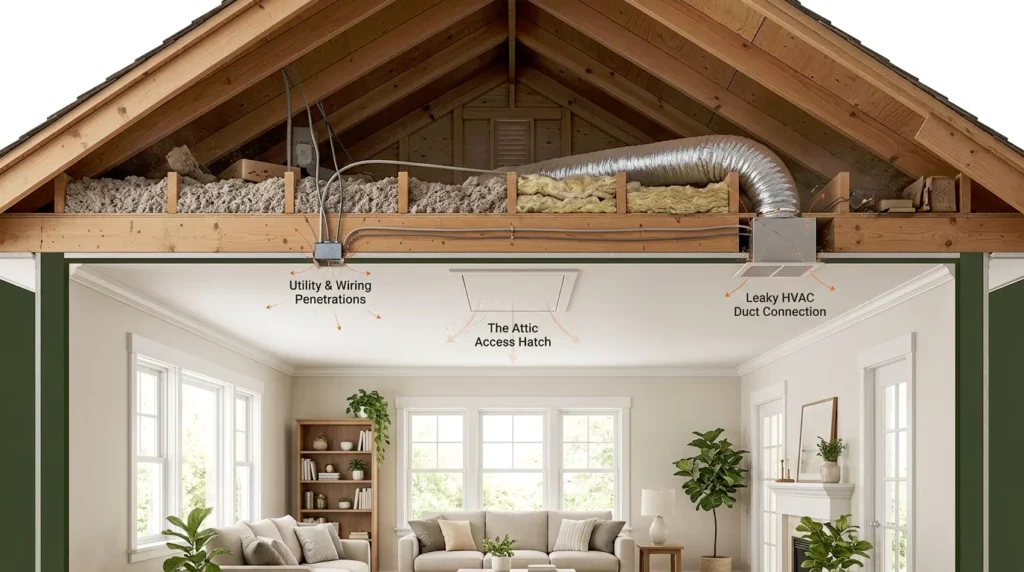
Attic dust can reach living spaces when particles become airborne and move through connected air pathways. The amount transferred depends on the building’s air leakage, pressure differences, duct condition, and the location of the contamination.
Common pathways include:
Ceiling penetrations: Gaps around plumbing pipes, wiring, recessed fixtures, and ceiling openings may connect the attic with rooms below.
Attic access points: Poorly sealed attic hatches and pull-down stairs can allow air exchange between spaces.
Leaky ductwork: Damaged or poorly sealed ducts can transport particles when they connect to contaminated spaces or draw in unwanted air.
Building pressure differences: Wind, exhaust fans, and HVAC operation can change airflow through openings in the building envelope.
Insulation and air-sealing gaps: Missing or poorly fitted air barriers can allow air to move through ceiling assemblies.
Attic ventilation and building air sealing serve different purposes. Ventilation manages attic heat and moisture, while air sealing limits unintended air movement between the attic and occupied rooms.
If dust repeatedly appears around ceiling fixtures or the attic access door, inspect the surrounding area for leakage. Do not seal required combustion-air openings or block designated attic vents. Air-sealing work near electrical equipment, hot fixtures, or combustion appliances may require a qualified professional.
Signs Your Attic Needs Inspection or Cleaning
An attic does not need to look spotless to be in good condition. The decision to clean should depend on visible buildup, contamination, moisture, and the attic’s intended use.
| Warning sign | What it may indicate | Recommended next step |
| Heavy settled dust or loose debris | Accumulated particles or recent construction activity | Inspect the source and determine whether routine cleaning is suitable |
| Musty odor | Possible moisture or mold issue | Check for leaks and damp materials |
| Water stains or wet insulation | Roof, plumbing, or condensation problem | Correct the moisture source and assess affected materials |
| Droppings or nesting debris | Current or past pest activity | Identify the contamination and arrange safe removal |
| Damaged or displaced insulation | Disturbance, moisture damage, or pest activity | Assess the material before cleaning or replacement |
| Dust appearing around ceiling openings | Possible air leakage from the attic | Inspect and correct the relevant air pathway |
| Unknown older insulation | Possible hazardous material | Seek specialist assessment before disturbance |
How Often Should an Attic Be Cleaned?
There is no universal schedule that requires every attic to receive a full professional cleaning each year. Some attics need only occasional inspection, while others require more frequent attention because of pests, roof leaks, renovation work, or recurring contamination.
Inspect the attic when you notice warning signs and after significant events such as roof damage or a known pest infestation. The appropriate cleaning frequency depends on the property’s condition and history.
How to Clean Attic Dust Safely?
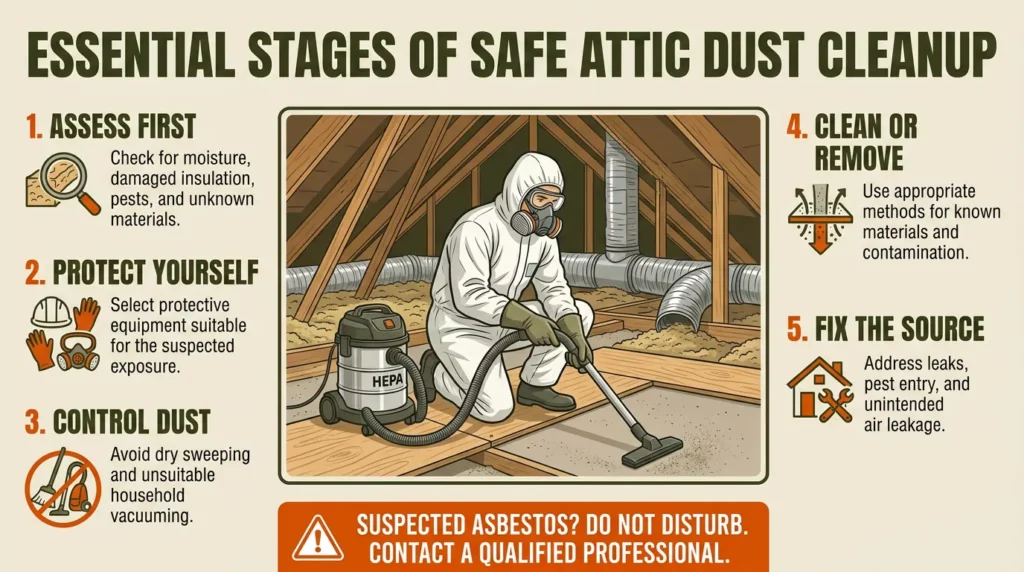
The correct cleanup method depends on what is present. Ordinary dust, mold-contaminated material, animal waste, and suspected asbestos should not be treated as the same problem.
Step 1: Assess the Contamination Before Starting
Look for visible debris, damaged insulation, moisture stains, pest waste, and signs of mold. Check whether the attic has safe access and a stable walking surface.
Avoid stepping between ceiling joists unless a suitable platform or walkway supports your weight. The ceiling below may not be designed to carry a person’s load.
Stop before disturbing material that may contain asbestos or another hazardous substance. Also avoid entering areas with extensive contamination or unsafe structural conditions.
Step 2: Select Appropriate Protective Equipment
Protective equipment should match the material and exposure risk. Depending on the task, this may include gloves, protective clothing, eye protection, and a suitable respirator.
A disposable N95 respirator can help reduce exposure to certain airborne particles when correctly selected and used. It does not protect against every contaminant, gas, or vapor. Fit, condition, and the nature of the hazard matter.
For workplace respirator use, applicable requirements may include medical evaluation, fit testing, and a respiratory protection program. More complex contamination may require specialized controls and professional equipment.
Step 3: Control Dust Before Removing Debris
Avoid dry sweeping or using ordinary vacuums when these methods could spread fine particles into the air.
For suitable, nonhazardous dust, use equipment designed for the material and fitted with effective filtration. HEPA-filtered vacuuming can capture fine particles and reduce their redistribution when the equipment and method are appropriate.
HEPA filtration alone does not make every cleanup safe. It cannot replace source control, proper containment, or specialized handling for hazardous materials.
If you find rodent droppings, follow public-health guidance for the specific situation. Do not dry-sweep or vacuum the waste. Appropriate procedures generally involve wetting contaminated material with a suitable disinfectant, allowing the required contact time, and removing it without creating dust. Extensive infestations may require professional cleanup.
Do not simply spray water on unknown insulation or suspected hazardous material. Wetting alone does not disinfect waste or eliminate every contaminant.
Step 4: Remove or Restore Contaminated Materials
The next step depends on the material’s condition.
- Loose, nonhazardous debris may be removable using an appropriate controlled method.
- Wet or heavily contaminated insulation may require removal and replacement.
- Mold-affected materials need assessment based on the extent of growth and the type of material.
- Suspected asbestos-containing materials should be handled only under appropriate specialist procedures.
Do not automatically remove all insulation because it looks dusty. A professional can help determine whether it can remain in place or needs replacement.
Step 5: Address the Source of Contamination
Cleaning without correcting the source often leads to recurring problems.
Repair roof and plumbing leaks, correct condensation issues, address pest entry points, and seal appropriate air leaks. Check that the attic’s ventilation and insulation work together as intended.
If dust has entered ductwork or the HVAC system, determine whether the system is actually contaminated before arranging duct cleaning. Attic dust does not automatically mean every duct requires service.
Step 6: Verify the Results
After cleanup, inspect the affected areas for remaining debris, moisture, and signs of pests. Confirm that the source of contamination has been corrected.
For specialized remediation, ask the provider what post-cleanup inspection or testing is appropriate. Not every routine dust cleanup requires laboratory testing.
DIY Attic Cleaning vs. Professional Cleaning
DIY cleaning may be reasonable when the debris is limited, the materials are known, access is safe, and there are no signs of hazardous contamination.
Professional help becomes more important when the source or risk is uncertain.
| Situation | Suitable approach |
| Small amounts of ordinary dust and debris | DIY may be reasonable with suitable precautions |
| Dust recurring around attic openings | Investigate air leakage and the underlying source |
| Minor moisture staining | Find and repair the moisture source; assess the affected material |
| Extensive mold growth or widespread wet insulation | Seek qualified remediation advice |
| Large quantities of rodent or bat waste | Use a qualified cleanup professional |
| Suspected asbestos-containing insulation | Avoid disturbance and contact an asbestos specialist |
| Possible lead or industrial contamination | Obtain appropriate environmental assessment and testing |
| Unsafe access or uncertain structural support | Arrange a professional inspection before entry |
What Does Professional Attic Cleaning Involve?
A suitable service should begin with an inspection rather than immediately removing all insulation. The technician should identify visible contamination, investigate moisture and pest activity, and explain which materials require cleaning or removal.
Depending on the findings, the work may include:
- Assessing contamination and access conditions.
- Establishing appropriate dust containment.
- Removing debris using suitable equipment.
- Handling contaminated insulation or animal waste correctly.
- Cleaning affected surfaces where appropriate.
- Recommending moisture repairs, air sealing, or pest exclusion.
- Inspecting the area after cleanup and documenting the work.
Not every project requires every step. Ask for a written scope that distinguishes cleaning, insulation replacement, mold remediation, pest exclusion, and any testing charges.
What Affects Attic Cleanup Cost?
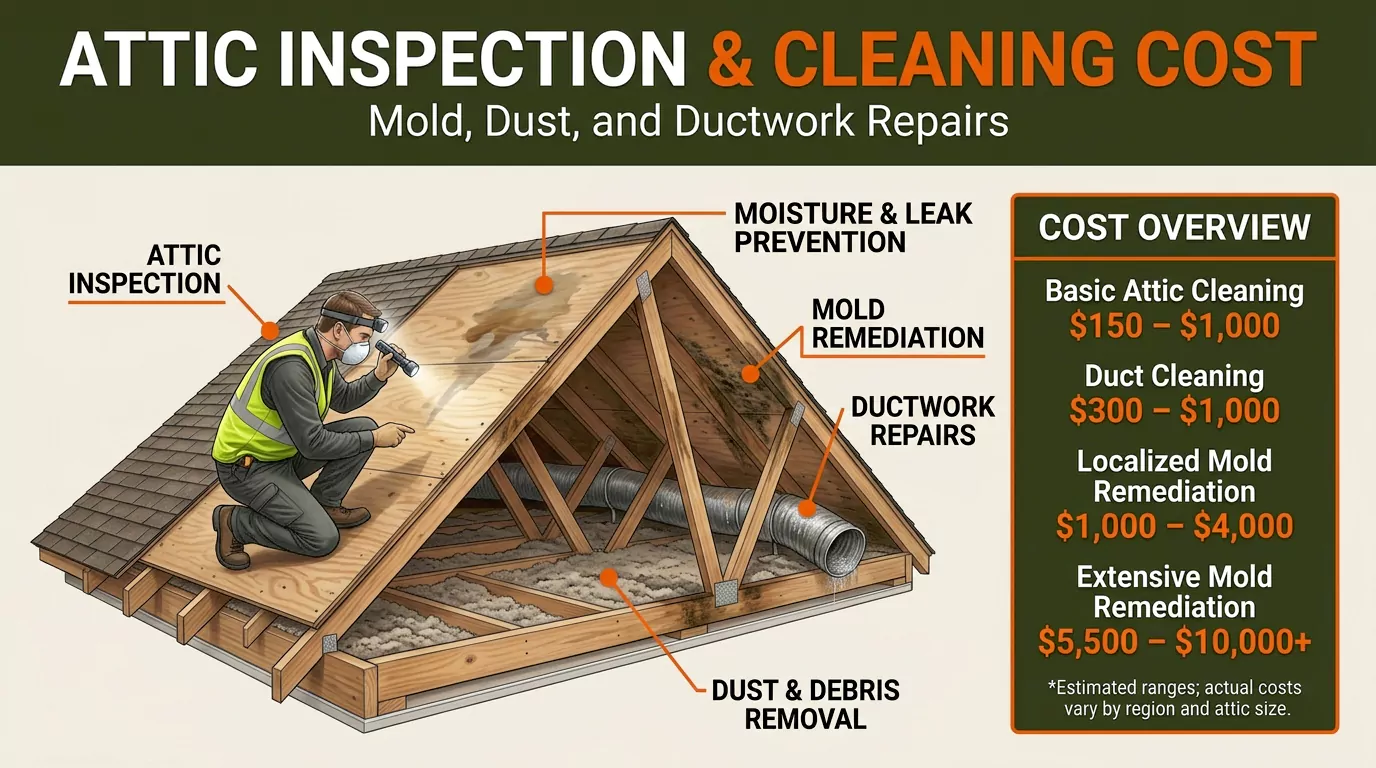
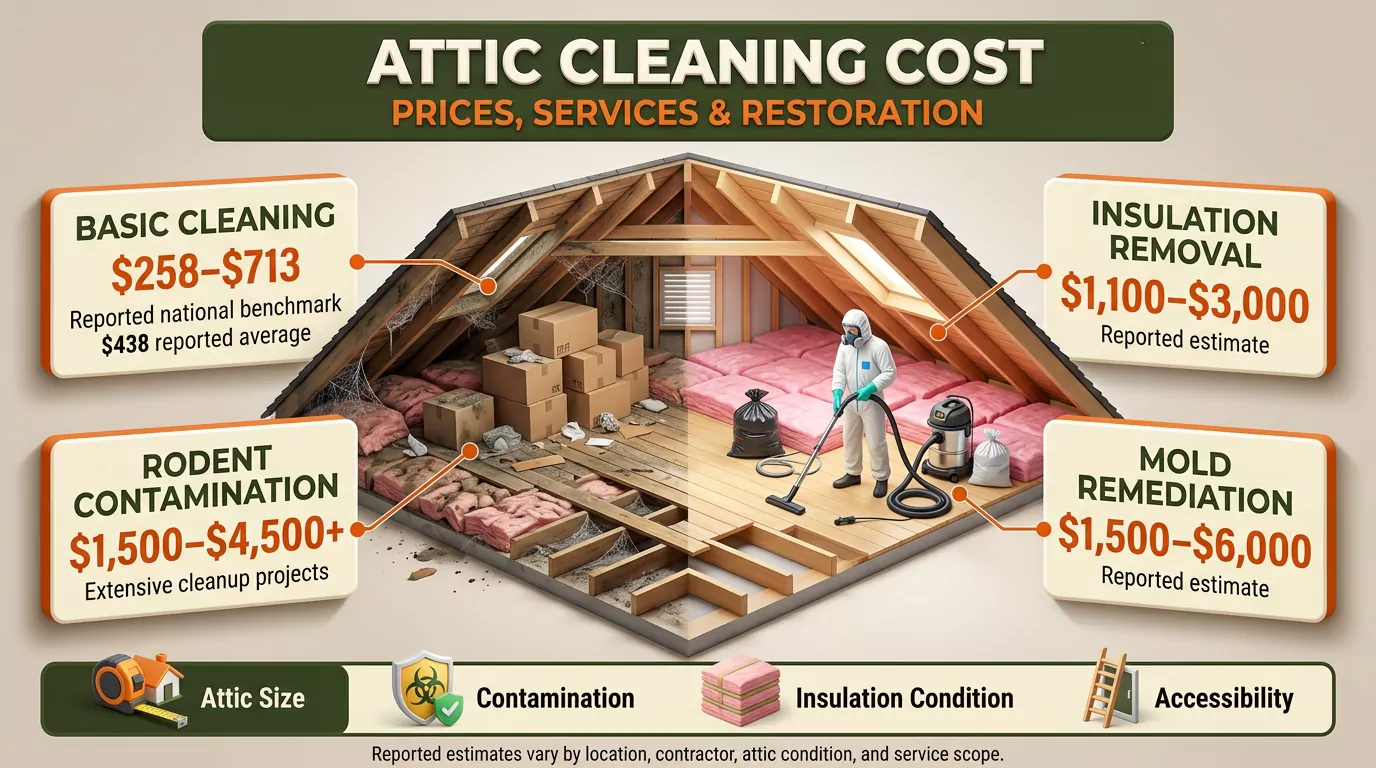
The cost depends on the size and accessibility of the attic, the amount of debris, the type of contamination, and the labor and equipment required.
Costs may increase when a project involves extensive animal waste, hazardous-material assessment, containment, insulation replacement, structural repairs, or specialized remediation.
Because these conditions vary substantially, obtain a property-specific quote rather than relying on a single average price. Compare what each quote includes, what materials will be removed, and whether repairs or testing are charged separately.
Should You Test Attic Dust for Mold or Heavy Metals?
Testing is useful when there is a specific reason to suspect a contaminant and the result will help guide a decision. It is not necessary for every dusty attic.
Mold Testing
Visible mold or a moisture problem often calls for an assessment of the affected building materials and the source of moisture. Routine air sampling is not always needed to decide whether visible mold growth requires attention.
If the contamination is hidden, extensive, or difficult to distinguish from other material, consult a qualified professional about the most appropriate assessment method.
Heavy Metals and Industrial Dust
Attic dust can preserve particles deposited over long periods. Researchers have used dust samples to investigate airborne pollution in certain industrial environments.
A study of 27 houses in Ajka, Hungary, analyzed attic dust for selected trace elements and found evidence of contamination associated with industrial sources. The study illustrates how settled dust can help investigate environmental pollution. It does not establish that the same contaminants occur at harmful levels in every home.
If a property is near a known contamination source or has a specific history that raises concern, an environmental professional can recommend targeted sampling and laboratory analysis. Testing should identify the contaminants relevant to the property rather than assume that all possible pollutants are present.
A positive laboratory result also needs context. The presence of a contaminant does not, by itself, establish the amount a person has inhaled or the likelihood of a health effect.
How to Prevent Attic Dust From Returning
Long-term dust control depends on reducing the sources of contamination and limiting unintended air movement. Regular inspection helps identify problems before they become more extensive.
Seal Unintended Air Leaks
Inspect appropriate gaps around attic access doors, wiring, plumbing penetrations, and ceiling openings. Use materials suitable for each location and follow applicable fire-safety requirements.
Do not block required ventilation openings or seal around equipment without understanding its clearances and combustion-air needs.
Maintain Insulation
Check for wet, displaced, compressed, or pest-contaminated insulation. Restore or replace materials when necessary, and avoid disturbing unknown older insulation.
Correct air leakage and moisture problems before installing new insulation. Otherwise, the underlying conditions may damage the replacement material.
Control Moisture
Repair roof and plumbing leaks promptly. Investigate condensation and ensure the attic’s ventilation system is suitable for the building.
Ventilation is not a substitute for repairing leaks or correcting air leakage from humid indoor spaces. Moisture control usually requires addressing the actual source.
Prevent Pest Entry
Inspect roof edges, vents, soffits, and other possible entry points. Seal suitable openings with pest-resistant materials and repair damaged building components.
Before sealing an opening, make sure animals are not trapped inside. An active infestation may require professional exclusion and sanitation.
Keep HVAC Components in Good Condition
Inspect accessible ductwork for damaged connections, leakage, and visible contamination. Maintain filters according to the equipment manufacturer’s instructions.
If dust keeps appearing in living spaces, investigate the source instead of assuming that more frequent duct cleaning will solve the problem.
Follow a Practical Inspection Schedule
There is no single inspection interval for every property. A useful approach is to inspect the attic when warning signs appear and after events that could cause damage.
Consider checking the attic:
- After roof leaks or significant roof damage.
- Following pest activity or removal.
- After renovation or insulation work.
- When musty odors or ceiling stains develop.
- When dust repeatedly appears near attic access points.
- During periodic home maintenance, especially in older or previously damaged buildings.
The aim is to identify changes early, not to perform unnecessary cleaning on a fixed schedule.
Frequently Asked Questions
Can attic dust make you sick?
Attic dust can irritate the eyes, skin, and respiratory tract. Some dust may contain allergens, insulation fibers, mold-related particles, or pest waste. Health effects depend on the material, exposure level, and individual sensitivity.
Why is my attic so dusty?
Common causes include outdoor particles, insulation debris, construction activity, pest waste, and air movement through building openings. Finding the source helps determine whether cleaning alone will be enough.
Can attic dust get into my HVAC system?
Yes, if there are connected air pathways, duct leaks, or other conditions that allow particles to enter the system. However, dust in an attic does not automatically mean the HVAC system or all ductwork is contaminated.
Does attic dust always mean there is mold?
No. Ordinary dust can accumulate in a dry attic without mold growth. Musty odors, damp insulation, and visible growth warrant further inspection, but dust color alone cannot confirm mold.
Is it safe to vacuum attic insulation?
That depends on the insulation type and contamination. Ordinary household vacuums may spread fine particles and are not suitable for every material. Use an appropriate method for known, nonhazardous debris, and seek specialist advice before disturbing unknown or potentially hazardous insulation.
Should I clean rodent droppings myself?
Small, limited contamination may sometimes be manageable under appropriate public-health guidance. Do not dry-sweep or vacuum droppings. Extensive infestations, contaminated insulation, or uncertain biological hazards are better handled by qualified professionals.
Does old attic insulation contain asbestos?
Not necessarily. Some older vermiculite insulation may contain asbestos, but age and appearance alone cannot confirm the presence or absence of asbestos. Avoid disturbing suspected material and consult a qualified asbestos professional.
How often should attic dust be removed?
There is no universal requirement for annual professional cleaning. Inspect the attic periodically and arrange cleaning when the condition warrants it, such as after contamination, renovation, moisture damage, or pest activity.
Should I test attic dust for lead or heavy metals?
Testing may be appropriate when a known pollution source, building history, or environmental assessment raises a specific concern. A qualified professional can recommend targeted sampling and explain how to interpret the results.
How can I keep attic dust from entering my home?
Investigate air leakage around attic access points, ceiling penetrations, and relevant duct connections. Correct unintended openings while maintaining required ventilation and following fire-safety requirements.
Conclusion
Attic dust is common, but its source and composition determine whether it needs attention. Outdoor particles, insulation debris, pest activity, and moisture can all contribute to accumulation. Some dust causes little concern, while contaminated insulation, mold, animal waste, or suspected hazardous materials require greater care.
Start by inspecting the attic for moisture, visible debris, damaged insulation, and signs of pests. Use an appropriate cleanup method for the material present, and avoid disturbing unknown insulation or extensive contamination. When necessary, qualified professionals can assess the risk and recommend suitable remediation.
Long-term prevention depends on fixing leaks, managing moisture, controlling pests, and sealing unintended air pathways. These measures help protect building materials and reduce the chance of recurring dust problems.

Daniel Carter specializes in attic maintenance, insulation, ventilation, moisture control, and home improvement. He understands common attic problems and their practical solutions. Through clear, informative guides, he helps homeowners identify issues, prevent damage, improve energy efficiency, and maintain safer, healthier homes.
One thought on “Attic Dust: Causes, Health Concerns, and Cleanup”