
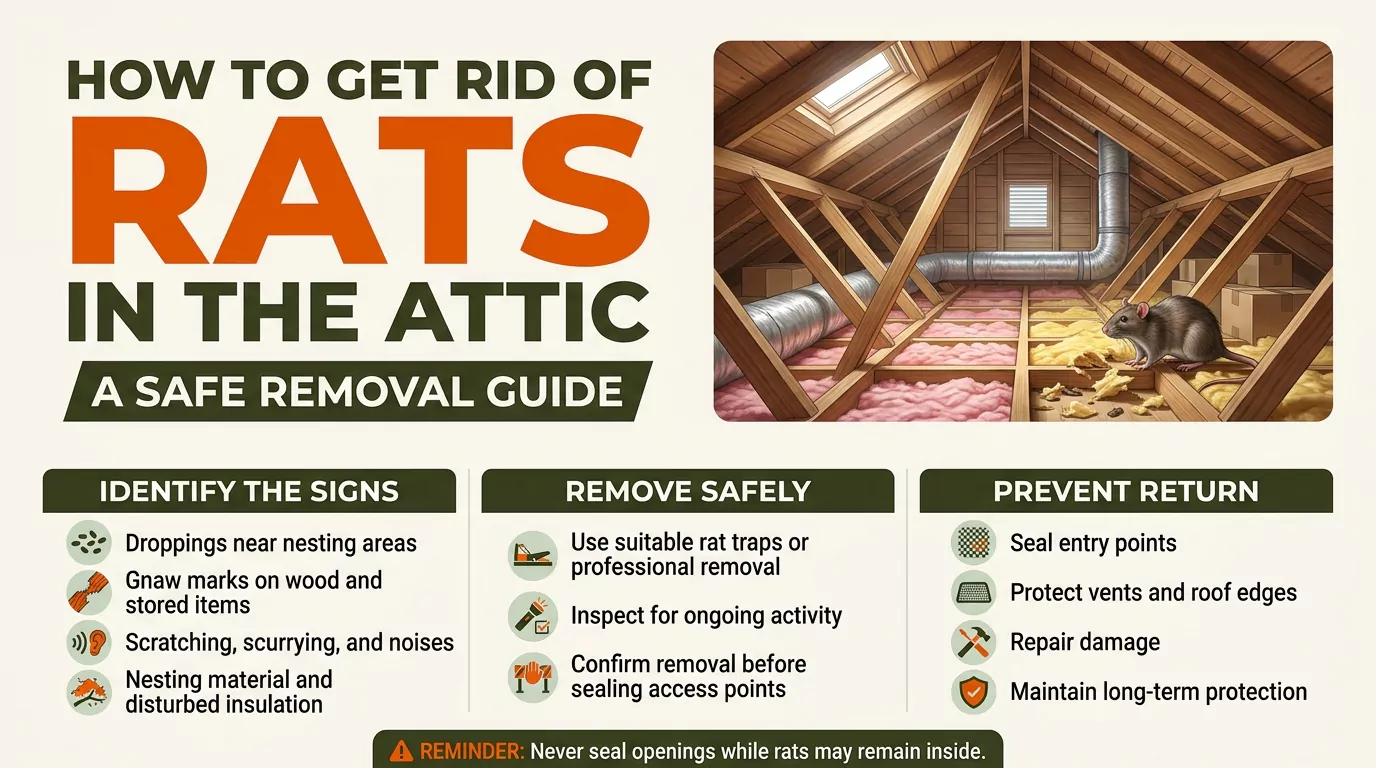
How to Get Rid of Rats in the Attic: Safe Removal and Prevention
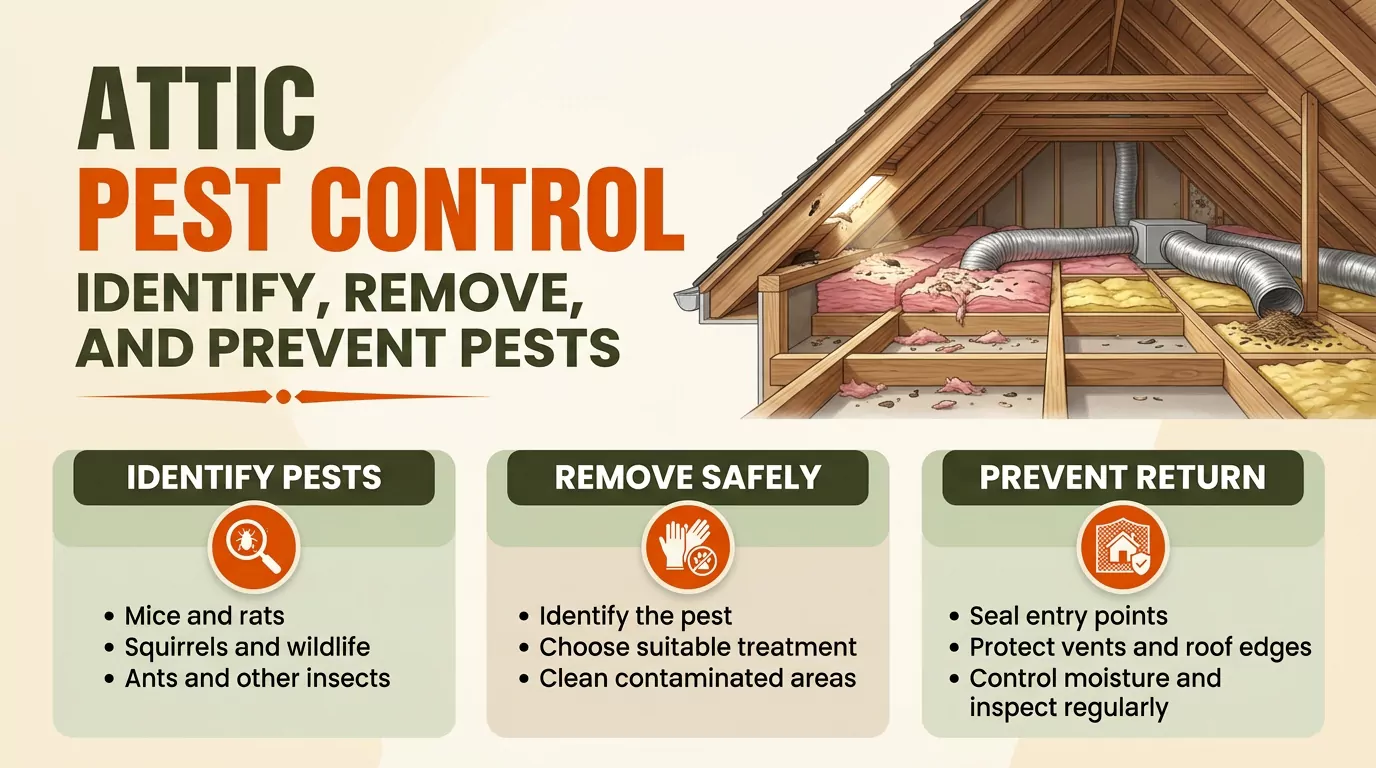
The most effective way to get rid of rats in the attic is to identify their activity, use properly placed traps or professional removal, prevent further entry, and clean contaminated areas safely. Simply catching a few rats will not solve the problem if access points remain open.
Start by looking for droppings, scratching noises, gnaw marks, damaged insulation, and openings around the roof. Use this evidence to determine where rats are active and whether the infestation is suitable for DIY control. Then coordinate removal with repairs so that no animals are trapped inside the building.
This guide explains how to identify attic rats, choose an appropriate removal method, clean up safely, seal entry points, and reduce the risk of another infestation.
1. How to Tell If You Have Rats in Your Attic
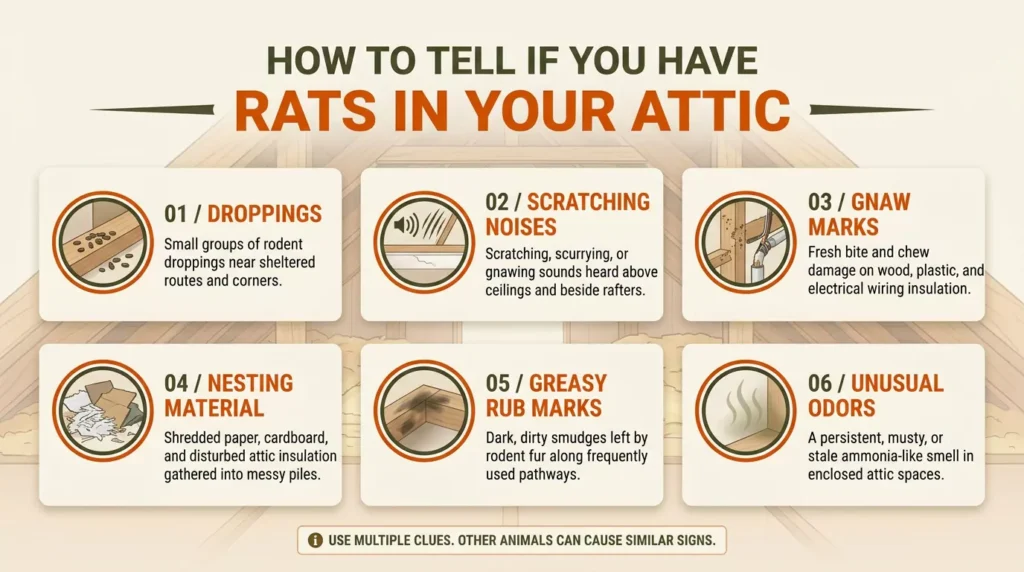
Rats often remain hidden in attics during the day, so you may notice their activity before seeing an animal. Look for several signs together rather than relying on one clue.
Common signs of a rat infestation
- Scratching and scurrying: Rats may move through attic spaces, particularly at night when the house is quiet.
- Droppings: Rat droppings are generally larger than mouse droppings, although size varies by species and age.
- Gnaw marks: Chewed wood, plastic, packaging, and wiring insulation may indicate rodent activity.
- Nesting materials: Shredded paper, fabric, and insulation may be gathered in sheltered areas.
- Greasy rub marks: Repeated movement along a surface can leave dark marks from a rodent’s body and fur.
- Unusual odors: Rat urine, accumulated waste, and dead rodents can produce persistent smells.
- Disturbed insulation: Tunnels, compressed areas, and nesting pockets may reveal where rodents have been moving.
Finding fresh droppings or new gnaw marks suggests ongoing activity. However, the number of droppings does not reliably tell you how many rats are present.
How to distinguish rats from mice and squirrels
Different animals can produce similar noises and damage. Identifying the likely pest helps you select the right control method.
| Clue | Rats | Mice | Squirrels |
| Typical movement | Scurrying and scratching | Light, rapid movement | Often heavier running or jumping |
| Droppings | Generally larger than mouse droppings | Generally small and narrow | Shape and size vary by species |
| Common activity | Nocturnal | Often nocturnal | Commonly active during daylight |
| Possible damage | Wiring, stored items, insulation | Food packaging, wiring, insulation | Roof openings, wood, insulation |
| Likely access | Roof gaps, pipes, vents, openings | Very small gaps and openings | Roof edges, soffits, damaged roof areas |
These clues are not conclusive. For example, squirrels can be active at night occasionally, and building movement can also cause ceiling noises. Use multiple signs or arrange a professional inspection if the animal is unclear.
2. How Do Rats Get Into the Attic?
Rats usually enter through existing openings in a building’s exterior. Once inside, they can use wall cavities, utility routes, and roof spaces to reach the attic.
Inspect these areas from the ground where possible:
- Roof edges and eaves: Loose fascia boards, damaged roof joints, and deteriorated soffits can expose openings.
- Roof and attic vents: Missing, damaged, or poorly fitted covers can provide access.
- Utility penetrations: Gaps around plumbing pipes, cables, and other services may connect the exterior to wall or ceiling cavities.
- Chimneys and roof junctions: Missing or damaged protective components can create access routes.
- Foundation and exterior-wall openings: Rats may enter lower parts of the building and travel upward through cavities.
- Nearby vegetation: Overhanging branches, vines, and other structures may give climbing rodents easier access to the roof.
Rats can squeeze through surprisingly small gaps and may enlarge some openings by gnawing. Treat openings around 1/2 inch (about 13 mm) or larger as potential rat access points, while remembering that smaller gaps may also matter depending on the animal and opening geometry. Mice can use considerably smaller openings.
Do not assume that the opening closest to the attic noises is the only entrance. Rats may use more than one route.
3. How to Get Rid of Rats in the Attic Step by Step
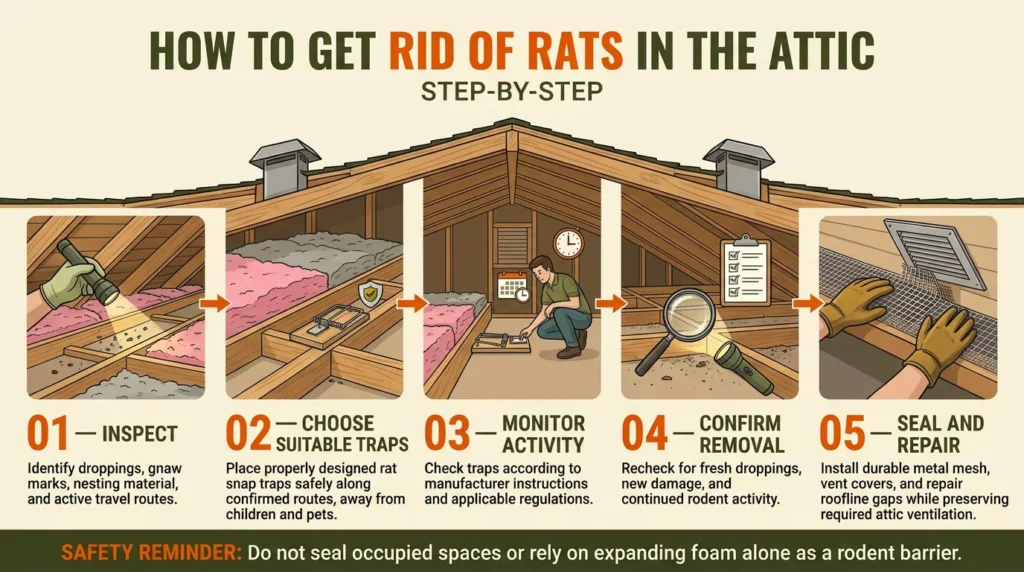
A successful removal plan combines inspection, population control, exclusion, and cleanup. The order matters because sealing an occupied opening or using the wrong treatment can create additional problems.
Step 1: Inspect the attic and assess the activity
Before setting traps, identify the areas showing the strongest evidence of rat activity.
Look for:
- Droppings along walls and beams.
- Gnaw marks on timber, plastic, or other materials.
- Nesting pockets in insulation.
- Grease marks along frequently used routes.
- Damaged roof penetrations and utility openings.
- Chewed electrical cables or other potentially hazardous damage.
Avoid walking directly on ceiling drywall or stepping between structural supports. The ceiling may not support your weight. Use a safe access route and suitable lighting, and do not enter a confined, unstable, or heavily contaminated attic.
If you find exposed wiring, extensive contamination, or evidence of a large infestation, arrange a professional assessment.
Step 2: Choose a suitable removal method
For many accessible attic infestations, appropriately sized snap traps are a practical option. Electronic traps may also be suitable when their manufacturer permits the intended placement.
Select equipment designed for rats rather than assuming a small mouse trap will work equally well.
Consider the following:
- The size and location of the infestation.
- Whether children or pets could reach the traps.
- Whether the attic can be inspected safely.
- Whether rats are moving through accessible routes or concealed cavities.
- Whether local rules restrict particular traps or control products.
For an extensive infestation, difficult access, or repeated trapping failures, professional pest control may be more effective than repeatedly changing DIY products.
Step 3: Place traps along confirmed travel routes
Rats tend to use sheltered paths along walls, beams, and edges rather than crossing exposed spaces unnecessarily. Use the evidence from your inspection to guide trap placement.
For better results:
- Position suitable traps close to active travel routes, following the manufacturer’s placement instructions.
- Use a small amount of appropriate bait if the trap design requires it. Peanut butter or nuts may be suitable options where permitted and safe.
- Place traps at several confirmed activity locations when necessary, rather than relying on one trap for the entire attic.
- Secure traps so they cannot shift or fall into inaccessible cavities.
- Keep traps away from children, pets, and non-target animals.
- Inspect traps at the frequency required by the product instructions and applicable regulations, and deal with captures promptly and safely.
The best trap arrangement depends on the attic layout and observed activity. There is no universal spacing that guarantees successful removal.
Do not place traps randomly across insulation or where they could damage electrical components. If you cannot reach the suspected travel routes safely, have a pest professional handle the placement.
Step 4: Coordinate removal with exclusion
Removing rats without closing their access routes leaves the attic vulnerable to reinfestation. However, sealing every opening before accounting for animals inside can trap rats in wall cavities or other inaccessible spaces.
Use this sequence:
- Identify and document all potential entry points.
- Determine whether rats may still be inside the building.
- Use an appropriate trapping or professionally managed exclusion plan.
- Confirm that animals are no longer occupying the spaces that will be closed.
- Permanently seal access points using suitable rodent-resistant materials.
- Recheck the attic for new signs of activity.
If you plan to use a one-way exclusion device, make sure the method is appropriate for the species, the building, and any applicable wildlife or animal-welfare requirements. One-way devices are not a universal substitute for trapping and inspection.
Step 5: Verify that the infestation has ended
Do not assume that the attic is clear simply because the noises stop.
Continue inspecting for fresh droppings, new gnaw marks, disturbed nesting material, or renewed activity around traps and entry points. Persistent signs may indicate surviving rats, an overlooked opening, or a different animal.
Once removal is confirmed, proceed with contaminated-material cleanup and necessary repairs.
4. Rat Traps, Poison, and Other Removal Methods
Different control methods have different benefits, limitations, and risks. The best option depends on the severity of the infestation, the building layout, and the safety requirements.
| Method | Advantages | Limitations and precautions |
| Snap traps | Can provide direct, localized control without rodenticide | Require correct sizing, placement, inspection, and safe handling |
| Electronic traps | Can offer enclosed capture and killing mechanisms | Must be used according to manufacturer instructions and kept away from unintended users |
| Live-capture traps | May suit certain non-lethal control plans | Require frequent monitoring and a lawful, practical plan for handling captured animals |
| Rodenticides | May be useful in some professionally managed programs | Can poison pets and wildlife and may leave dead rats in inaccessible cavities |
| Professional pest control | Can combine inspection, trapping, exclusion, and follow-up | Cost and service scope vary by provider and infestation conditions |
Are snap traps effective for attic rats?
Snap traps can be effective when they are correctly sized and positioned along active travel routes. Their performance depends on the trap design, placement, rat behavior, and the number of animals involved.
A trap that repeatedly goes untouched may be poorly positioned, unsuitable for the target animal, or located in an area with little current activity. Reassess the evidence rather than assuming that more bait alone will solve the problem.
Should you use rat poison in the attic?
Rodenticides should not be the automatic first choice for an attic infestation.
Poison can expose children, pets, and non-target wildlife to harmful substances. A poisoned rat may also die inside a wall, under insulation, or in another inaccessible cavity, creating odor and removal problems.
If rodenticides are being considered:
- Use only products legally permitted for the intended use.
- Follow all label directions and exposure precautions.
- Prevent access by children, pets, and non-target animals.
- Do not assume that placing poison in an attic is safe simply because the space is out of sight.
- Consult a qualified pest management professional when the infestation or building layout makes control difficult.
Do not mix pest-control chemicals or use household products in ways not specified by their labels.
Can you get rid of rats humanely?
A humane approach aims to minimize unnecessary suffering while preventing continued infestation.
Options may include professionally managed exclusion, carefully planned live capture where lawful and appropriate, and prevention measures that stop rats from entering in the first place. Live capture is not automatically humane: animals can suffer from stress, dehydration, injury, or unsuitable relocation.
Avoid methods that leave animals trapped inside the building or dependent on an unreliable escape route. For occupied attics, a qualified professional can help determine which method is appropriate.
5. How to Clean Rat Droppings and Contaminated Insulation
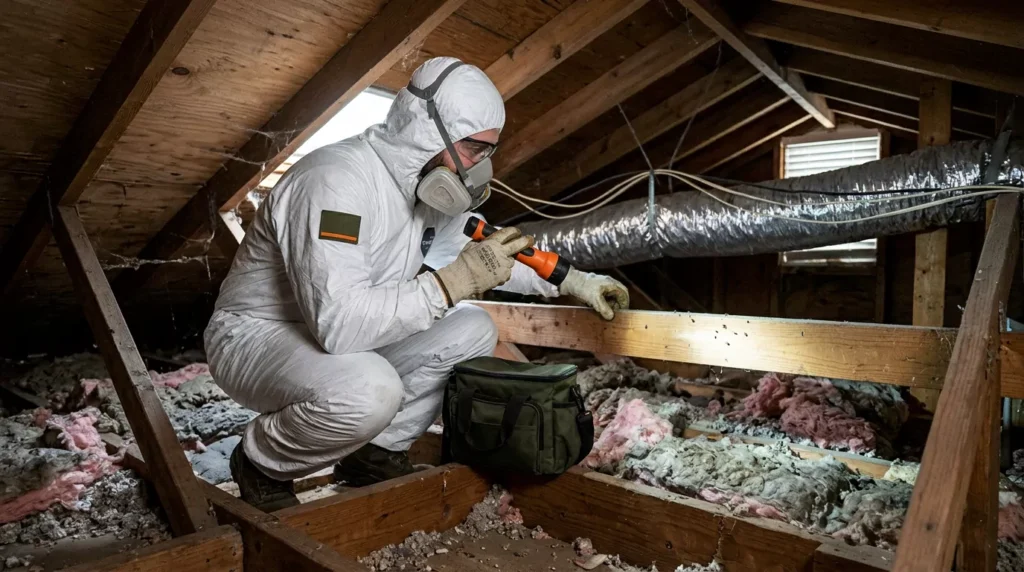
Removing rats does not automatically make the attic safe or clean. Droppings, urine, nesting debris, and contaminated insulation may remain after the animals are gone.
Rodent waste can contain infectious agents. Disturbing dried waste can also release contaminated particles into the air.
Safe cleanup precautions
For small, accessible areas, follow appropriate public-health guidance and the directions on the disinfectant you use.
- Assess the contamination. If waste is extensive, insulation is heavily contaminated, or the attic is poorly ventilated or difficult to access, use a trained remediation professional.
- Ventilate when appropriate. For enclosed areas, follow applicable public-health instructions for ventilation before cleanup.
- Wear suitable protection. Use appropriate disposable or washable gloves and other protective equipment required for the contamination level.
- Do not dry sweep or vacuum droppings. These methods can disturb contaminated material and create airborne particles.
- Wet the waste with an appropriate disinfectant. Follow the product’s label for application, coverage, and contact time.
- Remove contaminated material carefully. Collect treated droppings and nesting debris without creating dust, then place them in suitable bags according to local disposal guidance.
- Clean and disinfect affected surfaces. Use products appropriate for the material being treated and allow the specified contact time.
- Wash your hands and clean reusable equipment. Dispose of protective items appropriately.
Do not spray or fog an entire attic indiscriminately. A chemical mist is not a substitute for removing contaminated material, and some products are unsuitable for insulation, electrical components, or occupied indoor spaces.
If you find extensive rodent waste, do not disturb it before obtaining professional advice. Public-health guidance may recommend additional precautions in heavily contaminated enclosed spaces.
Does rat urine attract more rats?
Rodents leave scent marks and other signs as they move through an area. Residual waste may indicate previous activity, but it is too simplistic to claim that removing a particular scent guarantees that new rats will stay away.
The practical solution is to remove contamination safely, eliminate food and shelter opportunities, close access routes, and monitor for renewed activity.
What if a rat dies inside a wall?
A dead rat can produce a strong odor as decomposition progresses. The smell may persist until the carcass is removed or decomposes, and contaminated materials may require cleaning.
If you suspect a dead rat inside a wall or ceiling, avoid cutting into the structure without locating the animal and checking for electrical, plumbing, or other hazards. A pest control or remediation professional can help locate and remove the carcass safely.
6. How to Seal Rat Entry Points
Rodent exclusion means closing the routes rats use to enter a building. It is essential for preventing reinfestation after removal.
The correct repair depends on the opening, its location, the building material, and whether ventilation must be maintained.
Which materials are best for sealing rat holes?
| Material | Appropriate use | Important consideration |
| Galvanized steel hardware cloth | Protecting suitable vents and openings | Select a mesh gauge and opening size appropriate for the target rodent and installation |
| Sheet metal or metal flashing | Covering accessible gaps and repairing vulnerable edges | Must be fitted securely without damaging roof or wall components |
| Copper or steel mesh | Filling certain narrow gaps as part of a complete repair | Mesh alone may not provide a durable seal in every location |
| Rodent-resistant sealant | Closing suitable small joints and finishing repairs | Must be compatible with the substrate and used as directed |
| Expanding foam | Filling selected voids as part of a reinforced repair | Foam alone is not a dependable chew-proof barrier |
Avoid blocking vents with solid materials. Attic ventilation serves an important function, and an exclusion repair must preserve the intended airflow.
Inspect the roof and soffits
Roof edges, fascia boards, soffits, and roof-to-wall junctions deserve particular attention because defects in these areas can create direct access to attic spaces.
Look for loose panels, damaged wood, missing covers, gaps around pipes, and deterioration near the roofline. Have roof repairs completed by a qualified contractor when the work requires roof access or structural repair.
Do not forget lower-level entry points
Rats may enter through lower parts of the building and reach the attic through wall cavities or service routes.
Inspect accessible foundation openings, exterior-wall penetrations, garage connections, and utility entry points. Addressing only the attic opening may leave another route into the building.
7. How to Prevent Rats From Returning
Long-term prevention combines structural repairs, sanitation, and monitoring. Each measure addresses a different reason rats may continue to use the property.
Remove accessible food and water
Rats are more likely to remain around a property when food, water, and shelter are easy to obtain.
- Store rubbish in containers with secure lids.
- Clean up spilled birdseed and pet food.
- Avoid leaving pet food outside overnight.
- Remove fallen fruit where practical.
- Fix leaking outdoor taps and other unnecessary water sources.
- Store suitable food and supplies in rodent-resistant containers.
Good sanitation reduces attractants, but it will not compensate for an open roof gap or damaged vent.
Maintain trees, rooflines, and vents
Trim vegetation that provides easy access to the roof, particularly branches that touch or closely overhang the structure. The appropriate clearance depends on the tree, roof design, and other possible climbing routes.
Repair damaged soffits, maintain roof coverings, and install secure rodent-resistant screening on suitable vents. Check that protective covers remain firmly attached and do not obstruct necessary airflow.
Monitor the attic after treatment
Continue checking for:
- Fresh droppings.
- New gnaw marks.
- Renewed scratching or scurrying.
- Disturbed insulation.
- Signs of activity around repaired openings.
Inspect more frequently while verifying removal, then incorporate attic and roof checks into routine home maintenance.
If new evidence appears, revisit the inspection and exclusion plan. Repeated activity often means an access point, nesting area, or part of the infestation was missed.
8. DIY Rat Removal vs. Professional Pest Control
DIY control may be reasonable when activity is limited, the attic is safely accessible, the species is identified, and the homeowner can follow appropriate trapping and sanitation precautions.
Professional help is preferable when the infestation is extensive, access points are difficult to locate, rats are repeatedly returning, or contamination and structural damage require specialized work.
When should you call a professional?
Arrange a professional inspection if:
- Rats continue appearing despite appropriate trapping.
- You hear activity in inaccessible walls or ceiling cavities.
- The attic contains extensive droppings or contaminated insulation.
- Several entry points require roof or structural repairs.
- You suspect electrical wiring has been chewed.
- Children, pets, or non-target wildlife could be exposed to control products.
- You cannot safely access or clean the affected area.
Suspected damaged electrical wiring warrants assessment by a qualified electrician. Avoid touching damaged cables or attempting repairs while the electrical system may be energized.
What does professional rat removal cost?
The cost of removing rats from an attic varies with the infestation, the building, local labor rates, and the work included in the service.
| Cost factor | Why it matters |
| Inspection and access | Difficult-to-reach attics may require additional time or equipment |
| Infestation severity | Extensive or recurring activity may need multiple visits |
| Trapping and removal | The treatment method and follow-up requirements affect labor |
| Exclusion and repairs | The number, location, and complexity of openings influence repair costs |
| Cleanup and disinfection | Waste removal and contaminated-material handling add work |
| Insulation replacement | Damaged or heavily contaminated insulation may need partial or complete replacement |
| Monitoring and warranty | Follow-up visits and the scope of any written guarantee affect the total service package |
Ask for an itemized estimate that separates pest control from exclusion, cleanup, and repair work. This makes it easier to compare providers and understand what the quoted price actually covers.
How to choose a reliable pest control provider
Before hiring a company, ask:
- Will the inspection cover the attic and the building’s exterior?
- How will the provider confirm the likely species and locate access points?
- Which removal method will be used, and what are its risks?
- Does the estimate include sealing entry points or only trapping?
- Is contaminated insulation or waste removal included?
- How many follow-up visits are included?
- What does the written warranty cover, and what is excluded?
- Does the provider have the necessary licensing, insurance, and qualifications for the work?
A useful treatment plan should address both the existing rats and the conditions that allowed them to enter.
Frequently Asked Questions
How long does it take to get rid of rats in an attic?
The timeframe depends on the infestation’s size, rat behavior, access points, and the removal method. A small, accessible problem may be resolved more quickly than an infestation involving multiple nesting areas or wall cavities. Confirm that activity has stopped before treating the job as complete.
What is the fastest way to get rid of rats in an attic?
Inspect for active routes, use appropriately sized and safely positioned traps, and coordinate removal with exclusion. Professional pest control may be the quickest practical option when the infestation is extensive or the access points are difficult to reach. Avoid relying on poison or repellents as a guaranteed shortcut.
Should I seal rat holes before or after trapping?
Do not permanently seal an opening without accounting for rats that may still be inside. First establish a removal or exclusion plan, then confirm that animals are no longer occupying the spaces being closed. A qualified professional can coordinate trapping and exclusion when the entry route is difficult to manage.
Will rats leave an attic on their own?
They may leave temporarily in search of food or other resources, but this does not establish that the infestation has ended. Rats can return if suitable shelter and access remain available. Inspect the attic, address entry points, and monitor for renewed activity.
Do ultrasonic rat repellents work in attics?
Do not rely on ultrasonic devices as the primary solution. Their effectiveness can vary, and they do not repair access points or remove existing rats. Inspection, appropriate trapping or professional removal, exclusion, and sanitation are more dependable components of a control plan.
Can rats chew through expanding foam?
Yes. Expanding foam alone is not a reliable barrier against rodents. Use suitable metal mesh, sheet metal, or other rodent-resistant repairs appropriate for the opening, and use sealants only as compatible finishing materials.
Are rats in the attic dangerous?
They can pose health and property risks. Rat waste can contaminate surfaces, while gnawing can damage insulation and electrical wiring. Avoid disturbing accumulated waste, keep children and pets away from contaminated areas, and arrange appropriate cleanup and repairs.
Can I vacuum rat droppings in the attic?
Do not dry vacuum rodent droppings. Vacuuming can disturb contaminated material and release particles into the air. Follow applicable public-health cleanup guidance, wet the waste with an appropriate disinfectant, and seek professional help for extensive contamination.
What should I do if I still hear rats after trapping?
Reinspect the attic for fresh droppings, new gnaw marks, and other signs of activity. Check whether traps are positioned along current travel routes and whether other access points remain open. If activity persists or is located in inaccessible spaces, arrange a professional inspection.
How can I stop rats from returning permanently?
No single measure guarantees permanent prevention. Reduce the risk by removing the current infestation, sealing access points with suitable materials, repairing roof and soffit damage, securing food and waste, and monitoring for new activity.

Daniel Carter specializes in attic maintenance, insulation, ventilation, moisture control, and home improvement. He understands common attic problems and their practical solutions. Through clear, informative guides, he helps homeowners identify issues, prevent damage, improve energy efficiency, and maintain safer, healthier homes.
One thought on “How to Get Rid of Rats in the Attic: Safe Removal and Prevention”