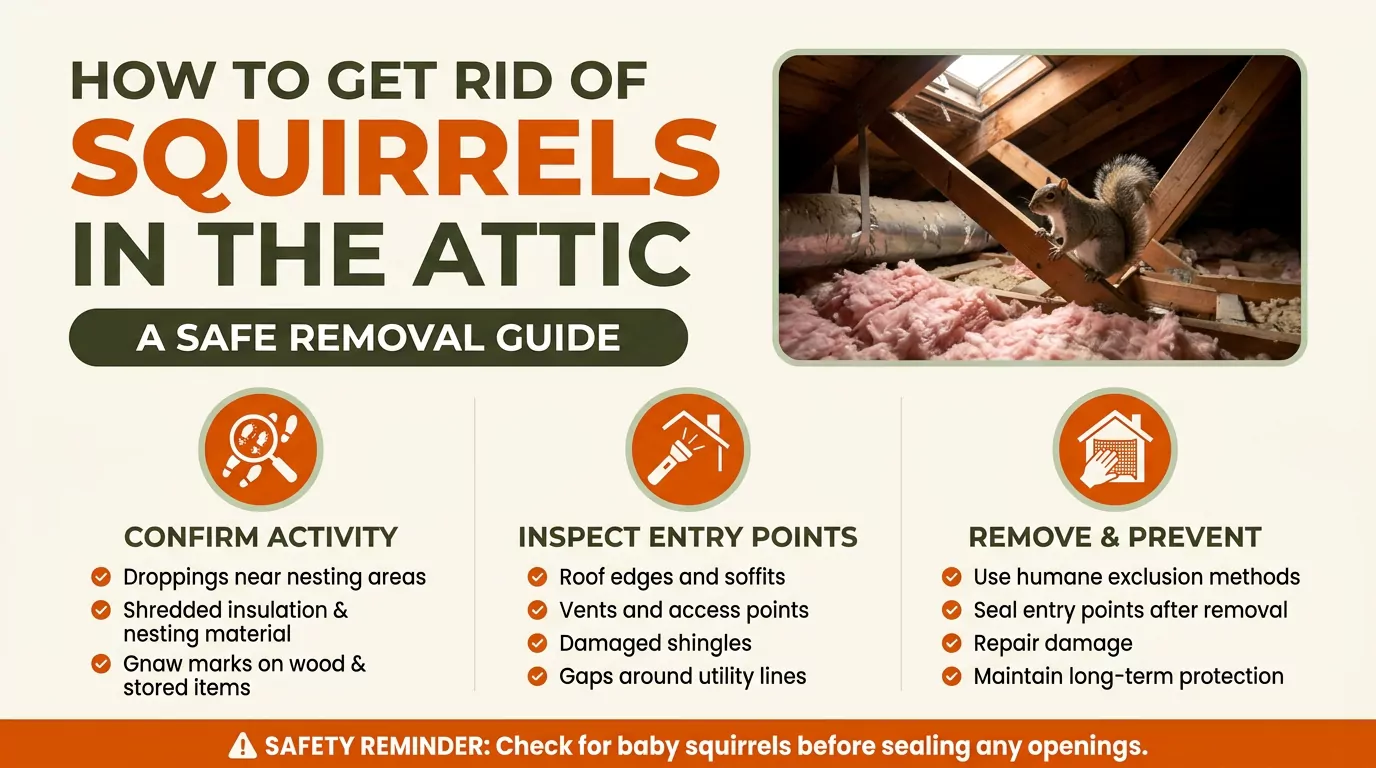
How to Get Rid of Squirrels in the Attic: A Safe Removal Guide
To get rid of squirrels in your attic, identify their entry points and check for baby squirrels first. Then, use an appropriate exclusion method to help them leave safely. Seal openings only after confirming every squirrel is out. Finally, repair damage, clean contaminated areas, and prevent future entry.
Avoid sealing holes while squirrels remain inside. Trapped animals may damage your home while trying to escape. You could also separate a mother from her dependent young.
This guide explains how to remove squirrels safely, protect your attic, and prevent another infestation.
How to Get Rid of Squirrels in Your Attic
Removing squirrels requires more than closing the hole they use. You must identify their activity, account for nesting animals, and secure every possible entrance.
Follow these steps to plan the removal process.
Step 1: Confirm Squirrel Activity
Start by determining whether squirrels are responsible for the noises in your attic.
Listen for scratching, running, chewing, and movement above your ceiling. Squirrels often become noticeable during daylight hours. However, their activity patterns can vary.
Look for these additional signs:
- Droppings near nesting areas or along attic surfaces.
- Shredded insulation, leaves, paper, or other nesting materials.
- Gnaw marks on wood, roof edges, and stored items.
- Damaged wiring or disturbed insulation.
- Small openings around roof edges, vents, or soffits.
- Squirrels entering or leaving a roof opening.
No single sign confirms a squirrel infestation. Other animals can create similar noises and damage.
If the evidence is unclear, consider a professional wildlife inspection. Correct identification helps you choose an appropriate removal method.
Step 2: Inspect the Attic and Locate Entry Points
Once you suspect squirrels, inspect the attic and exterior of your home.
Check for openings around the roofline, soffits, fascia boards, and vents. Also examine damaged shingles and gaps around utility lines.
Squirrels may use several access points. Closing only the most obvious hole may not solve the problem.
Look for gnaw marks, loose materials, nesting debris, and tracks in dusty areas. Avoid climbing onto a steep roof or entering an unsafe attic space.
Use a flashlight to inspect accessible areas. Watch for exposed wires, unstable flooring, sharp objects, and damaged insulation.
Make a list of suspected entry points before planning any repairs. This helps you avoid overlooking secondary openings.
Step 3: Check for Baby Squirrels
Always consider whether a mother squirrel has a nest inside your attic.
Female squirrels may use attics to raise their young. A nest can contain dependent babies that cannot leave without their mother.
Look for concentrated nesting materials and repeated movement near one location. You may also hear faint squeaking or sounds from inside a wall cavity.
However, these signs do not always reveal the nest’s exact location.
Do not install a one-way door or seal the opening until you have assessed the risk of dependent young.
If babies are present, consult a qualified wildlife removal professional. They can determine whether the family can leave together or needs careful intervention.
Do not assume that every litter will become independent after the same number of weeks. Development and breeding seasons vary by species and region.
Never seal young squirrels inside a wall or attic. This can cause suffering, decomposition, and additional cleanup problems.
Step 4: Choose a Suitable Removal Method
The best method depends on the number of squirrels, their nesting behavior, and the building’s condition.
| Removal method | When it may help | Important limitation |
| One-way exclusion door | Suitable situations where squirrels can safely leave through a controlled opening | Requires correct installation and confirmation that no animals remain |
| Professional wildlife removal | Difficult access, suspected babies, or recurring infestations | Service costs depend on the work required |
| Live trapping | Certain situations where lawful and appropriate | Requires careful monitoring and a lawful, humane plan |
| Temporary deterrents | May encourage some squirrels to move away from an area | Rarely resolves an established infestation alone |
| Structural exclusion | Prevents future entry after removal | Must not trap squirrels inside |
For many attic infestations, carefully planned exclusion is preferable to repeated trapping. However, the presence of dependent young may require a different approach.
If the attic has multiple openings, a professional can determine which ones need temporary protection and which should be sealed immediately.
Step 5: Use a One-Way Exclusion Door When Appropriate
A one-way exclusion door allows squirrels to leave an attic but restricts their return.
The device fits over a confirmed exit opening. Its design allows outward movement while blocking entry from the outside.
A successful installation must account for other openings. Otherwise, squirrels may bypass the device or use another entrance.
The installer must also consider whether every squirrel can reach the exit. Animals trapped behind internal barriers may not be able to leave.
Before using an exclusion door:
- Confirm that dependent young are not trapped inside.
- Identify other openings that could allow re-entry.
- Select a suitable device for the opening and squirrel activity.
- Secure the device so squirrels cannot push around it.
- Monitor activity and verify that all animals have exited.
One-way exclusion is not suitable for every building or situation. Professional assistance is advisable when the nest location is uncertain or access is difficult.
Step 6: Confirm All Squirrels Have Left
Do not assume the attic is empty just because the noises stop.
Monitor the exclusion device and look for continued movement around the roofline. Check for new scratching sounds and other signs of activity.
A piece of paper or another simple indicator may provide clues about movement. However, it cannot prove that every squirrel has left.
A squirrel might remain inside without disturbing the indicator. Others might use an opening that you have not identified.
Wait until you have reliable evidence that the attic is empty before permanently sealing the final exit.
If activity continues, reassess the entry points and nesting areas. A wildlife professional can help confirm whether removal is complete.
Step 7: Seal Entry Points and Repair Damage
Once all squirrels are out, permanently secure the openings.
Use durable materials that resist gnawing. Depending on the location, suitable repairs may include metal flashing, sheet metal, corrosion-resistant hardware cloth, and properly secured vent covers.
Choose materials that fit the structure and local building requirements.
Pay particular attention to:
- Damaged soffits and fascia boards.
- Gaps around roof edges and eaves.
- Loose or damaged roof vents.
- Openings around utility lines.
- Broken roof components and damaged shingles.
- Gaps where roof sections meet.
Plastic screening and weak materials may not withstand squirrel chewing.
Do not block required attic ventilation. Vent covers and repairs must allow the necessary airflow while preventing wildlife access.
If squirrels have damaged roofing, consult a qualified roofer. If wiring appears chewed or exposed, have an electrician inspect it before using affected circuits.
Step 8: Clean and Inspect the Attic
After removal, inspect the attic for droppings, urine, nesting debris, and damaged insulation.
Squirrel waste can contaminate surfaces and materials. Heavy contamination may require professional cleaning and insulation replacement.
Do not immediately sweep or vacuum dry droppings. These activities can release contaminated dust into the air.
For significant contamination, extensive nesting, or damaged insulation, consider a qualified remediation service. Follow appropriate protective measures and product instructions for any cleanup work.
After cleaning, inspect the attic for lingering odors, moisture, and damaged building materials. Repair the source of any water intrusion or structural damage.
A clean attic is easier to monitor for renewed activity.
Signs You Have Squirrels in Your Attic
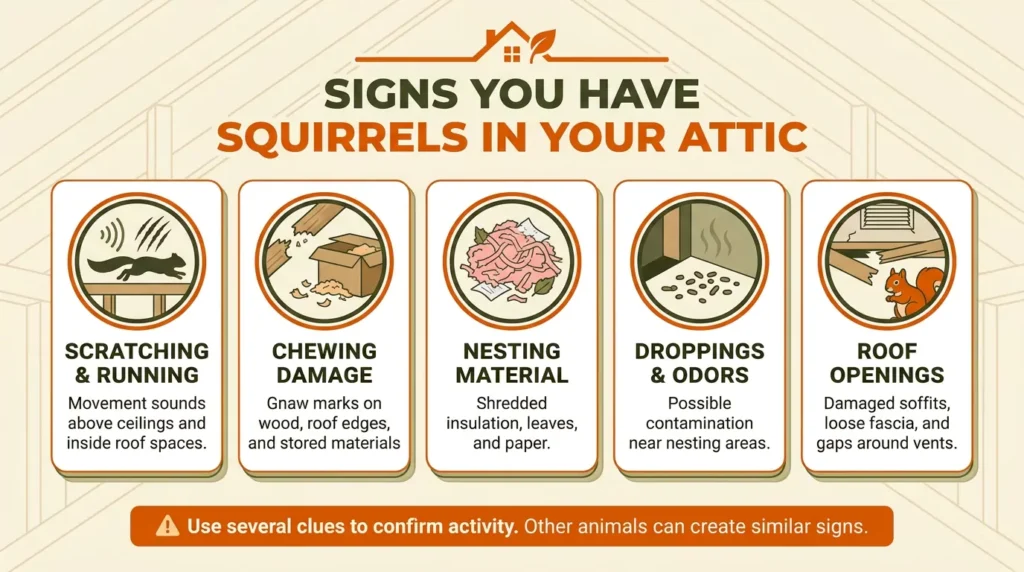
Recognizing squirrel activity helps you act before damage becomes extensive.
Scratching, Running, and Chewing Noises
Squirrels may create quick running sounds, scratching, gnawing, and movement above ceilings.
These noises can occur as animals travel between nesting areas and exterior openings. Chewing sounds may indicate activity around wood or other building materials.
Noise alone cannot confirm the animal’s identity. Rats, mice, raccoons, and other wildlife can also produce sounds inside buildings.
Droppings and Nesting Materials
Squirrel nests may contain leaves, shredded paper, insulation, and other available materials.
You might notice disturbed insulation, droppings, urine odors, or gnaw marks near these areas.
Avoid handling droppings or nesting debris without appropriate precautions. If contamination is extensive, seek professional cleaning advice.
Squirrel Noises Versus Rat Noises
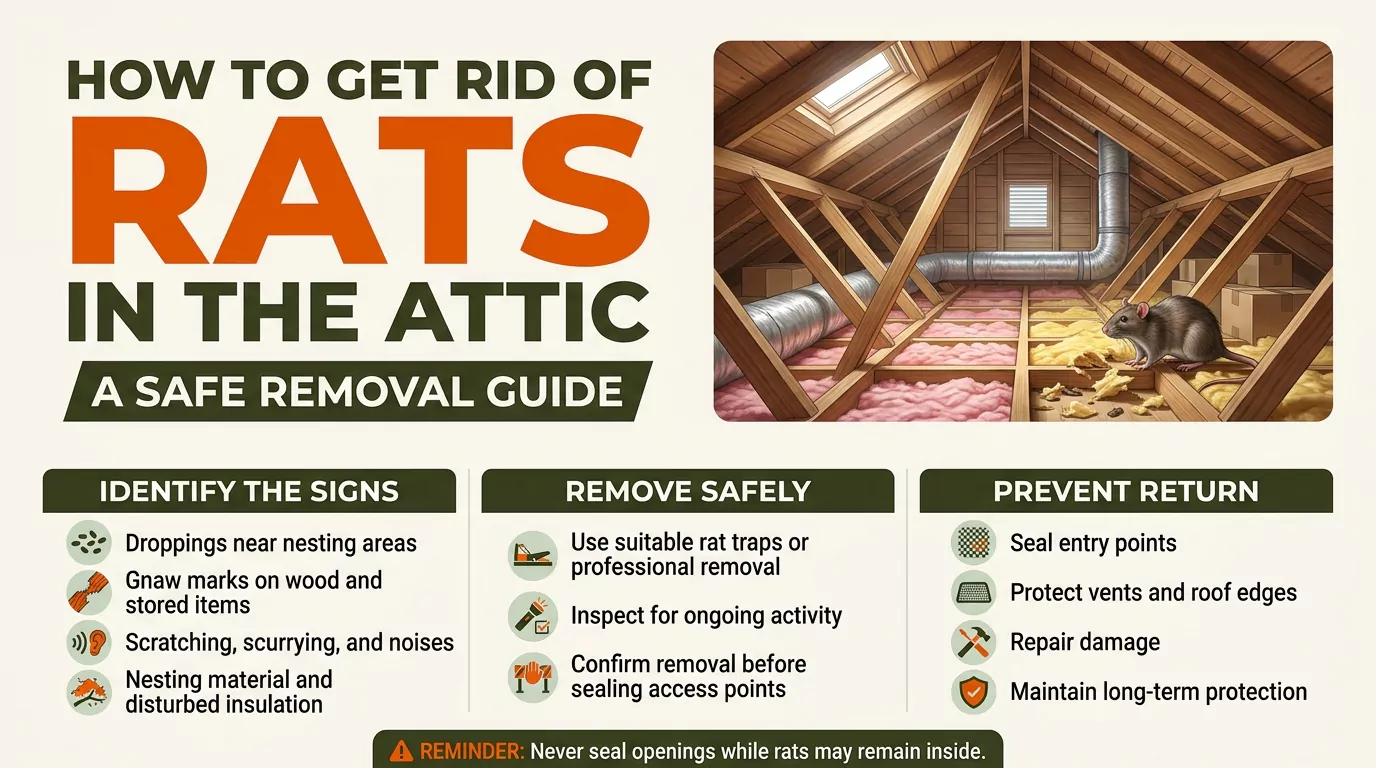
Squirrels and rats can both occupy attics. Their activity may overlap, so use several clues instead of relying on noise alone.
| Clue | Possible squirrel activity | Possible rat activity |
| Movement sounds | Running and scrambling, often during daylight | Scratching and movement, often at night |
| Chewing | May damage roof edges, wood, and wiring | May damage wiring, wood, and stored materials |
| Entry evidence | Gnawed roofline gaps, soffits, or vents | Small gaps, gnaw marks, and openings around utilities |
| Visual evidence | A squirrel entering or leaving the roof | A rat seen near walls, pipes, or other access routes |
| Nesting | Leaves, insulation, and other materials | Shredded materials in sheltered spaces |
These are general clues, not definitive identification rules. Activity patterns can overlap, and individual animals behave differently.
If you cannot identify the animal confidently, arrange an inspection before choosing a removal method.
How Squirrels Get Into Attics
Squirrels are skilled climbers. They can reach roofs through trees, fences, nearby structures, and other climbing routes.
Once on the roof, they may exploit weak or damaged building materials.
Roof Gaps, Soffits, and Fascia Boards
Soffits cover the underside of roof overhangs. Fascia boards run along roof edges and often support gutters.
Damaged or loose sections can create openings into roof cavities. Squirrels may also enlarge weak spots by chewing.
Inspect these areas for fresh gnaw marks, loose boards, and damaged joints.
Roof Vents and Utility Openings
Unprotected vents can provide access to attic spaces. Gaps around cables, pipes, and other exterior penetrations can also become entry routes.
Install compatible, durable covers where needed. Ensure the repairs preserve ventilation and do not interfere with equipment.
Tree Branches and Nearby Structures
Overhanging branches can provide squirrels with convenient access to roofs.
Trim branches where appropriate and maintain suitable clearance around the building. Remember that squirrels can climb and jump, so pruning alone may not prevent access.
Also check nearby fences, sheds, and structures that create routes toward the roof.
What Is the Most Humane Way to Remove Squirrels?
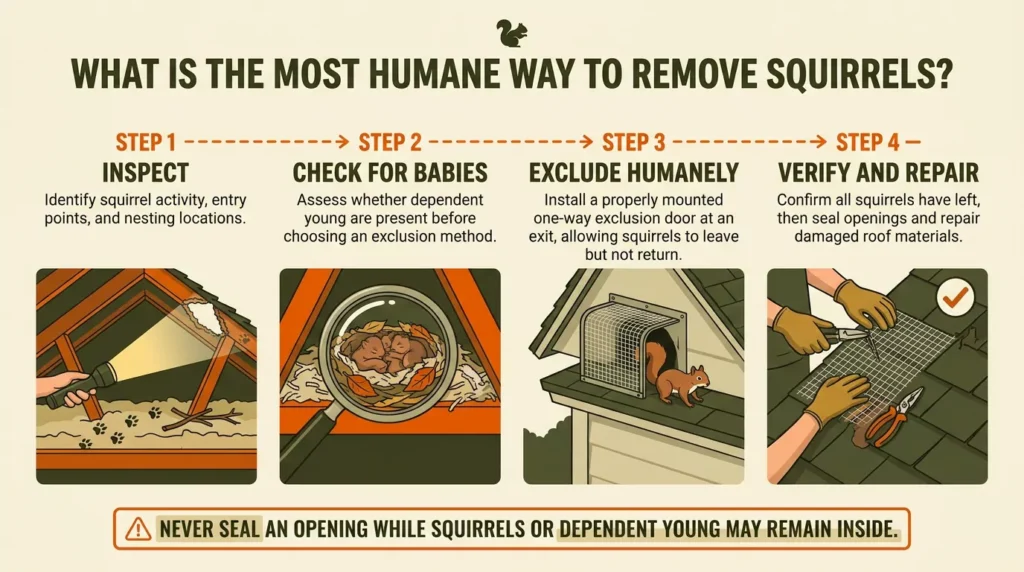
Humane removal aims to resolve the infestation without unnecessary injury or suffering.
The right approach depends on the animals’ location, nesting status, and available exit routes.
Use Exclusion Instead of Poison
Poison is not an appropriate DIY solution for squirrels in an attic.
A poisoned animal may die inside a wall or inaccessible roof cavity. This can create odor, sanitation problems, and additional removal costs.
Toxic products can also expose pets, children, and other wildlife to harm.
Prioritize appropriate exclusion and professional assistance instead.
Understand the Limits of Squirrel Repellents
Scent-based repellents may discourage some squirrel activity. However, their effectiveness varies, particularly when animals have established a nest.
Some homeowners try peppermint oil, vinegar, or commercial deterrents. These products should not replace proper inspection and exclusion.
Never mix household chemicals to create a repellent. Follow product labels and keep chemicals away from children and pets.
Do Ultrasonic Devices Work?
Ultrasonic devices are marketed as ways to discourage pests without physical contact.
Their effectiveness against established squirrel infestations is uncertain. They should not be relied on as the main removal method.
Even if a device changes animal behavior temporarily, it does not repair the opening that allowed entry.
Should You Trap and Relocate Squirrels?
Live trapping may be considered in certain situations, but it has important limitations.
Trapped squirrels can experience stress or injury. Improper handling may also expose people to bites and scratches.
Relocation can be restricted by local wildlife rules. Moving an animal may also separate a mother from her young or place it in an unfamiliar environment.
Before trapping, check the applicable laws and consider professional advice. Do not assume that releasing an animal far from your property is always humane or lawful.
What to Do If Baby Squirrels Are in the Attic
Baby squirrels need their mother until they can survive independently.
If you suspect a nest, avoid sealing openings or installing exclusion equipment until the situation has been assessed.
A qualified wildlife professional can inspect the nesting area and recommend a suitable approach.
Depending on the circumstances, the solution may involve allowing the family to leave together or using a careful reunification process.
Do not move young squirrels outside and assume the mother will find them. Successful reunification is not guaranteed, and the young may become exposed to weather or predators.
If the mother is trapped outside, she may repeatedly try to regain access. Continued attempts to enter can indicate that young remain inside.
Address the nesting issue before completing permanent exclusion.
When to Hire a Professional Wildlife Removal Service
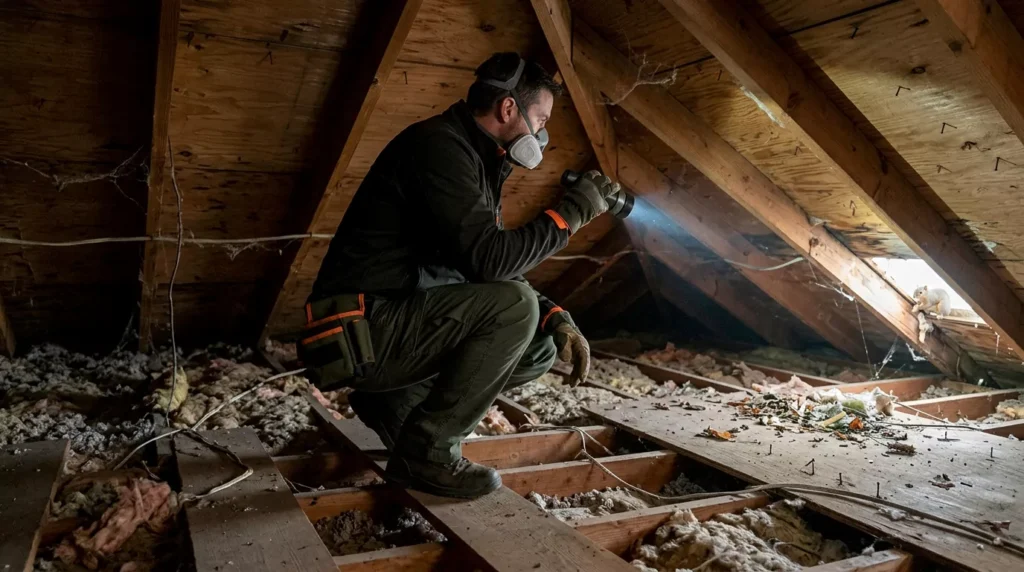
Professional help is especially useful when squirrels occupy inaccessible roof cavities or have repeatedly returned.
Consider hiring a qualified wildlife removal specialist if:
- You suspect baby squirrels are inside.
- The nest is hidden behind walls or inaccessible insulation.
- Several entry points are difficult to reach.
- Squirrels keep returning after previous repairs.
- You cannot confirm that every animal has left.
- The roof is steep, high, damaged, or unsafe to access.
- Wiring, insulation, or structural materials appear damaged.
- Significant contamination requires specialized cleanup.
What Should a Professional Service Include?
A thorough service should assess the entire problem rather than remove only the visible animal.
Ask whether the provider offers:
- A full attic and exterior inspection.
- Assessment of nesting animals and dependent young.
- An appropriate exclusion plan.
- Durable entry-point repairs or referrals for those repairs.
- Follow-up monitoring when necessary.
- Cleanup and insulation remediation, if required.
- Written service terms and warranty details.
Check local licensing and permit requirements where applicable. Ask about insurance, experience, and the limits of any removal guarantee.
A written estimate should explain which services are included and which repairs cost extra.
How Much Does Squirrel Removal Cost?
Squirrel removal costs vary by location and the complexity of the infestation. There is no single price that applies to every home.
The main cost factors include the following:
| Cost factor | Why it affects the price |
| Inspection | The provider must identify activity and locate access points |
| Roof access | Steep roofs and difficult entry locations may require additional labor |
| Removal method | Exclusion and trapping involve different equipment and service needs |
| Nesting animals | Dependent young may require additional assessment and care |
| Entry-point repairs | Damaged roof edges, vents, and soffits may need repair |
| Attic cleanup | Contaminated insulation and nesting debris may require removal |
| Follow-up service | Monitoring and warranty terms vary between providers |
Request itemized quotes from qualified local companies. Compare the scope of work, not just the initial price.
Ask whether the estimate includes permanent repairs, cleanup, and follow-up visits. A cheaper removal that leaves the entry points open may not solve the underlying problem.
Homeowners insurance coverage also varies by policy and circumstances. Review your policy or contact your insurer before assuming removal or repair costs are covered.
How to Prevent Squirrels From Returning
Long-term prevention depends on strong repairs and regular maintenance.
Protect Roof Openings
Inspect soffits, fascia boards, vents, and roof edges regularly. Repair loose materials before squirrels can enlarge the openings.
Use suitable metal barriers and secure vent covers where needed. Avoid blocking required ventilation.
Maintain Trees and Exterior Areas
Trim branches that provide easy access to the roof. Remove fallen nuts and fruit when practical.
Keep garbage secured and avoid leaving accessible food near the house. If bird feeders attract repeated squirrel activity near the roof, reconsider their placement.
These measures can reduce attractants, but they cannot guarantee that squirrels will stay away.
Inspect the Attic After Removal
Monitor the attic for new noises, droppings, disturbed insulation, and damage around repaired openings.
Arrange another inspection if activity returns. A recurring problem may indicate an overlooked entry point or an incomplete repair.
Schedule Routine Maintenance
Check roof edges, vents, and exterior materials during routine home maintenance. Inspect vulnerable areas after storms or roof repairs.
Early repairs are usually easier to manage than extensive damage discovered later.
Frequently Asked Questions
How long does squirrel removal take?
The time depends on the number of squirrels, their location, and whether dependent young are present. Straightforward exclusion may require less time than a complex infestation. Repairs and cleanup can extend the overall process.
Will squirrels leave an attic on their own?
They may leave temporarily to search for food, but that does not mean the infestation has ended. Squirrels can return to established nesting areas. Confirm their departure and secure the entry points before considering the problem resolved.
Do lights or loud noises keep squirrels away?
Bright lights and noise may discourage some squirrel activity temporarily. However, results vary, and squirrels may adapt. These methods do not replace proper exclusion and structural repairs.
Can squirrels chew through metal mesh?
Squirrels can damage poorly selected or loosely installed barriers. Properly secured metal mesh designed for the application offers better protection than plastic screening. Material choice and installation quality both matter.
Is squirrel removal covered by homeowners insurance?
Coverage depends on your policy, the cause of the damage, and applicable exclusions. Some policies treat animal damage differently from sudden accidental damage. Review your policy and ask your insurer about your specific situation.
Can squirrels return after removal?
Yes. Squirrels may return if openings remain accessible or repairs fail. Inspect the entire roofline and secure vulnerable areas with durable materials. Continue monitoring for new activity.
Should you clean squirrel droppings yourself?
Small cleanup tasks may be manageable with appropriate precautions. However, extensive droppings, contaminated insulation, strong odors, or inaccessible nesting areas may require professional remediation. Avoid dry sweeping or vacuuming droppings because this can spread contaminated dust.
What should you do if a squirrel enters your living space?
Keep children and pets away from the animal. If possible, isolate the room and provide a clear exit through an exterior door or window. Do not corner or handle the squirrel. Contact a wildlife professional if it cannot leave safely.
Conclusion
Getting rid of squirrels in your attic requires careful inspection, appropriate removal, and lasting repairs.
Start by confirming squirrel activity and checking for dependent young. Choose a suitable exclusion method, then verify that every squirrel has left before sealing the openings.
Repair damaged roof materials, inspect wiring, and address contaminated insulation when necessary. Finally, maintain the roofline and monitor the attic for renewed activity.
A complete approach protects your home while reducing the risk of another infestation.

Daniel Carter specializes in attic maintenance, insulation, ventilation, moisture control, and home improvement. He understands common attic problems and their practical solutions. Through clear, informative guides, he helps homeowners identify issues, prevent damage, improve energy efficiency, and maintain safer, healthier homes.