How to Get Rid of Bats in the Attic Safely
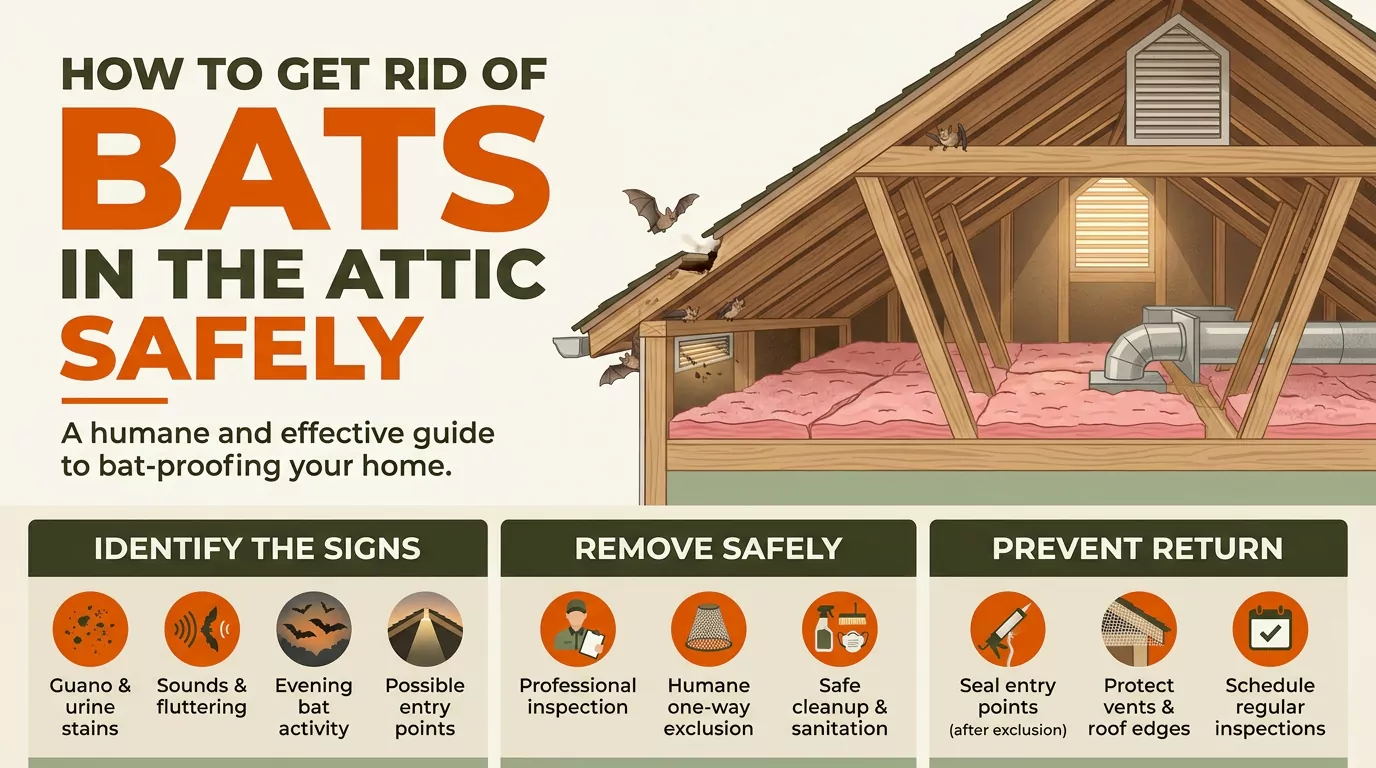
Bats in your attic require careful removal, proper timing, and permanent prevention. Humane exclusion is generally the preferred method for removing an established bat colony. It allows bats to leave while preventing them from returning.
However, exclusion must follow local wildlife regulations and seasonal restrictions. Sealing openings too early can trap bats inside your home.
Start by identifying bat activity and locating possible entry points. Then arrange an appropriate removal plan before sealing openings. This guide explains the process, health risks, cleanup, costs, and prevention.
What Is the Safest Way to Remove Bats From an Attic?
The safest approach is to inspect the property and plan humane bat exclusion. This process allows bats to exit through designated openings without returning.
Avoid poisons, glue traps, and methods that could injure bats. These approaches can create additional hazards and may violate wildlife regulations.
Your next steps depend on the situation:
- One bat indoors: Isolate the room and prevent contact with people and pets.
- Several bats in the attic: Arrange an inspection to assess the colony and entry points.
- Possible human or pet exposure: Seek prompt medical, public health, or veterinary advice.
- Heavy guano accumulation: Avoid disturbing the waste and arrange professional cleanup.
- Bats active during breeding season: Check local restrictions before proceeding with exclusion.
For an established colony, the goal is complete removal without trapping animals inside. Permanent repairs and suitable cleanup help protect your home afterward.
Signs You Have Bats in Your Attic
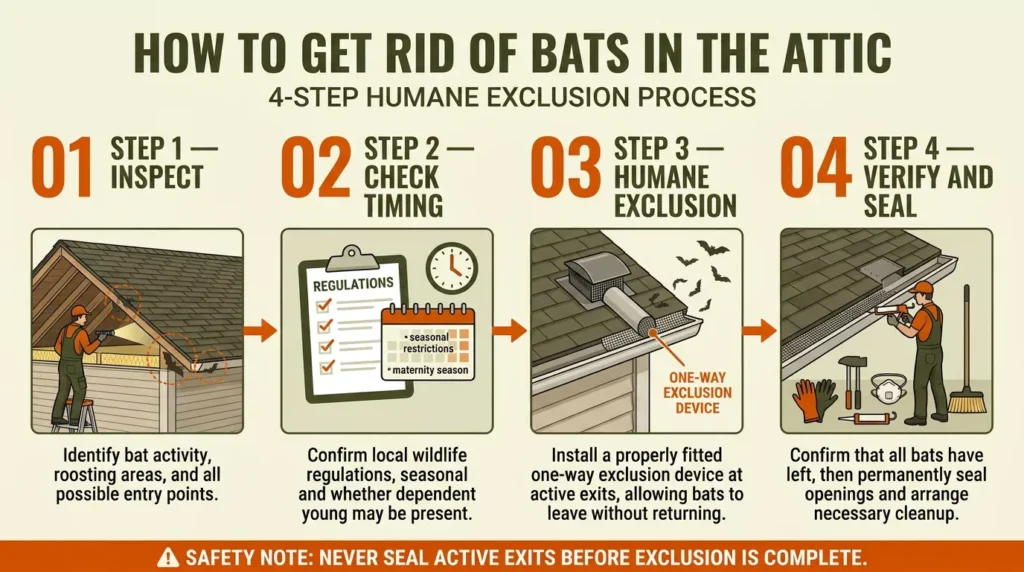
Bats often remain hidden during daylight hours. However, their activity can leave several clues around your property.
Bat Droppings and Urine Stains
Bat droppings are commonly called guano. They may accumulate beneath roosting areas and exterior entry points.
Guano can resemble rodent droppings, so appearance alone may not confirm bats. Look for additional evidence, including flight activity and dark marks around openings.
Other signs include:
- Droppings on attic floors or window ledges.
- Dark stains around roof gaps and exterior walls.
- Persistent odors from accumulated droppings and urine.
- Contaminated insulation beneath suspected roosting areas.
Avoid touching droppings or disturbing accumulated waste during inspection.
Scratching, Squeaking, and Fluttering Sounds
Bats may produce faint squeaks, scratching sounds, or fluttering noises. These sounds can occur around dusk and before sunrise.
However, other animals can produce similar noises. Squirrels, mice, and birds may also occupy roof spaces.
Combine sound evidence with exterior observations before deciding which removal method is appropriate.
Bats Entering or Leaving at Dusk
One useful inspection method is watching your roofline around sunset. Bats may emerge from their roosts to feed.
Observe the property from a safe location. Look for repeated flight activity around eaves, vents, and roof gaps.
Repeat observations when weather conditions allow. Some bats may remain inside during unsuitable weather.
Common Bat Entry Points
Bats use existing openings rather than chewing through building materials. Small gaps can provide access to sheltered attic spaces.
Inspect these exterior areas visually:
- Roof edges, eaves, and soffits.
- Loose shingles and damaged flashing.
- Gaps around fascia boards.
- Gable vents and roof vents.
- Uncapped or damaged chimney openings.
- Spaces around pipes, cables, and utility penetrations.
Do not climb onto unstable roofs or enter hazardous attic spaces. A professional can inspect inaccessible areas safely.
How to Get Rid of Bats in the Attic
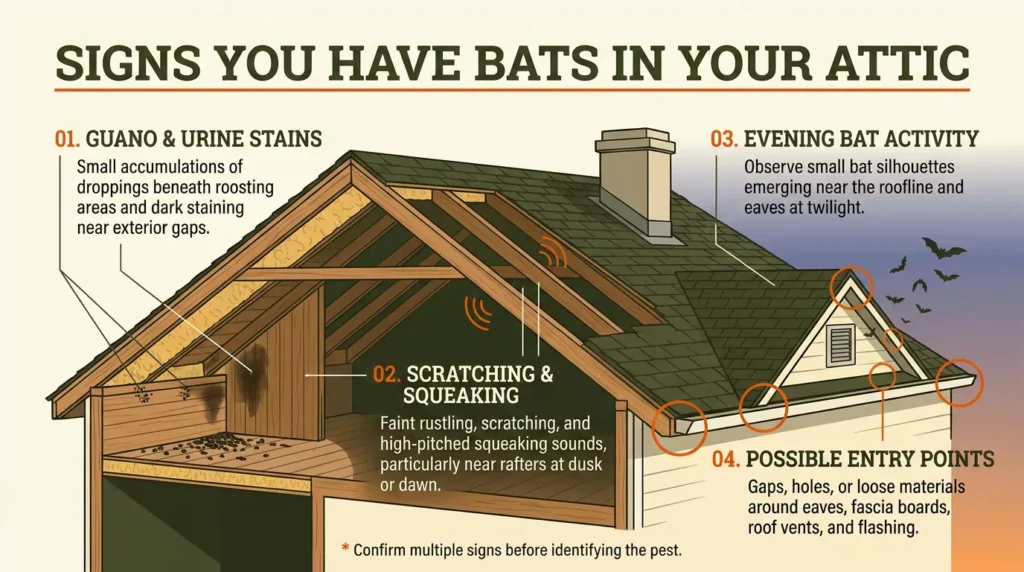
Removing an attic colony requires planning, monitoring, and careful repairs. Follow these general stages, with a wildlife professional guiding complex exclusion work.
Step 1: Inspect the Attic and Identify Bat Activity
Begin by examining exterior signs of bat activity. Look for droppings, staining, and repeated flight paths.
A professional attic inspection can help identify:
- Active and unused entry points.
- Potential roosting locations.
- Colony activity and possible dependent young.
- Contaminated insulation or building materials.
- Roof damage that requires repair.
Bat species identification may also affect legal requirements and removal timing. Avoid handling bats to determine their species.
Step 2: Check Seasonal Restrictions and Local Regulations
Exclusion timing is one of the most important parts of removal. Some colonies contain flightless pups during maternity season.
If adults cannot reach their young, exclusion may leave pups trapped inside. Winter conditions can also make exclusion unsuitable for certain species.
There is no universal removal calendar for every bat species and location.
Before starting, confirm:
- Which bat species may occupy the building.
- Whether local laws protect the species or colony.
- Whether dependent young may remain inside.
- Whether seasonal restrictions apply.
- Whether weather conditions support safe exclusion.
Contact your local wildlife authority or a qualified bat removal specialist. Do not rely on fixed calendar dates alone.
Step 3: Identify Active Exit Points
Bats may use several openings to enter and leave an attic. Identifying all active openings helps prevent incomplete exclusion.
A specialist should inspect the roofline and other accessible exterior areas. The inspection should distinguish active exits from unrelated building gaps.
Secondary openings may need sealing before exclusion begins. However, active exits must remain available until suitable exclusion devices are installed.
Incorrect sealing can trap bats inside walls or roof cavities. It can also force them into occupied areas.
Step 4: Install Suitable One-Way Exclusion Devices
One-way exclusion devices allow bats to leave while restricting their return. Common designs include specialized tubes, valves, and suitable netting systems.
The correct device depends on the opening, building design, and bat behavior.
A suitable exclusion plan should account for:
- The number and location of active exits.
- The device’s fit and installation position.
- Potential alternative openings.
- The presence of dependent young.
- Weather and expected bat activity.
Do not assume ordinary plastic netting will work in every situation. Poorly fitted devices can trap bats or allow re-entry.
Professional installation is advisable for established colonies and difficult roof access.
Step 5: Monitor Activity and Confirm the Bats Have Left
After installation, bats need suitable opportunities to exit. The required monitoring period depends on the colony and environmental conditions.
A fixed seven-to-fourteen-day period is not guaranteed to suit every situation.
Poor weather may delay emergence. Some bats may also use different exits or remain inside temporarily.
Monitor the designated openings and check the exclusion equipment regularly. A specialist should confirm that no bats remain before final sealing.
Never rely on silence alone as proof that the attic is empty.
Step 6: Seal Remaining Entry Points
Once exclusion is complete, permanent repairs help prevent bats from returning.
Suitable materials may include durable sealants, metal mesh, flashing, and replacement building materials. The best choice depends on the opening and surrounding surface.
Seal verified gaps around:
- Roof edges and fascia boards.
- Damaged siding and exterior joints.
- Suitable vent openings with appropriate screening.
- Gaps around pipes and utility penetrations.
- Damaged roof materials and flashing.
Do not block required ventilation or create chimney and fire hazards. Screens must preserve the intended airflow.
A final exterior inspection helps identify overlooked openings.
Step 7: Arrange Safe Cleanup and Repairs
Bat colonies can leave droppings, urine, contaminated insulation, and persistent odors. These materials may require specialized cleanup.
Small amounts and extensive contamination do not present identical cleanup challenges. The correct approach depends on the quantity, location, and condition of the waste.
A professional assessment may identify the need for:
- Careful removal of accumulated guano.
- Appropriate protective equipment and containment.
- Specialized filtration and dust-control procedures.
- Removal or replacement of contaminated insulation.
- Cleaning of affected surfaces.
- Repairs to damaged building materials.
Avoid sweeping or vacuuming dry guano. Disturbing contaminated material can release particles into the air.
Extensive contamination should be handled by trained remediation professionals.
Five Safe Ways to Handle a Bat Problem
The best response depends on whether one bat entered your living space or a colony occupies your attic.
| Method | Best suited for | Important consideration |
| Isolate the affected room | A single bat indoors | Keep people and pets away. |
| Provide a suitable exterior exit | An isolated bat with no suspected exposure | Do not approach or chase the animal. |
| Arrange a professional wildlife inspection | Suspected attic activity | Specialists can assess entry points and risks. |
| Use planned one-way exclusion | An established attic colony | Timing and installation require careful planning. |
| Seal verified openings | Preventing re-entry after exclusion | Confirm that bats have left first. |
Method 1: Isolate a Bat in a Living Space
If a bat enters a room, close interior doors to limit its movement. Keep children and pets outside the affected area.
Do not chase the bat or strike it with a broom. Avoid touching it, even if it appears inactive.
If human or pet contact may have occurred, contact the appropriate health authority or veterinarian. Follow their instructions before attempting capture or release.
Method 2: Provide a Suitable Exterior Exit
If there has been no suspected exposure, a bat may leave through an accessible exterior opening. Close off access to other rooms and keep people away.
Opening an exterior window or door may provide an exit when conditions are suitable. Do not attempt this if the bat could escape into another occupied area.
If the bat remains inside, seek guidance from a wildlife professional. Never handle it with bare hands.
Method 3: Arrange a Professional Wildlife Inspection
A specialist can determine whether the problem involves one bat or an established colony.
The inspection should identify possible exits, assess seasonal restrictions, and recommend a safe plan.
This is especially useful when bats repeatedly appear indoors. Repeated sightings may indicate an opening between the attic and living areas.
Method 4: Use Planned One-Way Exclusion
One-way exclusion is generally the preferred approach for an attic colony. It allows bats to leave without returning through designated openings.
The process requires suitable timing, correct installation, and monitoring. Improper installation may leave bats trapped inside.
A professional should assess the colony before exclusion begins.
Method 5: Seal Verified Openings
Sealing openings prevents bats from using them again. However, the timing matters as much as the repair itself.
Close unused gaps when appropriate, but preserve active exits until exclusion is complete. Confirm that bats and dependent young are not trapped inside.
After removal, inspect repairs regularly for damage or newly discovered gaps.
When Should You Hire a Professional Bat Removal Service?
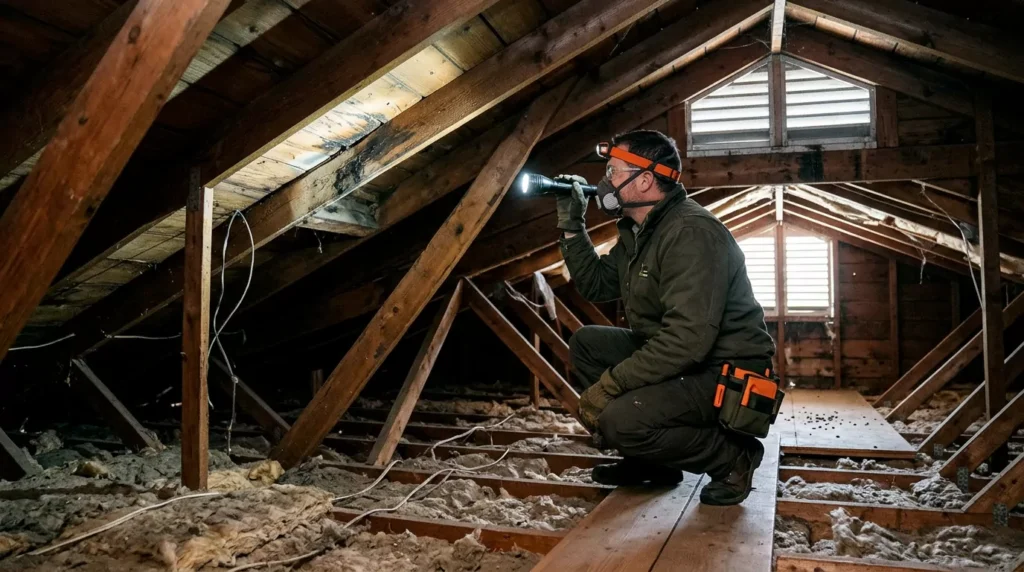
Professional help is advisable when bats occupy an attic, especially when the colony’s size or location is uncertain.
Wildlife specialists understand exclusion equipment, seasonal restrictions, and the risks associated with contaminated attic spaces.
Large Colonies and Difficult Roof Access
Professional assistance is particularly useful when bats occupy inaccessible roof cavities. High roofs, steep pitches, and damaged structures create additional risks.
Specialists can inspect difficult areas and identify multiple entry points. They can also recommend repairs that reduce the chance of re-entry.
Maternity Colonies and Protected Species
Some bat species receive legal protection, and seasonal restrictions may apply. Requirements vary by jurisdiction and species.
A qualified professional should assess whether exclusion is appropriate. They can help prevent dependent young from being trapped inside.
Heavy Guano Accumulation and Contaminated Insulation
Large amounts of guano require careful assessment and dust control. Contaminated insulation may also need removal or replacement.
Professional remediation can reduce exposure during cleanup. It may also help address persistent odors and damaged materials.
Questions to Ask Before Hiring a Specialist
Compare providers based on their methods, experience, and written service terms.
Ask these questions before approving work:
- How will you identify the bat species and entry points?
- How will you avoid trapping dependent young?
- Which exclusion devices will you use?
- How will you confirm all bats have left?
- Does the estimate include permanent sealing?
- Is guano cleanup included or priced separately?
- What protective measures will workers use?
- Does the service include follow-up inspections?
- What does the written warranty cover?
- Are permits or other approvals required locally?
Avoid providers who recommend poisoning bats or sealing every opening immediately.
Health Risks Associated With Bats in the Attic
Bats create different health concerns through direct contact and accumulated waste. Understanding these risks helps homeowners choose safer responses.
Rabies and Possible Bat Exposure
Bats can carry rabies, although not every bat is infected. Rabies is a serious disease that requires prompt assessment after possible exposure.
Bites can be difficult to notice. Therefore, avoid assuming that no visible wound means no risk.
If a bat bites or scratches someone, wash the affected area with soap and water. Contact a healthcare professional or public health authority immediately.
Seek advice after any uncertain contact, especially when someone wakes to find a bat nearby. Do not handle or release the bat before receiving appropriate guidance.
If a pet may have contacted a bat, contact a veterinarian promptly.
Histoplasmosis and Bat Guano
Histoplasmosis is a respiratory infection caused by inhaling certain fungal spores. The fungus can grow in environments containing contaminated soil or bird and bat droppings.
Disturbing contaminated material may release particles into the air. Risk depends on the environment, exposure, and amount of disturbed material.
Avoid dry sweeping, ordinary vacuuming, or other dust-generating cleanup methods. Large accumulations should receive professional assessment.
What to Do if a Bat Contacts a Child or Pet
Treat possible contact as a potential exposure until qualified professionals assess the situation.
For a person:
- Move everyone away from the bat.
- Avoid touching or releasing the animal.
- Contact a healthcare professional or public health authority.
- Follow instructions about testing and medical treatment.
For a pet:
- Keep the pet away from the bat.
- Avoid handling the bat yourself.
- Contact a veterinarian promptly.
- Follow guidance about vaccination and exposure management.
Do not delay professional advice while trying to identify the bat.
How to Clean Up After Bat Removal
Cleanup should begin only after exclusion and the property’s safety have been assessed.
The amount of waste determines the complexity of remediation. A few droppings differ significantly from years of accumulated guano and contaminated insulation.
Assessing Guano and Contaminated Materials
Inspect the affected area for droppings, urine stains, damaged insulation, and persistent odors.
Do not disturb dry waste while assessing the situation. Extensive contamination may require specialized containment and cleanup equipment.
A remediation professional can determine which materials can be cleaned. They can also identify materials that require removal or replacement.
Protective Equipment and Professional Remediation
Bat guano cleanup may expose workers to airborne contaminants. Appropriate protection depends on contamination levels and the cleanup method.
Extensive accumulations should be handled by trained professionals. They can select suitable protective equipment and dust-control procedures.
Do not assume an ordinary household mask provides adequate protection. Likewise, do not use a standard household vacuum on dry guano.
Removing Odors and Damaged Insulation
Bat odors often result from accumulated urine, guano, and contaminated materials. Covering the smell without removing its source rarely solves the underlying problem.
Effective remediation may involve:
- Removing accumulated waste.
- Assessing affected insulation.
- Cleaning suitable surfaces.
- Replacing irreversibly contaminated materials.
- Repairing moisture or structural problems.
- Improving appropriate attic ventilation.
Odor treatment should follow source removal. Otherwise, the smell may persist or return.
Do Bat Repellents and Home Remedies Work?
Most commonly suggested repellents have limited evidence supporting their effectiveness against established attic colonies.
Repellents also fail to address the openings that allow bats inside. Humane exclusion and permanent repairs offer a more reliable approach.
Ultrasonic Repellents
Ultrasonic devices produce high-frequency sounds intended to discourage pests. However, reliable evidence does not establish them as an effective solution for established bat colonies.
Bats may continue using suitable roosting spaces despite these devices. Ultrasonic repellents should not replace inspection and exclusion.
Strong Smells and Natural Remedies
Homeowners sometimes try mint, garlic, or other strongly scented materials. These remedies are not proven ways to remove established colonies.
Strong odors also leave entry points unchanged. Focus instead on identifying the roost and arranging appropriate exclusion.
Poison, Glue Traps, and Other Harmful Methods
Avoid poisoning bats or using glue traps. These methods can cause suffering and create additional safety concerns.
Killing or disturbing bats may also violate local wildlife laws. Never seal active exits while bats remain inside.
Choose a removal method that protects people and avoids unnecessary harm to wildlife.
How Much Does Bat Removal Cost?
Bat removal costs vary with colony size, building design, and required repairs. Location, labor rates, roof access, and contamination also influence the final price.
A simple inspection may involve less work than a large colony requiring extensive remediation.
| Cost factor | Why it affects the estimate |
| Inspection | Identifying the colony and access points requires time and expertise. |
| Colony size | Larger infestations may require more exclusion equipment and monitoring. |
| Roof access | Steep or inaccessible areas increase labor and safety requirements. |
| Exclusion devices | Device selection and installation affect material and labor costs. |
| Permanent repairs | Damaged roofs and numerous openings require additional work. |
| Guano cleanup | Extensive contamination may require specialized equipment and disposal. |
| Insulation replacement | Contaminated materials may need removal and replacement. |
| Follow-up service | Additional inspections or warranty visits may affect the total. |
How to Compare Bat Removal Estimates
Request a written estimate that separates the main services. This makes it easier to compare providers accurately.
Check whether the price includes:
- Inspection and identification.
- Exclusion equipment and installation.
- Monitoring and confirmation of successful removal.
- Permanent entry-point sealing.
- Guano cleanup and insulation work.
- Roof repairs and other restoration.
- Follow-up visits and warranty coverage.
Do not choose a provider based on price alone. Incomplete exclusion may allow bats to return and create additional expenses.
Homeowners insurance coverage varies by policy. Review your policy and ask your insurer about applicable exclusions.
How to Prevent Bats From Returning
Prevention begins after successful exclusion and permanent sealing. Regular maintenance helps reduce opportunities for bats to enter again.
Repair Roof Gaps and Damaged Materials
Inspect roof edges, fascia boards, flashing, and exterior joints periodically. Repair damaged materials before openings become larger.
Check previously used entry points after storms or roof repairs. Small gaps may reopen as materials deteriorate.
Screen Appropriate Vents
Suitable screening can prevent bats from entering through some vents. However, screening must preserve required airflow and comply with building requirements.
Do not block ventilation openings or create chimney hazards. Choose materials designed for the specific opening.
Maintain Window and Door Screens
Keep exterior doors closed when practical during evening hours. Repair torn screens and check gaps around doors and windows.
A bat may enter through an open door while hunting insects. Reducing access helps prevent accidental indoor encounters.
Monitor Repaired Entry Points
Watch previously active areas around dusk after exclusion. Look for renewed flight activity or fresh staining.
Contact a specialist if bats appear to be returning. Do not reopen sealed areas or disturb suspected roosts without guidance.
Consider Alternative Roosting Habitat Carefully
Some homeowners install bat houses to provide alternative shelter. However, a bat house does not guarantee that a colony will relocate.
Placement, design, temperature, and local bat species affect suitability. A bat house should supplement prevention rather than replace proper exclusion.
Frequently Asked Questions
Will bats leave an attic on their own?
Bats may leave their roost to feed and later return. An established colony may continue using the same attic for shelter. Inspection and properly timed exclusion may be necessary.
Can I remove bats from my attic myself?
Homeowners can observe activity and identify visible exterior gaps. However, colony exclusion involves timing, wildlife regulations, and potential health risks. Professional assistance is advisable for established colonies or difficult access.
How long does bat exclusion take?
The timeline depends on colony behavior, weather, and building design. Exclusion may require several nights of monitoring or longer. Do not seal openings until a qualified assessment confirms successful removal.
What time of year should bats be removed?
The appropriate season depends on the bat species and local regulations. Maternity periods and winter hibernation may make exclusion unsuitable. Consult your local wildlife authority before beginning work.
Do mothballs or ultrasonic devices repel bats?
Neither method is a reliable solution for an established attic colony. Some products may also create health or legal concerns. Humane exclusion and permanent sealing address the underlying problem.
Can bats return after exclusion?
Yes, bats may return if openings remain accessible. They may also investigate previously used roosting sites. Thorough sealing and regular inspections reduce the chance of another infestation.
Is bat guano dangerous to clean?
Accumulated guano can create respiratory and sanitation concerns. Disturbing contaminated waste may release airborne particles. Avoid dry sweeping or ordinary vacuuming, and seek professional help for substantial contamination.
Does homeowners insurance cover bat removal?
Coverage depends on your insurance policy and the circumstances. Some policies exclude wildlife removal or related damage. Contact your insurer before assuming removal and cleanup expenses are covered.
Should I install a bat house?
A properly designed bat house may provide alternative shelter. However, occupancy is not guaranteed, and placement matters. It does not replace exclusion when bats already occupy your attic.
What should I do if a bat enters my bedroom?
Keep people and pets away from the bat. Avoid touching or releasing it if someone may have been exposed. Contact public health professionals for guidance, especially after possible contact during sleep.
Getting rid of bats in the attic requires careful planning and humane removal. Properly timed exclusion, permanent sealing, and safe cleanup address the main problems. Avoid poisoning bats or trapping them inside your home. Check local wildlife regulations before disturbing an established colony.
Conclusion
Professional assistance is especially valuable when bats occupy inaccessible spaces or leave heavy contamination. After removal, inspect your roof and maintain suitable screens. These steps help reduce re-entry and protect your home over time.

Daniel Carter specializes in attic maintenance, insulation, ventilation, moisture control, and home improvement. He understands common attic problems and their practical solutions. Through clear, informative guides, he helps homeowners identify issues, prevent damage, improve energy efficiency, and maintain safer, healthier homes.