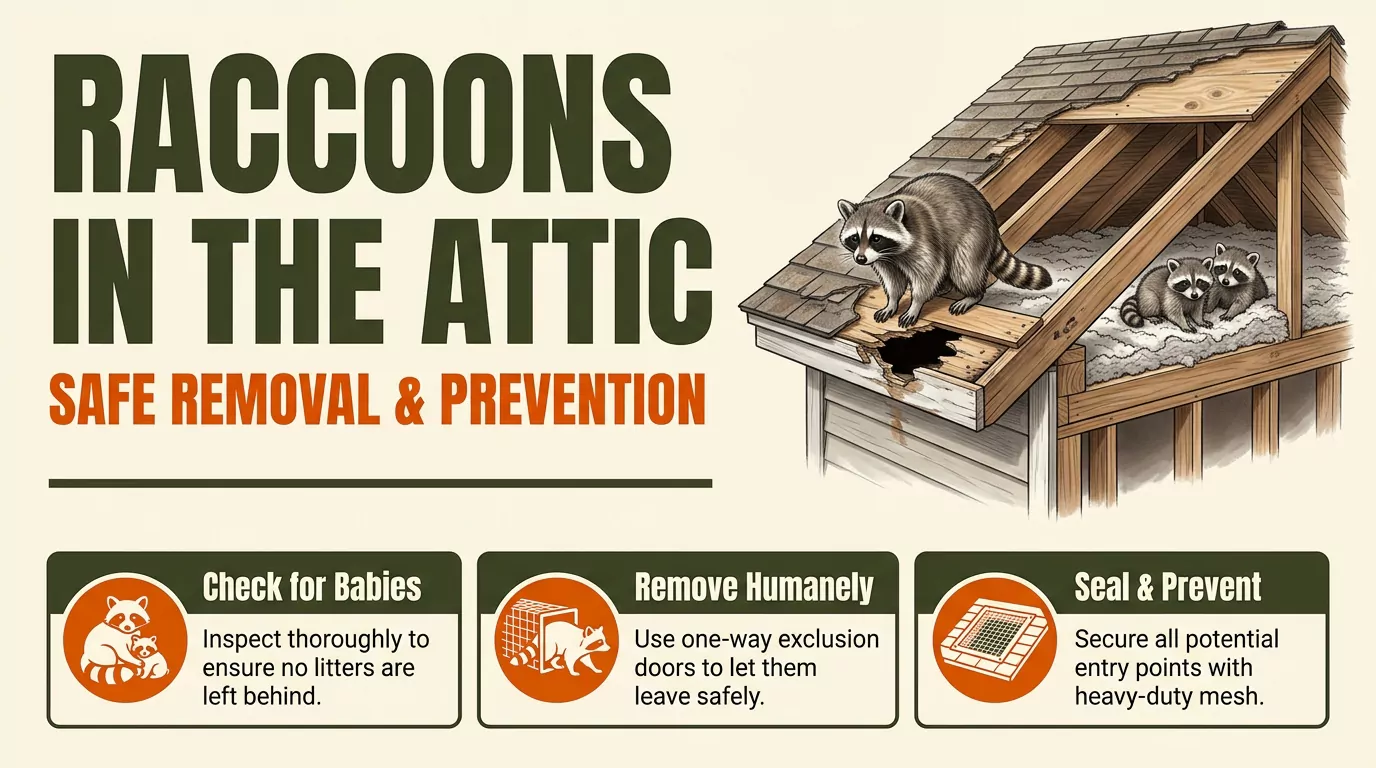
How to Get Rid of Raccoons in the Attic Safely
Raccoons can damage your roof, insulation, wiring, and other attic materials. The safest solution combines humane removal, careful inspection, and permanent exclusion.
First, determine whether baby raccoons are present before disturbing the den. Never trap an animal inside or seal an occupied entry point. Lights and noise may encourage raccoons to leave, but these methods are not guaranteed.
A qualified wildlife-control professional can assess difficult infestations and prevent animals from becoming trapped.
After removal, repair damaged openings and address contaminated materials. These steps help protect your home and reduce the risk of another infestation.
What to Do First When You Find Raccoons in Your Attic
If you discover raccoons in your attic, keep your distance and protect your household. Do not attempt to catch, corner, or handle the animals. Secure pets and keep children away from the affected area. Avoid entering an unsafe attic, especially when an animal appears aggressive.
Follow these immediate precautions:
- Listen for signs of adult raccoons and possible babies.
- Check the roof from the ground for visible openings.
- Avoid blocking the suspected entrance while animals remain inside.
- Keep pets away from raccoons and their droppings.
- Contact a wildlife-control professional if animals cannot leave safely.
If a raccoon bites or scratches someone, wash the wound immediately. Seek prompt medical advice about rabies exposure and other infection risks. Contact a veterinarian if your pet encounters a raccoon.
Signs You Have Raccoons Living in Your Attic
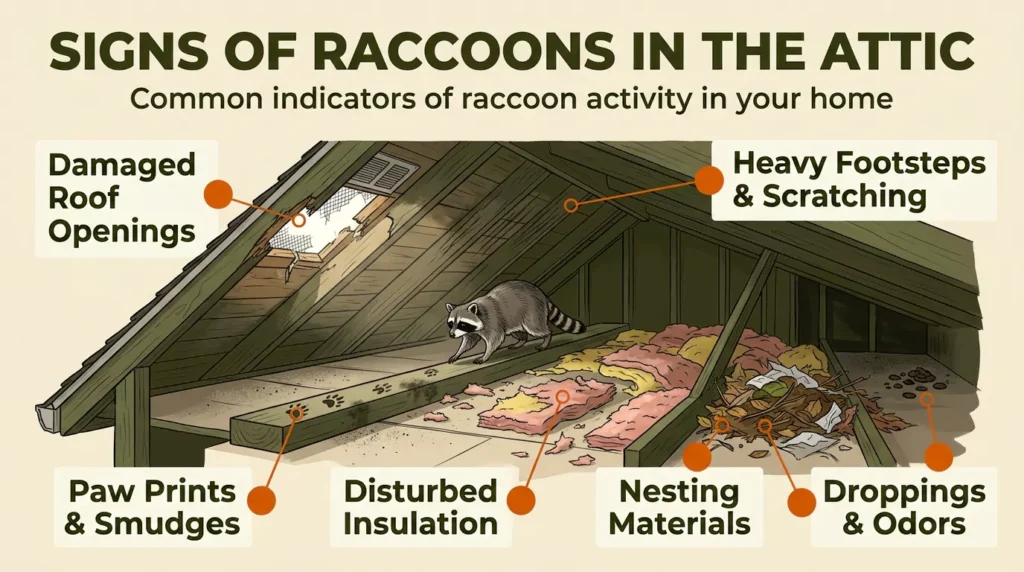
Raccoons often make noticeable sounds when moving through attic spaces. You might hear heavy footsteps, scratching, thumping, growling, or chattering. High-pitched cries can indicate dependent young. However, noises alone cannot confirm which animal occupies your attic.
Look for these additional signs:
- Large droppings: Raccoon feces may appear in repeated locations.
- Disturbed insulation: Animals can compress insulation and create nesting areas.
- Damaged roofing: Torn shingles, loose soffits, and broken vents suggest possible entry.
- Tracks and smudges: Paw prints or oily marks may appear near openings.
- Nesting materials: Leaves, shredded materials, and other debris may indicate a den.
- Strong odors: Urine and accumulated feces can create persistent smells.
Squirrels usually produce lighter scurrying sounds and may chew wood or wiring. Rats and mice often leave smaller droppings and narrower travel paths. Bats may produce fluttering sounds and small droppings beneath roosting areas.
A professional inspection can help identify the animal before removal begins.
Check for Baby Raccoons Before Removing Them
Baby raccoons change how an attic infestation should be handled. A mother may use your attic as a protected nursery. If she leaves through an exclusion device, dependent babies could remain trapped inside.
Breeding periods vary by region and climate. Spring is common in many areas, but it is not a universal rule. Never assume an attic contains only adult animals.
Listen for repeated squeaking, chattering, or crying sounds. Look for nesting materials without approaching the animals. Do not reach into insulation or attempt to carry babies yourself.
A qualified wildlife professional can check for dependent young. They can also arrange appropriate removal and family reunification. The correct approach depends on the animals’ ages, local regulations, and building conditions.
Never permanently seal an entrance until every animal has safely left. Otherwise, trapped raccoons may die inside or damage your home while escaping.
How to Get Raccoons Out of the Attic
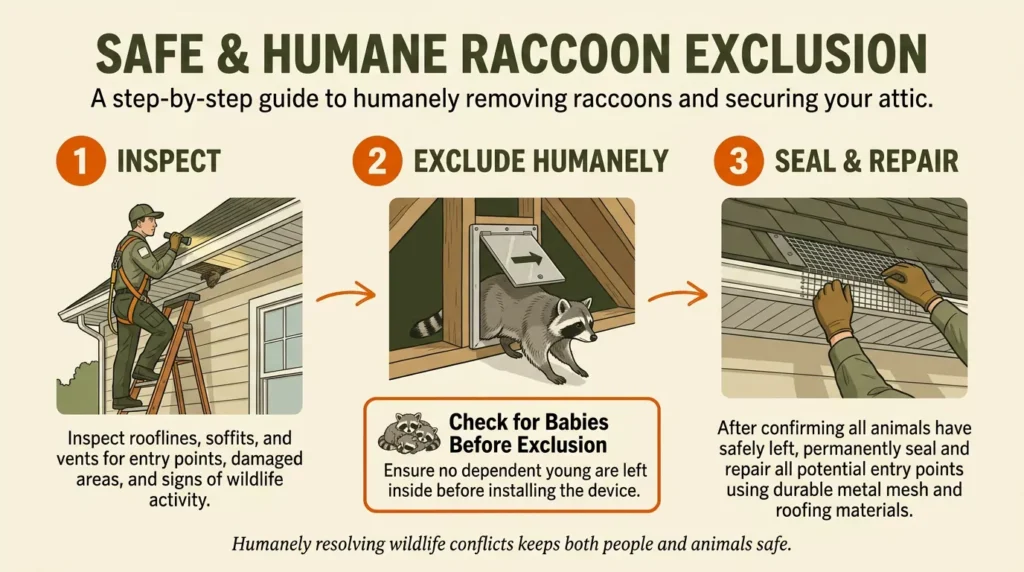
The safest removal method depends on the infestation and the animals involved. Start with an assessment, then choose an appropriate eviction or exclusion strategy. Permanent repairs should happen only after the attic is confirmed empty.
1. Inspect the Attic and Locate Entry Points
Raccoons commonly enter through damaged roof edges, loose soffits, broken vents, and structural gaps. They may enlarge weak openings using their strong paws. Look for damaged materials and tracks around likely access points.
Observe the roof from the ground whenever possible. Avoid climbing ladders or entering unstable areas. A professional can inspect difficult locations and identify secondary openings.
The inspection should also establish whether babies, multiple adults, or other animals are present. This information determines which removal method is appropriate.
2. Encourage Raccoons to Leave Safely
Lights and moderate noise may make an attic less attractive. A mother might relocate her young when the den becomes uncomfortable. However, some raccoons tolerate disturbance and remain inside.
If a professional recommends deterrents, use them only after assessing the animals’ location. Avoid methods that expose animals to toxic fumes, extreme heat, or other hazards.
Do not block the entrance while trying these methods. The animals need a safe exit, and dependent young must remain protected. If the raccoons do not leave, arrange professional assistance.
3. Consider a One-Way Exclusion Door
A one-way exclusion door allows raccoons to leave through an opening without returning. Professionals may use these devices when the site and animal situation make them appropriate.
Correct installation is essential. The device must fit the opening and remain functional throughout the exclusion process. Most importantly, dependent young must not remain inside.
A one-way door is not suitable for every infestation. Other animals may use secondary openings, or the device may interfere with access to dependent young. A professional should assess these risks before installation.
There is no guaranteed eviction timeline. The duration depends on the animals, weather, entry routes, and nesting conditions.
4. Hire a Wildlife-Control Professional When Needed
Professional help is advisable when babies may be present, animals behave aggressively, or access points are difficult to reach. It is also appropriate when raccoons repeatedly return or cause substantial damage.
Ask the provider about:
- Experience with raccoon exclusion and dependent young.
- Inspection of all possible entry and exit points.
- Humane handling and family-reunification procedures.
- Compliance with applicable wildlife regulations.
- Written estimates for removal, repairs, and cleanup.
- Follow-up inspections and any exclusion warranty.
A reliable provider should explain the proposed method before starting work. Avoid services that promise guaranteed removal without inspecting the situation.
Do Raccoon Repellents, Lights, and Radios Work?
Repellents and deterrents may discourage raccoon activity, but their results vary. They rarely solve an established attic infestation by themselves.
| Method | Potential benefit | Main limitation |
| Bright lights | May disturb resting animals | Raccoons may become accustomed to them |
| Radio noise | May make a den less attractive | Sound does not guarantee eviction |
| Odor-based repellents | May discourage some animal activity | Results are inconsistent |
| Commercial repellents | May provide limited deterrence | Product claims and suitability vary |
| One-way exclusion | Can provide a controlled exit | Requires correct installation and animal assessment |
| Permanent exclusion | Prevents access through repaired openings | Must wait until all animals have left |
Avoid mothballs, concentrated ammonia, and improvised chemical mixtures. These substances can create health hazards and may harm wildlife. Never use smoke or fire to drive raccoons from an attic or chimney.
Do not feed raccoons to encourage them toward another den. Food can attract additional wildlife and create new problems. Focus on safe eviction, entry-point repair, and removing accessible food sources.
How to Seal Raccoon Entry Points
Permanent exclusion is essential after successful removal. Raccoons may return when an opening remains accessible. They can also exploit weak repairs or nearby alternative entrances.
First, confirm that every raccoon has left. Check for activity at all known openings and have a professional inspect hidden spaces when necessary. Quiet conditions alone do not prove the attic is empty.
Then repair vulnerable areas:
- Replace damaged shingles and roof materials.
- Repair loose soffits, fascia boards, and roof edges.
- Cover vulnerable vents with suitable wildlife-resistant barriers.
- Secure chimney openings with an appropriate chimney cap.
- Close structural gaps using durable, compatible materials.
- Inspect nearby openings for signs of animal activity.
Heavy-gauge metal mesh or metal flashing may suit some repairs. The correct material depends on the opening and building design. Vent covers must preserve required airflow, while roof repairs must remain weatherproof.
Do not use a temporary patch as a substitute for structural repairs. Raccoons can reopen weak areas and regain access.
How to Clean and Repair an Attic After Raccoons
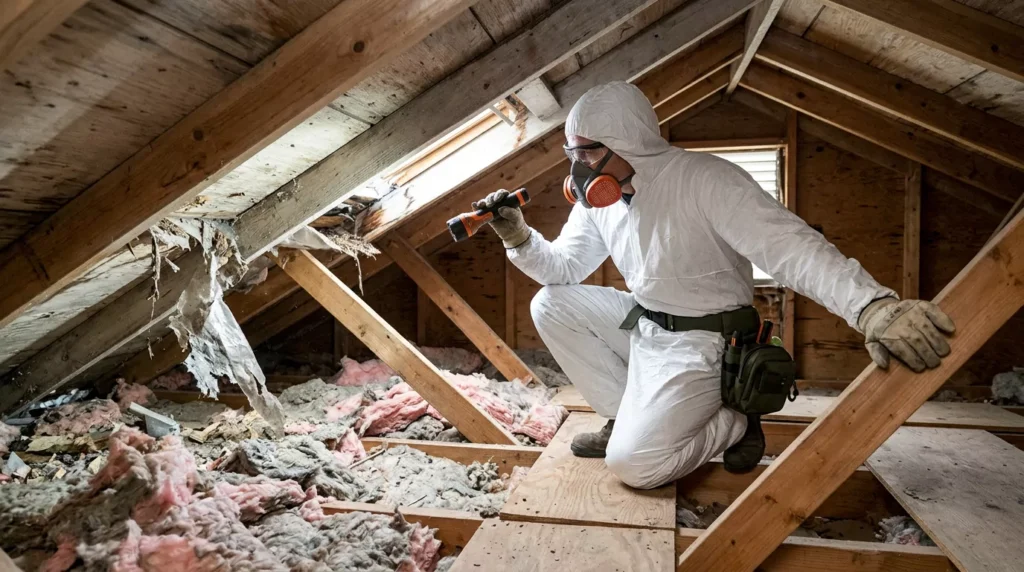
Removing the animals does not automatically make the attic safe. Raccoons may leave feces, urine, nesting debris, damaged insulation, and chewed building materials.
Remove Raccoon Droppings Safely
Raccoon feces can contain eggs of Baylisascaris procyonis, a parasite known as raccoon roundworm. Exposure can cause serious illness in humans, particularly when contaminated material is accidentally swallowed.
Avoid touching droppings with bare hands. Do not dry-sweep or vacuum potentially contaminated feces, because this may spread contaminated dust or particles.
Small amounts of waste and extensive attic contamination require different approaches. Accumulated droppings, contaminated insulation, or established latrine areas may need specialized remediation.
Ask a qualified cleanup professional about appropriate protective equipment, waste removal, and decontamination procedures. Keep children and pets away from contaminated areas until cleanup is complete.
Inspect Damaged Insulation
Raccoons may compress insulation, pull it apart, or contaminate it with waste. Damaged insulation can reduce thermal performance and require partial or complete replacement.
A professional can determine whether the material needs cleaning or replacement. The decision depends on contamination, material condition, and the extent of the damage.
Check Wiring and Structural Materials
Chewed electrical wiring can create fire and shock hazards. Damaged roof structures can also allow moisture to enter the attic.
Have a qualified electrician inspect suspected wiring damage before restoring affected areas. Arrange roof or structural repairs where necessary. Replace damaged components before installing new insulation.
How Much Does Professional Raccoon Removal Cost?
Professional raccoon removal costs vary by location and infestation complexity. A simple exclusion job may require less work than a den containing dependent young. Extensive contamination and roof damage can increase the total expense.
Common cost factors include:
| Service | What affects the cost |
| Initial inspection | Access difficulty and inspection requirements |
| Raccoon exclusion | Number of animals, entry points, and installation complexity |
| Baby raccoon handling | Assessment, removal, and reunification requirements |
| Roof and soffit repairs | Material damage, access, and labor |
| Attic cleanup | Amount of waste and contamination |
| Insulation replacement | Affected area and insulation type |
| Electrical repairs | Extent of damage and required safety work |
| Follow-up visits | Monitoring, repairs, and service terms |
Request an itemized written estimate before approving the work. Confirm whether the price includes exclusion devices, permanent repairs, cleanup, and follow-up visits.
Ask about additional charges if technicians discover hidden damage. Compare providers by their methods and scope of work, not price alone.
How to Prevent Raccoons from Returning
Long-term prevention starts with removing access and reducing attractive food sources. After completing repairs, inspect vulnerable areas regularly.
Use this prevention checklist:
- Inspect roof edges, soffits, vents, and shingles.
- Repair gaps before raccoons can enlarge them.
- Install suitable wildlife-resistant vent covers.
- Keep garbage containers securely closed.
- Remove outdoor pet food after feeding.
- Secure compost and other accessible food sources.
- Trim branches that provide easy roof access when practical.
- Check repaired areas after severe weather.
- Investigate new scratching sounds or visible damage promptly.
Tree branches are only one possible access route. Raccoons can climb many surfaces, so trimming alone will not secure an attic.
Routine inspections help identify vulnerable openings before another animal enters. Combine these checks with durable repairs and responsible food storage.
Raccoon Removal Laws and Safety Considerations
Wildlife removal rules differ by state, county, and municipality. Regulations may cover trapping, relocation, handling, and approved exclusion methods.
Before trapping or moving a raccoon, check the requirements of your local wildlife agency. Some locations restrict relocation or require permits. Rules may also affect how professionals handle dependent young.
Never attempt to handle an aggressive or disoriented raccoon. Keep people and pets away, then contact the appropriate wildlife or animal-control service.
Possible rabies exposure requires prompt medical or veterinary assessment. Do not wait for symptoms after a bite or scratch. Follow local public-health guidance regarding testing and treatment.
Frequently Asked Questions
What should I do if I hear a raccoon in my attic?
Keep people and pets away from the suspected den. Avoid entering the attic or blocking its openings. Listen for signs of babies and arrange an inspection if needed. A qualified wildlife professional can recommend safe removal.
Can I remove a raccoon from my attic myself?
You can observe exterior damage from a safe location. However, handling raccoons, removing dependent young, and installing exclusion devices carry risks. Professional help is advisable when animals remain inside or access is difficult.
How can I tell if baby raccoons are present?
Repeated high-pitched squeaking or chattering may indicate dependent young. A mother may also be using the attic as a nursery. Sounds alone cannot confirm their presence, so arrange a professional assessment before eviction.
Will lights and loud noises make raccoons leave?
Lights and noise may encourage raccoons to move elsewhere. However, some animals tolerate these disturbances and remain inside. Deterrents should not replace verified exclusion and permanent repairs.
How long does raccoon removal take?
The timeframe depends on the number of animals, nesting conditions, and available exits. A family with dependent young may require additional planning. Ask the wildlife professional for an estimate after inspection.
Can raccoons chew through a sealed entry point?
Raccoons can damage weak repairs and enlarge vulnerable openings. Durable materials and correct installation reduce this risk. Inspect the entire roofline instead of repairing only the most obvious hole.
Is raccoon poop in the attic dangerous?
Yes, raccoon feces may contain infectious organisms, including raccoon roundworm eggs. Avoid direct contact and prevent children or pets from entering contaminated areas. Extensive contamination may require specialized cleanup.
How much does raccoon removal cost?
The price depends on inspection needs, exclusion work, repairs, and cleanup. Baby raccoons or extensive contamination may require additional services. Request an itemized estimate based on your property’s actual conditions.
Should I trap and relocate a raccoon?
Do not trap or relocate raccoons without checking local regulations. Improper trapping can injure animals or separate dependent young. Professional exclusion may provide a more suitable solution for attic infestations.
How can I prevent raccoons from returning?
Repair roof openings and install suitable wildlife-resistant barriers. Secure garbage and remove accessible outdoor food. Inspect vulnerable areas regularly, especially after storms or new signs of animal activity.
Conclusion
Getting rid of raccoons in your attic requires more than scaring them away. First, identify the animals and check for dependent young. Choose a humane removal method that allows every animal to leave safely.
Use professional assistance when exclusion or handling becomes complicated. Once the attic is empty, seal entry points with durable materials.
Clean contaminated areas carefully and repair damaged insulation, wiring, and roofing. Finally, remove accessible food sources and inspect vulnerable openings regularly. These steps help protect your home, reduce health risks, and prevent raccoons from returning.

Daniel Carter specializes in attic maintenance, insulation, ventilation, moisture control, and home improvement. He understands common attic problems and their practical solutions. Through clear, informative guides, he helps homeowners identify issues, prevent damage, improve energy efficiency, and maintain safer, healthier homes.