Air Handler in Attic: Is It a Good Idea?
Yes, an air handler can be installed in an attic. However, the attic must provide the right environment, access, drainage, and support.
A conditioned attic is generally a better environment than a hot, vented attic. The difference matters because an air handler works with conditioned air and connects directly to your home’s duct system.
Attic placement can save valuable interior space. It can also simplify some duct layouts and keep HVAC noise away from living areas.
But attic installations have important risks. Extreme heat, difficult maintenance, duct leakage, condensation, and water damage can all become problems. This guide explains how to decide whether an attic is a suitable location for your air handler.
What Is an Air Handler?
An air handler is the indoor portion of many HVAC systems.
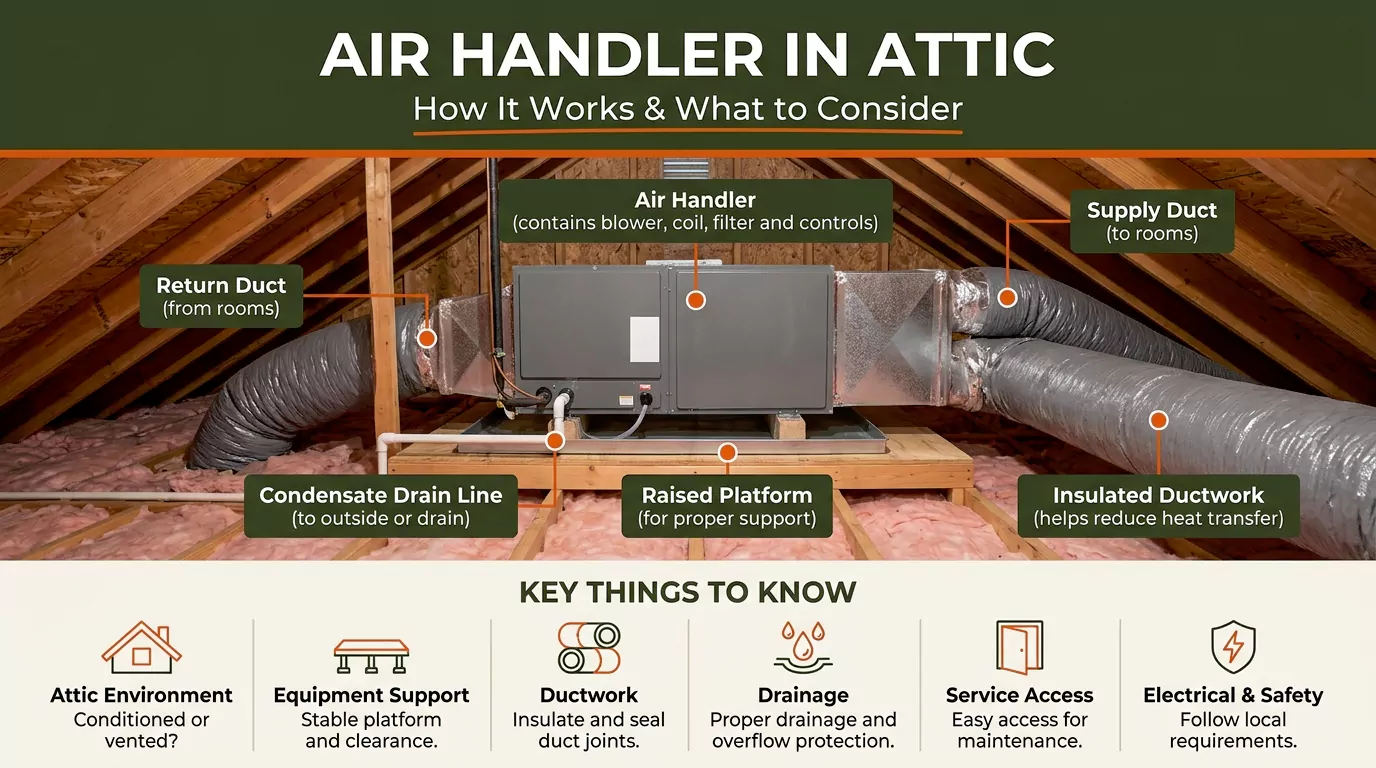
It typically contains components such as:
- A blower or air-moving fan
- A heating or cooling coil
- An air filter
- Controls
- Connections for supply and return ducts
The air handler moves conditioned air through your home’s ductwork. It may work with an outdoor air conditioner or a heat pump.
The outdoor equipment handles the refrigeration cycle. The indoor air handler distributes conditioned air throughout the building.
That makes the air handler’s location important. Its surroundings can affect equipment performance, duct efficiency, maintenance, and indoor air quality.
Can an Air Handler Be Installed in an Attic?
Yes, but the attic must be suitable for the equipment. The most important question is whether the attic is conditioned or unconditioned.
A conditioned attic is inside the building envelope. The roof assembly is generally insulated and air-sealed to separate the space from outdoor conditions.
A vented attic is exposed to outdoor air through ventilation openings. Its temperature can become much higher than the occupied space below.
The attic location should also provide:
- Safe equipment support
- Adequate service access
- Proper drainage
- Suitable duct connections
- Appropriate insulation
- Safe electrical provisions
- Enough room to replace filters
- A safe path for technicians
The semantic research identifies attic suitability as dependent on the enclosure, climate, access, drainage, and insulation rather than location alone.
Conditioned vs. Unconditioned Attics
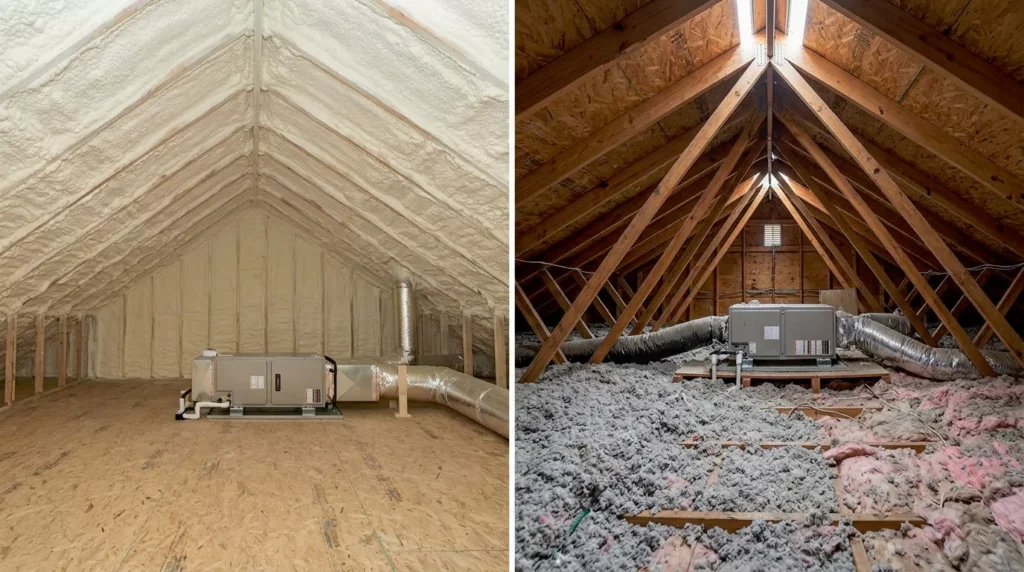
Air Handler in a Conditioned Attic
A conditioned attic can provide a more controlled environment for HVAC equipment. When the attic is within the building envelope, the air handler and ducts are less exposed to outdoor-like temperature conditions.
This can reduce some of the problems associated with a very hot attic. However, a conditioned attic still needs proper equipment access and drainage.
Conditioning the attic does not eliminate poor installation practices.
Air Handler in a Vented Attic
A vented attic is a more challenging location. Outdoor air enters through ventilation openings. During hot weather, attic temperatures can rise significantly.
The air handler, ducts, insulation, and condensate system must operate in that environment. Dust and other attic contaminants can also become a concern if the return-air system leaks.
For this reason, an unconditioned attic requires careful attention to equipment design, duct insulation, sealing, drainage, and service access.
Why the Building Envelope Matters
The building envelope separates conditioned interior space from unconditioned surroundings. Changing where insulation and air sealing occur can change the environment around the HVAC equipment.
For example, an attic insulated and air-sealed at the roof assembly behaves differently from a vented attic insulated at the attic floor.
That distinction should be considered before installing or replacing an attic air handler.
Pros of Putting an Air Handler in the Attic
Attic installation is common for practical reasons.
1. It Saves Interior Space
An air handler can occupy a significant amount of space. Installing it in an attic can preserve a closet, utility room, or other usable area.
This can be especially useful in smaller homes. The semantic research identifies space savings as one of the main benefits of attic installation.
2. It Can Simplify Duct Routing
An attic can provide a convenient route for supply and return ducts. This can be useful in homes with multiple rooms or upper floors.
However, shorter ducts do not automatically guarantee better efficiency. Duct insulation, sealing, routing, and return-air design still matter.
3. It Keeps Equipment Away From Living Areas
HVAC equipment produces some operating noise and vibration. Placing the equipment away from occupied rooms can reduce the noise people hear.
Proper equipment support can further help control vibration transmission.
4. It Can Work Well for Upper Floors
An attic location can make duct distribution to upper rooms convenient. This can be useful in multi-story homes where the upper floor needs dedicated cooling. However, the complete duct system still needs to be designed correctly.
Cons of an Attic Air Handler
The convenience of attic installation comes with tradeoffs.
1. Extreme Temperatures Can Stress Equipment
A vented attic can become extremely hot during summer. The air handler and ductwork then operate in a harsher environment.
Heat can increase cooling demands and contribute to energy losses through poorly insulated ducts.
The semantic research specifically connects hot attic conditions with thermal stress on HVAC equipment and ducts.
2. Maintenance Can Be Difficult
An air handler needs regular service.
Technicians may need access to:
- Filters
- Electrical components
- Blower components
- Coils
- Drain lines
- Duct connections
A cramped attic can make these tasks slower and more difficult. The equipment may technically fit while still having inadequate service access.
That is an important distinction when planning a new installation.
3. Water Leaks Can Damage the Ceiling
Air conditioning produces condensate as the cooling coil removes moisture from air. That water must drain safely.
If the drain becomes blocked or the system develops another drainage problem, water can overflow. An attic air handler sits above finished areas in many homes.
That means a drainage failure can damage:
- Ceiling drywall
- Insulation
- Wood framing
- Flooring
- Other building materials
The supplied semantic data specifically identifies condensate failure as a potential source of attic water damage.
4. Return-Air Leakage Can Affect Indoor Air Quality
Return ducts pull air back toward the air handler. If the return side has leaks in an unconditioned attic, it can potentially draw attic air into the HVAC system.
That air may contain dust, insulation fibers, or other contaminants. This is why return-side sealing deserves special attention.
A sealed return system helps keep the HVAC airflow separated from the attic environment.
5. Equipment Replacement Can Be More Difficult
Installing an air handler is one task. Removing it years later can be another.
An attic installation should account for how technicians will eventually remove the old equipment.
A narrow attic opening or cramped service path can make replacement much harder.
How Attic Temperature Affects an Air Handler
Temperature is one of the biggest differences between conditioned and vented attics. A vented attic receives outdoor air and solar heat through the roof assembly.
The air handler then operates in a space that may be much hotter than the rooms it serves. This can affect the overall HVAC system in several ways.
Equipment exposure
HVAC equipment is designed for specific operating conditions. Extreme surroundings can make the equipment work under greater thermal stress.
Duct heat gain
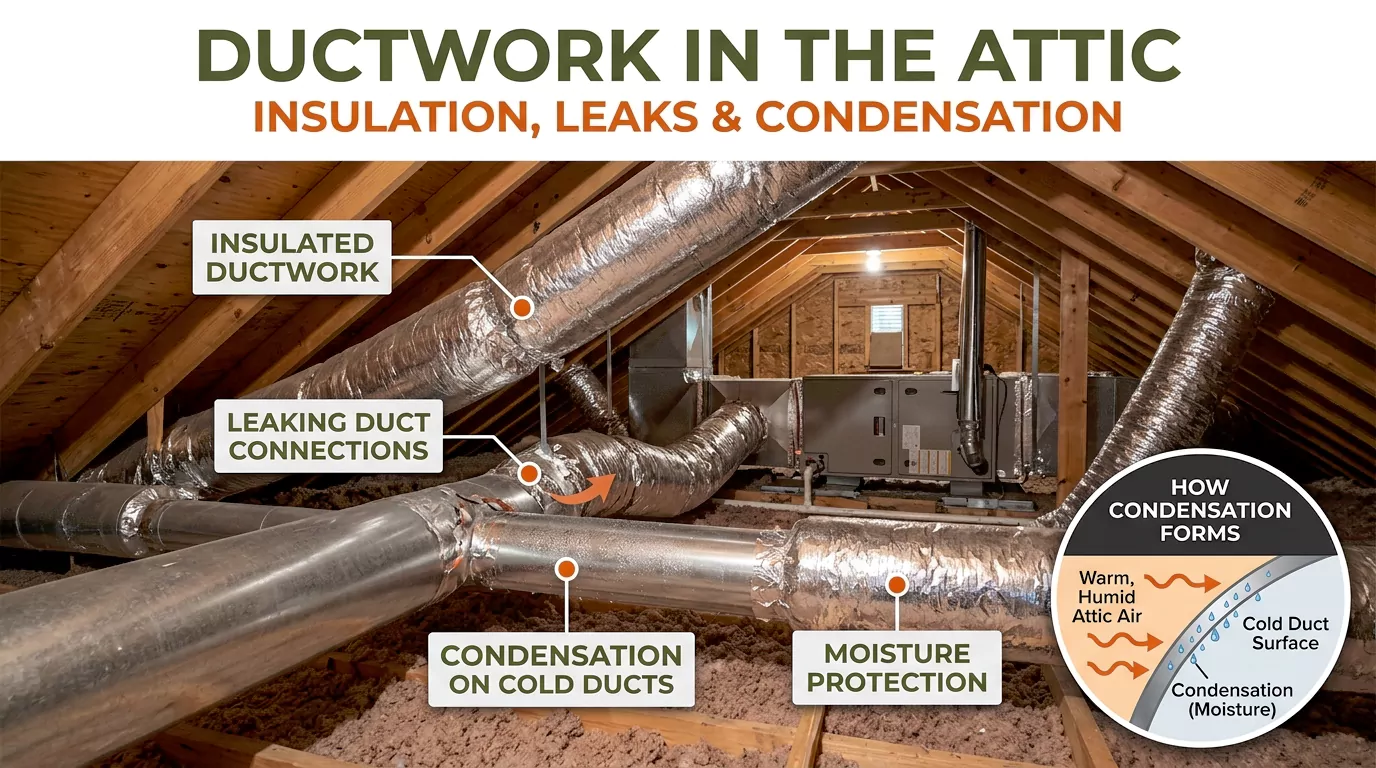
Ducts carrying cooled air through a hot attic can gain heat. Proper duct insulation helps reduce this transfer.
Higher cooling demand
Heat entering the duct system can reduce the benefit of the cooling produced by the air handler. The result is a distribution problem rather than simply an equipment problem.
That is why attic HVAC efficiency should be evaluated as a complete system.
Ductwork Matters as Much as the Air Handler
An attic air handler usually connects to supply and return ductwork. Those ducts distribute conditioned air throughout the home.
Their design and condition can have a major effect on performance.
Supply Ducts
Supply ducts carry conditioned air away from the air handler. In a hot attic, these ducts need appropriate thermal insulation.
They should also be properly sealed at joints and connections. Otherwise, conditioned air can escape before reaching the rooms.
Return Ducts
Return ducts bring air back to the air handler. Return-side leakage is especially important when the ducts are located in an unconditioned attic.
Leaks can allow attic air to enter the return system. That can affect both system performance and indoor air quality.
Duct Insulation and Sealing
Insulation and air sealing perform different jobs. Insulation reduces heat transfer. Sealing reduces unwanted air movement.
An efficient attic duct system needs both where the system design requires them.
The semantic framework specifically separates duct insulation from duct leakage because they address different problems.
Condensate Drainage and Water-Damage Protection
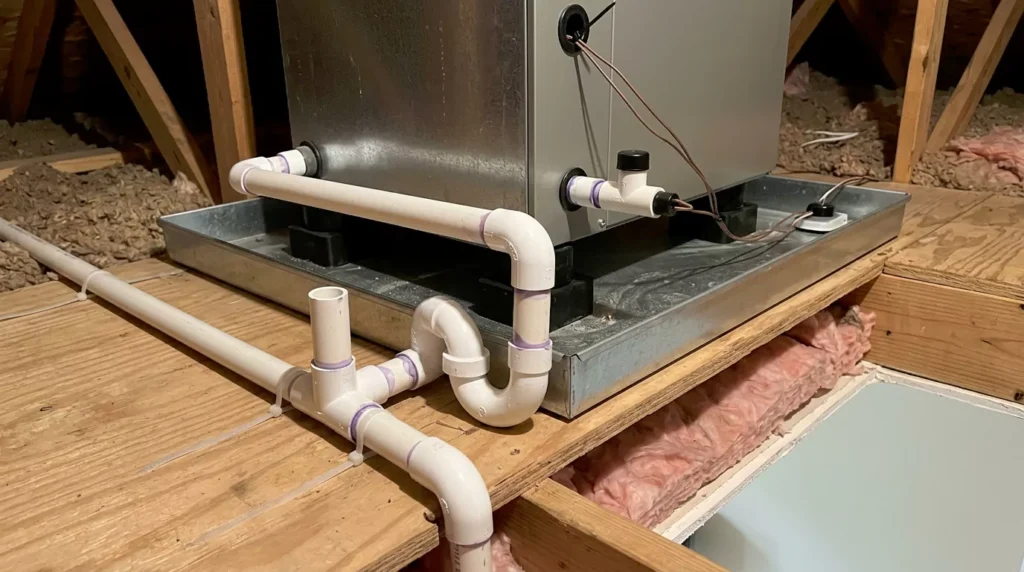
Condensation is normal during air conditioning. The cooling coil becomes cold enough to remove moisture from passing air.
That moisture becomes liquid water. The problem begins when condensate cannot drain correctly.
Primary Condensate Drain
The primary drain carries condensate away from the air handler. It must remain clear and properly configured. A clogged primary drain can cause water to collect around the equipment.
Drain Pan
A drain pan can provide protection when water leaves the normal drainage path. The pan should be appropriate for the equipment and installation.
It should not be treated as a replacement for proper primary drainage.
Secondary Drain Protection
Attic equipment installed above finished areas may need additional overflow protection.
Depending on the equipment, installation, and applicable local requirements, this can involve a secondary pan, secondary drain, float switch, or another approved method.
Requirements vary by jurisdiction and installation.
A qualified HVAC professional should verify the applicable requirements rather than assuming one rule applies everywhere.
Float Switches
A float switch can detect rising condensate. When properly installed, it can shut down the equipment before an overflow causes major damage.
This provides another layer of protection. However, it does not replace proper drain maintenance.
Proper Support and Access for an Attic Air Handler
An attic air handler should not simply be placed wherever there is empty space.
The equipment needs suitable structural support.
Equipment Platform
An appropriate platform can provide stable support for the equipment. The platform should be designed for the equipment and installation conditions.
It should also allow technicians to safely reach the unit.
The semantic research specifically identifies an appropriate equipment platform as an important attic-installation consideration.
Service Clearance
Technicians need enough room to inspect and repair the equipment. A unit squeezed between roof framing and other obstacles may be difficult to service.
Before installation, consider:
- Filter access
- Coil access
- Electrical access
- Drain access
- Duct connections
- Equipment removal
A good installation considers the future service technician, not just the initial installation.
Attic Flooring and Walkways
A safe walkway can make maintenance easier. It also protects insulation and reduces the need to step on areas that were not designed for foot traffic.
The service path should lead safely to the equipment.
Filter Access
Filters need routine attention. If the filter is difficult to reach, homeowners may be less likely to replace or inspect it. The filter location should therefore be considered during installation.
Should You Build a Mechanical Room Around an Attic Air Handler?
A dedicated mechanical room can make an attic installation more practical. It can provide a defined space for the air handler, duct connections, service access, lighting, and drainage.
However, simply enclosing an air handler does not automatically make the space suitable.
The mechanical space still needs proper:
- Airflow provisions
- Equipment access
- Drainage
- Structural support
- Insulation
- Electrical provisions
- Service clearance
The goal is to create a serviceable mechanical space, not merely hide the equipment.
Can Attic Ventilation Make the Installation Better?
Attic ventilation and attic conditioning are different strategies. Ventilation allows outdoor air to move through a vented attic.
Conditioning places the attic within the building envelope. Ventilation can affect attic temperatures, but it does not turn a vented attic into conditioned space.
Therefore, simply adding an attic fan does not eliminate every concern associated with an attic air handler.
The semantic research identifies attic ventilation as one factor affecting the thermal environment around equipment in vented attics.
The complete assembly still needs to be considered.
Attic Air Handler vs. Interior Mechanical Closet
If you are building or remodeling, compare the available locations before choosing one.
| Location | Main Advantage | Main Concern |
| Conditioned attic | Saves interior floor space | Still requires safe access and drainage |
| Vented attic | Convenient equipment location | Greater exposure to attic conditions |
| Mechanical closet | Protects equipment from attic conditions | Requires adequate service space |
| Utility room | Excellent accessibility | Uses interior floor space |
An interior mechanical closet may be preferable when space allows. But a poorly designed closet can also create problems.
The equipment still needs sufficient access and appropriate airflow.
Should You Replace or Relocate an Existing Attic Air Handler?
Replacement is a good time to reconsider equipment location.
If the existing air handler is difficult to access, frequently develops drainage problems, or sits in an unsuitable environment, relocation may deserve consideration.
However, moving the equipment can require more than moving the box.
Relocation may involve changes to:
- Supply ducts
- Return ducts
- Refrigerant lines
- Condensate drainage
- Electrical connections
- Structural support
- Equipment platforms
The semantic research specifically identifies relocation as a project involving equipment, duct, electrical, and condensate modifications.
Compare the upfront relocation cost with long-term maintenance and service benefits.
What Does an Attic Air Handler Installation Cost?
There is no single reliable price for every attic installation.
The final cost depends on the equipment and the scope of work.
Important cost factors include:
- Air handler type
- Equipment size
- Ductwork changes
- Electrical work
- Condensate drainage
- Platform construction
- Attic access
- Insulation
- Air sealing
- Replacement versus relocation
- Local labor rates
A simple replacement in an accessible attic can be very different from a complete relocation.
For this reason, estimates should identify the individual work items rather than provide one generic number.
When Should a Professional Inspect an Attic Air Handler?
Professional inspection is especially useful when you notice:
- Water around the unit
- Ceiling stains below the equipment
- Repeated drain clogs
- Poor cooling
- Unusual equipment noise
- Difficult filter access
- Damaged duct insulation
- Visible duct leaks
- Mold or persistent moisture
- Unsafe attic access
- Equipment corrosion
- An aging system due for replacement
A professional can evaluate the HVAC equipment together with the ductwork, drainage, electrical components, and attic conditions.
The semantic research recommends professional evaluation because these systems involve several interacting building and mechanical components.
Attic Air Handler Installation Checklist
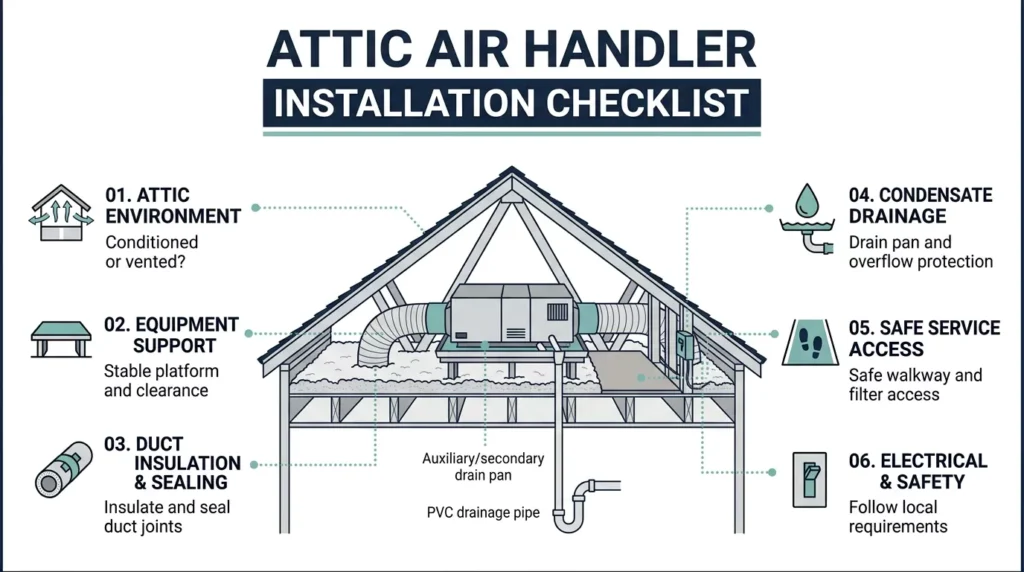
Before installing or replacing an attic air handler, review these areas:
Attic environment
- Is the attic conditioned or vented?
- Are temperature and moisture conditions appropriate?
- Is the building envelope properly designed?
Equipment
- Is the air handler correctly sized?
- Is it supported properly?
- Is there enough service clearance?
Ductwork
- Are supply ducts properly insulated?
- Are duct connections sealed?
- Is the return system properly sealed?
- Are ducts protected from unnecessary heat exposure?
Drainage
- Is the primary condensate drain correctly installed?
- Is overflow protection provided where required?
- Is there an appropriate drain pan?
- Is the drain accessible for maintenance?
Access
- Is there a safe walkway?
- Can technicians reach the equipment?
- Can the filter be easily replaced?
- Can the unit eventually be removed?
Safety
- Are required electrical controls accessible?
- Are applicable local requirements satisfied?
- Are nearby gas appliances creating combustion or pressure concerns?
Frequently Asked Questions
Can an air handler be installed in an attic?
Yes. An attic can be a suitable location when the space, equipment, ductwork, drainage, support, and access are properly designed.
Is a conditioned attic better for an air handler?
A conditioned attic can provide a more controlled environment than a hot, vented attic. It reduces the equipment’s exposure to outdoor-like attic conditions.
Can an air handler go in an unconditioned attic?
It can be installed in some configurations, but an unconditioned attic creates additional temperature, duct, moisture, access, and maintenance concerns.
Why do builders put air handlers in attics?
Attic placement can save interior floor space and provide convenient routes for ductwork.
Does an attic air handler need a drain pan?
Additional condensate protection may be required depending on the installation and applicable local requirements. The exact protection should be verified for the specific system.
Can an attic air handler cause ceiling damage?
Yes. A blocked drain, failed condensate system, or overflow can allow water to reach the ceiling below.
Does attic insulation affect an air handler?
Yes. Insulation affects heat transfer and can also affect the attic environment. It should not block required ventilation pathways in a vented assembly.
Can attic duct leaks affect indoor air quality?
Yes. Return-air leakage can potentially draw attic air and contaminants into the HVAC airflow, especially when the return system is located in an unconditioned attic.
Should I relocate my attic air handler?
Relocation may make sense when access is poor, the environment is unsuitable, or long-term serviceability is a concern. However, relocation can require duct, electrical, structural, refrigerant, and drainage changes.
Is an attic air handler less efficient?
Not automatically. Efficiency depends on the complete system, including equipment, ductwork, insulation, air leakage, attic conditions, and installation quality.
Final Takeaway
An air handler in an attic is not automatically a bad installation.
The better question is whether the attic provides the right environment and supports a well-designed HVAC system.
A suitable installation should provide:
- A controlled equipment environment where appropriate
- Proper duct insulation and sealing
- Reliable condensate drainage
- Overflow protection when required
- Stable equipment support
- Safe service access
- Accessible filter maintenance
- Proper electrical and safety provisions
- Good separation between attic air and return-air pathways
If you are replacing an existing attic unit, do not automatically put the new equipment in the same location.
Evaluate the attic, ductwork, drainage, access, and building envelope first.
Sometimes keeping the equipment in the attic is practical. In other cases, relocating it to a properly designed mechanical closet or utility space can provide better long-term serviceability.
The right choice depends on the entire HVAC installation, not the attic location alone.

Daniel Carter specializes in attic maintenance, insulation, ventilation, moisture control, and home improvement. He understands common attic problems and their practical solutions. Through clear, informative guides, he helps homeowners identify issues, prevent damage, improve energy efficiency, and maintain safer, healthier homes.