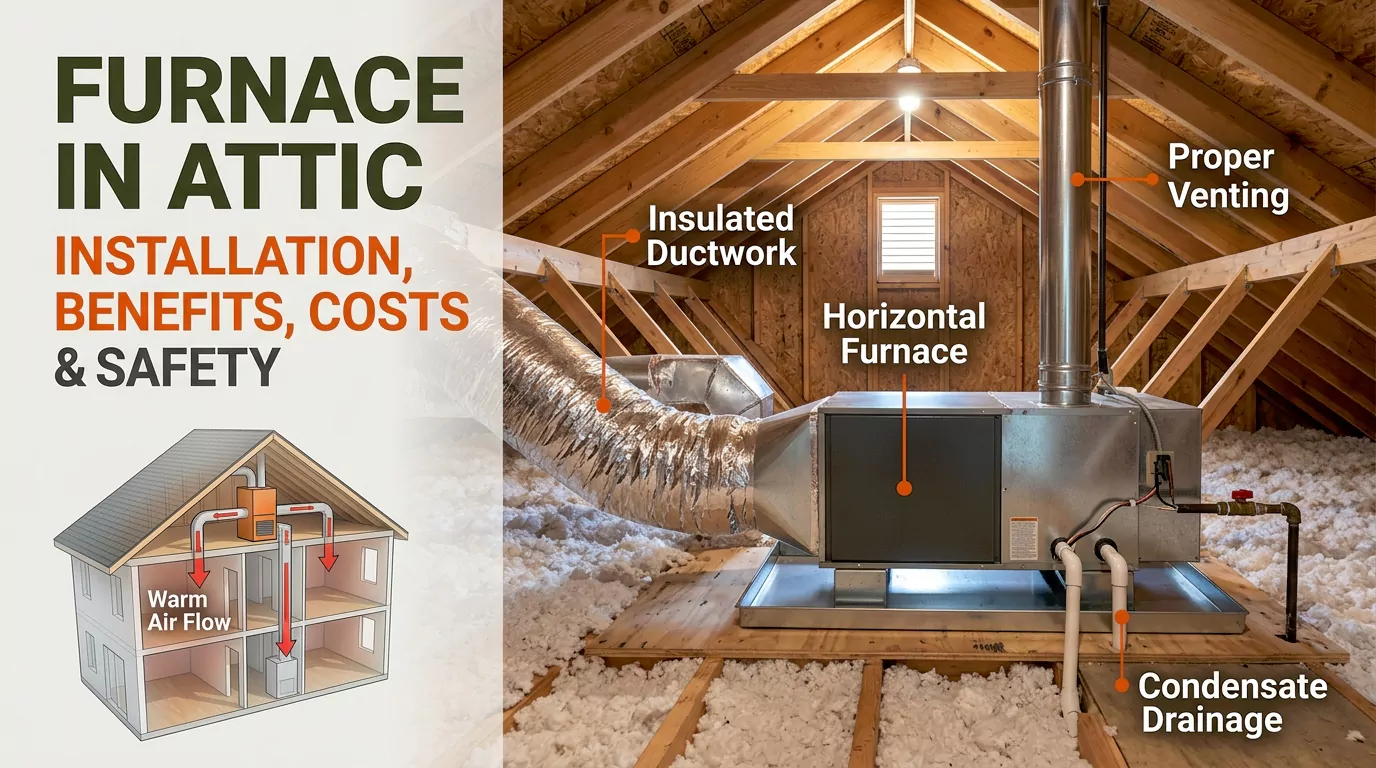
Furnace in Attic: Installation, Benefits, Costs & Safety
Yes, a furnace can be installed in an attic when the space and equipment allow it. An attic installation can save valuable living space and keep HVAC equipment away from occupied rooms.
However, the attic must provide suitable clearance, structural support, service access, ventilation, and safe utility connections.
Many attic installations use a horizontal furnace because attics often have limited vertical clearance. The furnace may be gas or electric, depending on the home’s heating system and available utilities.
The best installation is not simply one that fits the furnace into the attic. It must also provide safe access, proper airflow, reliable drainage, appropriate venting, and enough room for future service.
Can You Install a Furnace in an Attic?
In many homes, an attic can be a suitable furnace location. However, installation depends on the specific furnace, attic layout, structural conditions, and applicable requirements.
A contractor should evaluate several factors before selecting the installation location.
These include:
- Available space
- Furnace clearance
- Structural support
- Attic access
- Service space
- Ductwork
- Fuel supply
- Electrical service
- Combustion air
- Venting
- Condensate drainage
- Attic temperature
- Local building requirements
The furnace must also be approved for the intended installation orientation.
A furnace that physically fits in an attic is not automatically suitable for that application. The equipment must be designed and listed for the proposed configuration.
What Is an Attic Furnace?
An attic furnace is a standard forced-air furnace installed in an attic rather than a basement, garage, closet, or utility room.
It is not a separate type of heating technology.
The major difference is the furnace location and installation orientation.
Attic furnaces can use gas or electricity. Gas systems require additional considerations for combustion, fuel supply, and exhaust. Electric furnaces do not produce combustion gases, but they still require proper electrical connections, airflow, clearances, and service access.
The attic’s limited height often makes a horizontal configuration practical. In this arrangement, the furnace operates on its side and connects to ductwork along the attic space.
The supplied semantic research identifies the horizontal furnace as particularly relevant to spaces with limited vertical clearance.
Why Are Horizontal Furnaces Common in Attics?
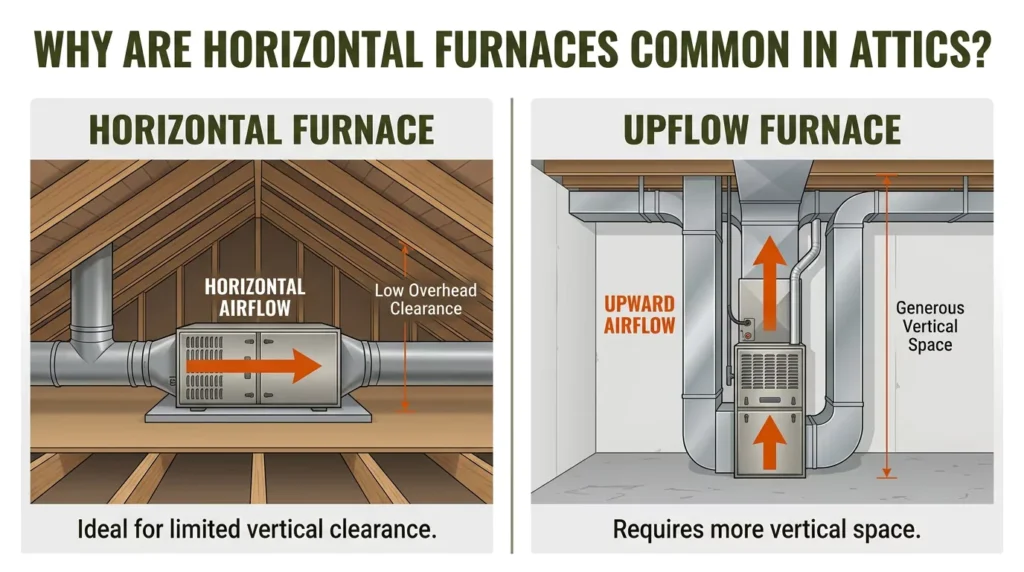
A traditional upflow furnace stands vertically. That configuration works well when there is enough height for the equipment and its duct connections.
Many attics do not provide that height.
A horizontal furnace solves this space problem by allowing the equipment to operate in a side-to-side configuration.
The basic heating process remains the same. The furnace receives return air, heats it, and sends supply air through the duct system.
The difference is how the equipment is positioned.
Horizontal vs. Upflow Furnaces
| Feature | Horizontal Furnace | Upflow Furnace |
| Orientation | Side-to-side | Vertical |
| Vertical space | Lower requirement | Higher requirement |
| Common application | Attics and low-clearance areas | Basements and utility areas |
| Duct arrangement | Suits horizontal layouts | Usually connects above and below |
| Installation | Must be approved for horizontal use | Designed for vertical use |
| Main consideration | Clearance and access | Available height |
Some furnaces are designed for multiple orientations. Others are designed for a specific configuration.
Therefore, the model’s installation instructions matter more than appearance alone.
Benefits of Putting a Furnace in the Attic
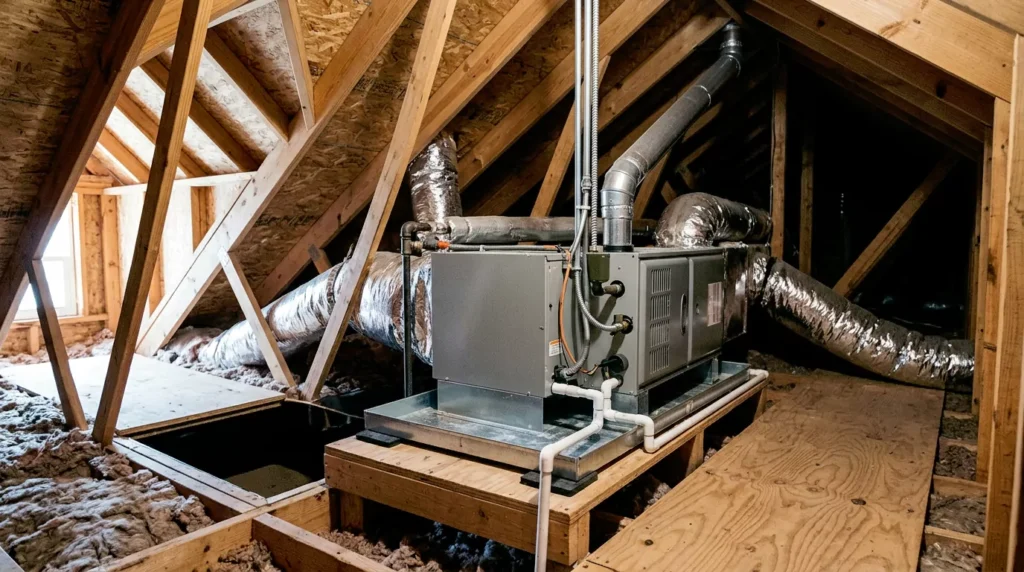
An attic installation can solve several space and layout problems.
1. It saves occupied floor space
The biggest advantage is often space.
Moving a furnace overhead can eliminate the need for a mechanical closet or floor-level equipment area.
That space may then become available for:
- Storage
- A larger closet
- A utility area
- Living space
- A home office
This makes attic placement useful in homes with limited mechanical-room space.
2. It can reduce equipment noise
A furnace located above the living areas may keep normal equipment noise farther away from bedrooms and living rooms.
The actual noise level still depends on the equipment, duct design, vibration control, and installation quality.
3. It works well in homes without basements
Some homes have slab foundations or limited lower-level utility space.
An attic can provide another location for HVAC equipment without major changes to the home’s living areas.
4. It can simplify certain HVAC layouts
If ductwork already runs through the attic, locating the furnace nearby may create a practical distribution arrangement.
However, the existing duct system still needs to be evaluated.
Potential Drawbacks of an Attic Furnace
The space-saving benefit comes with tradeoffs.
Difficult service access
Every repair begins with getting to the equipment.
A furnace deep inside an attic can be inconvenient if there is no permanent access path or adequate working area.
Technicians need enough room to inspect and service components safely.
Temperature extremes
An unconditioned attic can become much hotter or colder than the living space.
Those conditions can affect HVAC equipment and ductwork.
The semantic research specifically identifies attic temperature as a factor that can influence equipment performance and reliability.
Water-damage risk
Water problems deserve special attention when HVAC equipment sits above finished rooms.
Condensate problems, drain failures, or equipment leaks can allow water to reach the ceiling below.
That is why drainage and secondary protection should be part of the installation plan.
More complicated installation
An attic installation can involve more than placing the furnace in an empty space.
The project may require modifications to:
- Ductwork
- Electrical connections
- Gas piping
- Venting
- Structural support
- Access
- Condensate drainage
Installation costs therefore vary significantly between homes.
Attic Furnace Installation Requirements
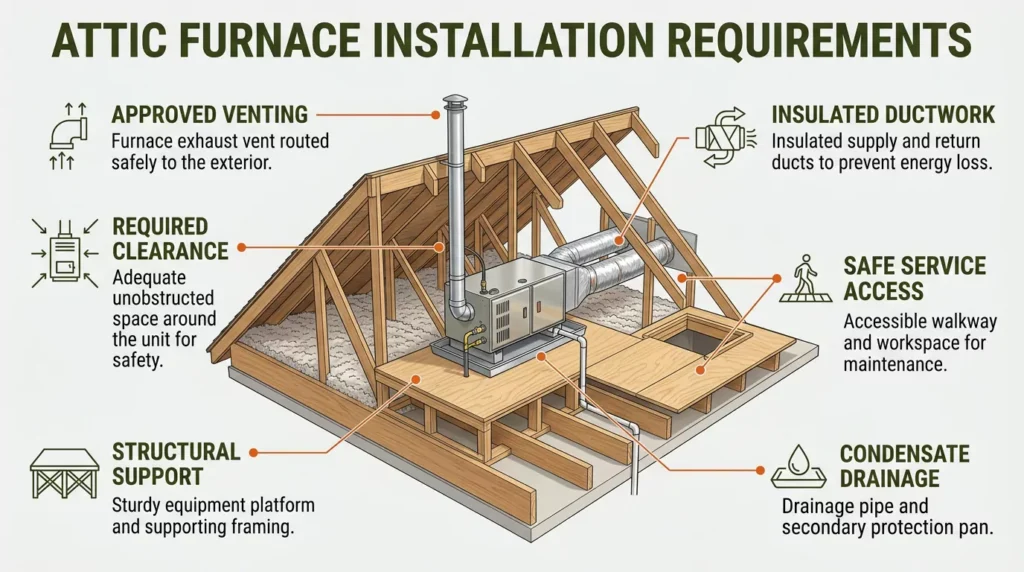
A proper attic installation starts with the space rather than the furnace.
Space and furnace clearance
The furnace needs the clearances specified by its manufacturer.
These clearances protect the equipment and nearby materials. They also provide enough room for inspection and service.
Do not assume that an open-looking attic automatically provides adequate clearance.
The installation area should account for the furnace itself, connected components, service access, and surrounding construction.
Structural support and equipment platform
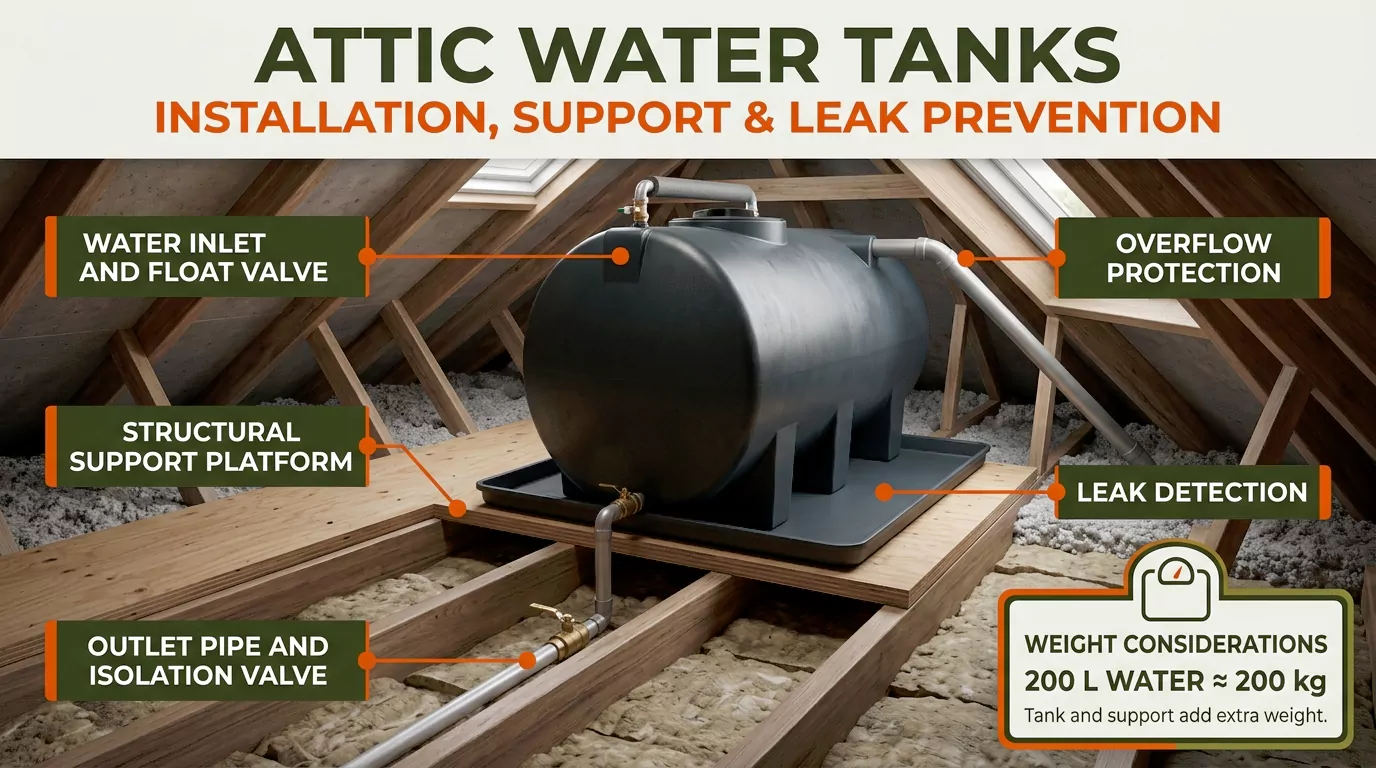
A furnace adds weight to the attic structure. The framing must be capable of supporting the equipment and associated components.
An appropriate equipment platform or support system may be needed.
The semantic research specifically identifies structural capacity and equipment platforms as important attic installation considerations.
A contractor should evaluate existing framing before adding heavy HVAC equipment.
Attic access and service space
The installation should provide a practical route to the furnace. A technician may need to carry tools, filters, replacement components, or equipment into the attic.
The service area should also provide stable footing and adequate working space. This is more important than simply being able to reach the furnace.
Gas and electrical connections
A gas furnace requires an appropriate fuel supply and safe gas connection.
It also requires electrical power for controls, ignition, blower operation, and safety components.
The gas line and electrical connection should be installed according to applicable requirements and manufacturer instructions.
Combustion air
Fuel-burning equipment needs air for combustion unless it uses a sealed combustion arrangement.
A direct-vent or sealed-combustion furnace generally draws combustion air from outside.
An atmospheric-combustion system uses surrounding air and therefore requires additional consideration of combustion-air requirements.
The semantic data identifies combustion air, direct venting, flue gas, and venting as major furnace-related entities.
Venting
A gas furnace produces combustion byproducts that must be safely exhausted. The venting system must match the furnace design and installation configuration.
Improper venting can create serious safety problems, including carbon monoxide exposure.
For this reason, gas furnace venting should be designed and installed by a qualified professional.
Condensing vs. Non-Condensing Furnaces in an Attic
Furnace efficiency affects attic installation requirements.
A non-condensing furnace generally exhausts combustion gases at temperatures that prevent condensation inside the heat exchanger and vent system.
A condensing furnace extracts additional heat from combustion gases. This process produces water that must be drained.
The semantic research distinguishes these two furnace categories and identifies condensate drainage as a core attic consideration.
Why do high-efficiency furnaces produce condensate?
High-efficiency furnaces recover additional heat from exhaust gases. As those gases cool, water vapor can condense.
That water becomes condensate. A condensing furnace therefore needs a properly designed condensate drainage system.
Can condensate freeze in an attic?
It can be a concern in a cold, unconditioned attic.If condensate freezes inside a drainage line, the water may not leave the furnace properly.
This can interrupt operation or contribute to drainage problems. The risk depends on the furnace design, attic temperature, drain configuration, climate, and installation.
Therefore, a condensing furnace in a cold attic requires careful planning for condensate management.
Do not assume that every high-efficiency furnace has the same freeze protection requirements.
How to Prevent Furnace Water Damage
Water protection is one of the most important differences between an attic installation and equipment located over an unfinished floor.
A drainage problem can affect the ceiling and finished rooms below.
Primary condensate drainage
A condensing furnace needs a controlled path for condensate.
The drain should be installed according to the furnace manufacturer’s requirements and applicable installation rules.
Secondary drain protection
Depending on the installation, a secondary drain pan can provide additional protection against water reaching the structure below.
A float or wet safety switch may also shut down equipment when unwanted water accumulation is detected.
The AI Overview supplied for this topic specifically emphasizes secondary drain pans and float switches as attic water-protection measures.
Exact requirements, however, depend on the installation and applicable code.
Condensate pumps
A condensate pump may be useful when gravity drainage is not practical. The pump moves water to an appropriate discharge location.
Again, the correct arrangement depends on the equipment and site.
Regular inspection
Drainage should not be treated as a set-and-forget component.
During service, a technician can inspect the drain system and look for signs of blockage, leakage, or improper drainage.
Attic Insulation, Temperature, and Ductwork
The attic environment affects more than the furnace itself. It also affects the duct system.
Conditioned vs. unconditioned attics
A conditioned attic is inside the home’s thermal boundary.
An unconditioned attic is outside that boundary and can experience larger temperature changes.
This distinction matters when deciding where HVAC equipment and ductwork should be located.
An unconditioned attic can expose equipment and ducts to more extreme conditions.
Duct insulation
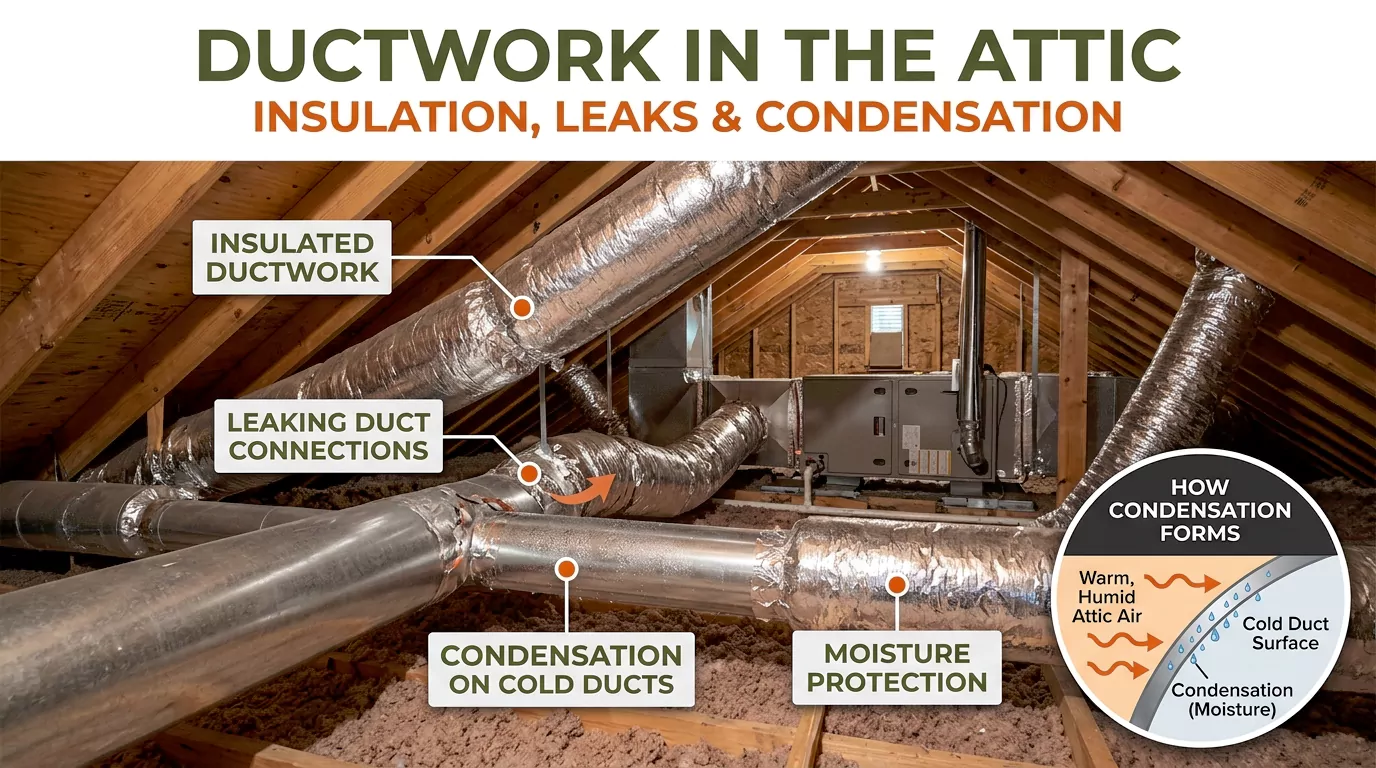
Ducts passing through an unconditioned attic can lose heat to the surrounding space.
Proper duct insulation helps reduce unwanted heat transfer.
The goal is not simply to insulate the furnace. The entire air-distribution system should be considered.
Duct leakage
Even well-insulated ducts can lose performance when they leak. Supply duct leakage allows heated air to escape before reaching the rooms.
Return duct leakage can draw unwanted attic air into the system.
Professional duct sealing can therefore improve the amount of conditioned air reaching occupied spaces.
Return and supply air
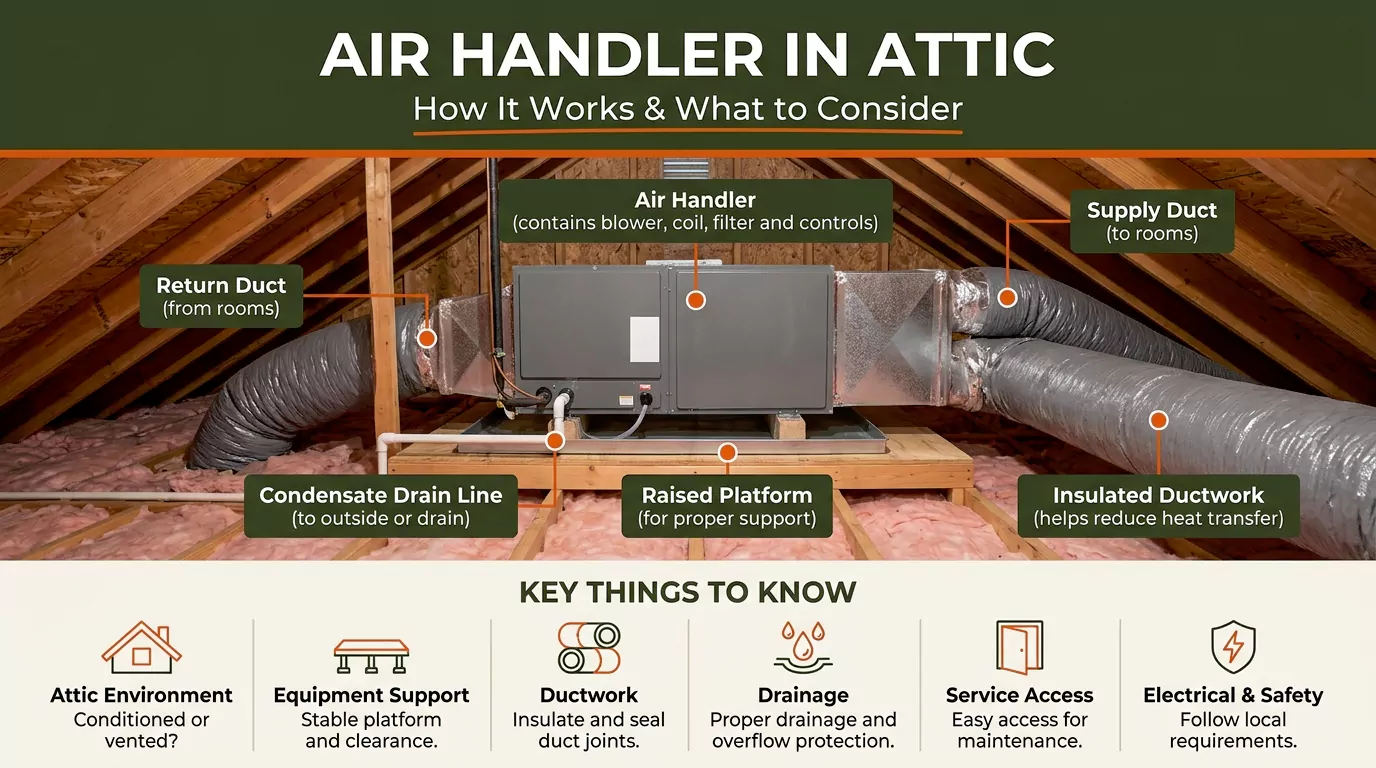
The furnace needs adequate return airflow. Return ducts bring indoor air back to the furnace.
The furnace heats that air and sends it through supply ducts to the rooms.
Restrictions in filters, ducts, or return openings can affect airflow and system performance.
The semantic research identifies return air, supply air, ductwork, duct insulation, and duct leakage as important components of attic HVAC performance.
How Much Does an Attic Furnace Installation Cost?
There is no reliable single price for every attic furnace installation.
The project cost depends on the equipment and the amount of work required.
Major cost components can include:
| Cost component | What can affect it |
| Furnace | Type, capacity, efficiency, model |
| Labor | Installation complexity and local labor rates |
| Platform | Existing support versus new construction |
| Ductwork | New, modified, or existing ducts |
| Gas line | Existing connection versus new routing |
| Electrical | Existing service versus modifications |
| Venting | Existing vent versus new configuration |
| Condensate | Drain, pump, protection, and routing |
| Access | Existing access versus improvements |
| Structural work | Existing framing and required reinforcement |
The supplied semantic data confirms that equipment, labor, venting, gas, electrical work, duct modifications, and attic requirements can all affect installation cost.
For an accurate estimate, have a contractor inspect the actual installation location.
How to Maintain a Furnace in the Attic
Maintenance becomes especially important when equipment is installed overhead.
Replace or clean the filter as required
A dirty filter can restrict airflow.
Follow the filter manufacturer’s and furnace manufacturer’s recommendations for replacement.
The filter should also be located where it can be accessed safely.
Inspect condensate drainage
For a condensing furnace, the drain should remain clear and functional.
Signs of trouble can include:
- Water around the furnace
- Repeated shutdowns
- Overflowing drain components
- Unusual moisture
- Water stains near the equipment
Check venting
Gas furnaces require safe exhaust of combustion products.
A qualified technician should inspect the venting system during appropriate professional service.
Maintain safe access
The attic should have a safe route to the equipment.
Technicians should not have to step across unstable surfaces or crawl through areas that prevent proper service.
Schedule professional maintenance
Furnace maintenance helps preserve safe and reliable operation.
A professional can evaluate combustion, electrical components, airflow, venting, drainage, and other equipment-specific components.
The semantic research identifies maintenance as a core ownership consideration for attic furnaces.
Should You Keep or Relocate an Existing Attic Furnace?
Replacing an attic furnace does not automatically mean the equipment must remain there.
Sometimes keeping the furnace in its existing location is the simpler solution.
Relocation may make sense when:
- Attic access is extremely poor
- The existing support is inadequate
- Water protection is difficult
- The attic experiences unsuitable conditions
- A better mechanical location is available
- A major remodel already requires ductwork changes
However, relocation can create additional work.
It may require changes to:
- Ductwork
- Gas piping
- Electrical connections
- Venting
- Condensate drainage
- Equipment support
The semantic research specifically identifies furnace replacement and relocation as separate planning decisions.
A contractor should compare the cost and long-term benefits of both options.
Is a Furnace in the Attic Safe?
An attic furnace can be safe when the equipment is appropriate for the location and installed correctly.
Safety depends on the complete system rather than the attic location alone.
Important factors include:
- Correct furnace orientation
- Proper clearance
- Structural support
- Safe access
- Correct fuel connections
- Appropriate combustion air
- Approved venting
- Carbon monoxide protection
- Condensate management
- Water-damage protection
- Regular maintenance
Gas furnace installations deserve particular attention because combustion produces exhaust gases.
Carbon monoxide is a toxic combustion byproduct, so proper combustion and venting are essential. A carbon monoxide detector provides another layer of protection in the home.
The supplied entity research rates carbon monoxide, combustion safety, fire safety, and furnace clearance as high-priority safety concepts.
How to Decide if an Attic Furnace Is Right for Your Home
Before choosing an attic installation, ask these questions:
Does the furnace fit the space?
Confirm that the selected model is approved for the intended orientation.
Can the attic support the equipment?
Have the supporting structure evaluated when necessary.
Can a technician reach it safely?
Plan permanent access and adequate service space.
Can the ductwork work efficiently?
Check supply and return paths, insulation, and leakage.
Is the attic environment suitable?
Consider whether the attic is conditioned or unconditioned and how temperature extremes may affect the system.
Can water be controlled?
Plan condensate drainage and appropriate secondary protection.
Can the furnace be vented correctly?
Gas equipment needs an approved exhaust arrangement.
Is another location better?
Compare the attic with available basement, closet, garage, or dedicated mechanical-space options.
A good installation decision considers the entire HVAC system rather than the furnace alone.
Questions to Ask an HVAC Contractor
Before approving an attic furnace installation, ask:
- Is this furnace approved for horizontal installation?
- What clearances does the selected model require?
- Can the existing attic framing support the equipment?
- What type of platform or support will be used?
- How will technicians access the furnace?
- Where will the filter be located?
- How will condensate drain from the system?
- What happens if the primary drain becomes blocked?
- How will the furnace be protected from attic temperature extremes?
- How will the ductwork be insulated and sealed?
- How will combustion air be provided?
- How will gas exhaust be vented?
- What water-damage protection is included?
- What work is included in the installation estimate?
- Would relocating the furnace be a better long-term option?
These questions help you compare installation proposals based on the entire system rather than equipment price alone.
Frequently Asked Questions
Can a gas furnace be installed in an attic?
Yes, a gas furnace can be installed in an attic when the furnace and installation meet applicable requirements. The installation must address clearance, structural support, combustion air, fuel supply, venting, access, and safety.
Why are horizontal furnaces common in attics?
Horizontal furnaces work well where vertical clearance is limited. They allow the furnace to operate on its side while connecting to a horizontal duct arrangement.
Are attic furnaces safe?
They can be safe when properly selected, installed, vented, supported, and maintained. Gas systems require particular attention to combustion and carbon monoxide safety.
Can a high-efficiency furnace go in an attic?
It can, but a condensing furnace produces condensate that needs proper drainage. A cold, unconditioned attic can also create freeze-related concerns for condensate lines.
Does an attic furnace need a drain pan?
Water protection requirements depend on the equipment and installation. A secondary drain pan and water-sensing safety device may provide important protection where an HVAC leak could damage the building.
Does an attic furnace need a platform?
The furnace needs suitable structural support. Depending on the installation, that may involve a dedicated equipment platform or another approved support arrangement.
Does attic insulation affect furnace installation?
Yes. Insulation affects the attic’s thermal environment and must not interfere with required equipment clearances or service components.
How does an attic affect ductwork?
Ducts in an unconditioned attic can experience greater heat transfer. Proper insulation and air sealing help reduce energy losses.
Is an attic furnace more expensive to install?
It can be, depending on the project. Access, structural support, duct modifications, gas and electrical connections, venting, condensate drainage, and other requirements can increase the scope.
Should I replace an attic furnace or move it?
That depends on the existing installation and available alternatives. Compare the cost and long-term benefits of replacement in place against relocation.
Final Takeaway
A furnace in an attic can be a practical way to reclaim living space without giving up a conventional forced-air heating system.
The key is proper planning.
A suitable attic installation needs more than enough room for the furnace. It needs appropriate clearance, structural support, service access, airflow, ductwork, utilities, venting, and drainage.
Horizontal furnaces are often useful because they fit spaces with limited vertical clearance. Condensing models require additional attention because they produce condensate. Unconditioned attics also expose HVAC equipment and ducts to greater temperature changes.
Before installation, have a qualified HVAC professional evaluate the complete system. The right question is not simply “Can a furnace fit in my attic?”
It is:
“Can this furnace operate safely, efficiently, and remain serviceable in this attic for years to come?”
That is the standard a good installation should meet.

Daniel Carter specializes in attic maintenance, insulation, ventilation, moisture control, and home improvement. He understands common attic problems and their practical solutions. Through clear, informative guides, he helps homeowners identify issues, prevent damage, improve energy efficiency, and maintain safer, healthier homes.